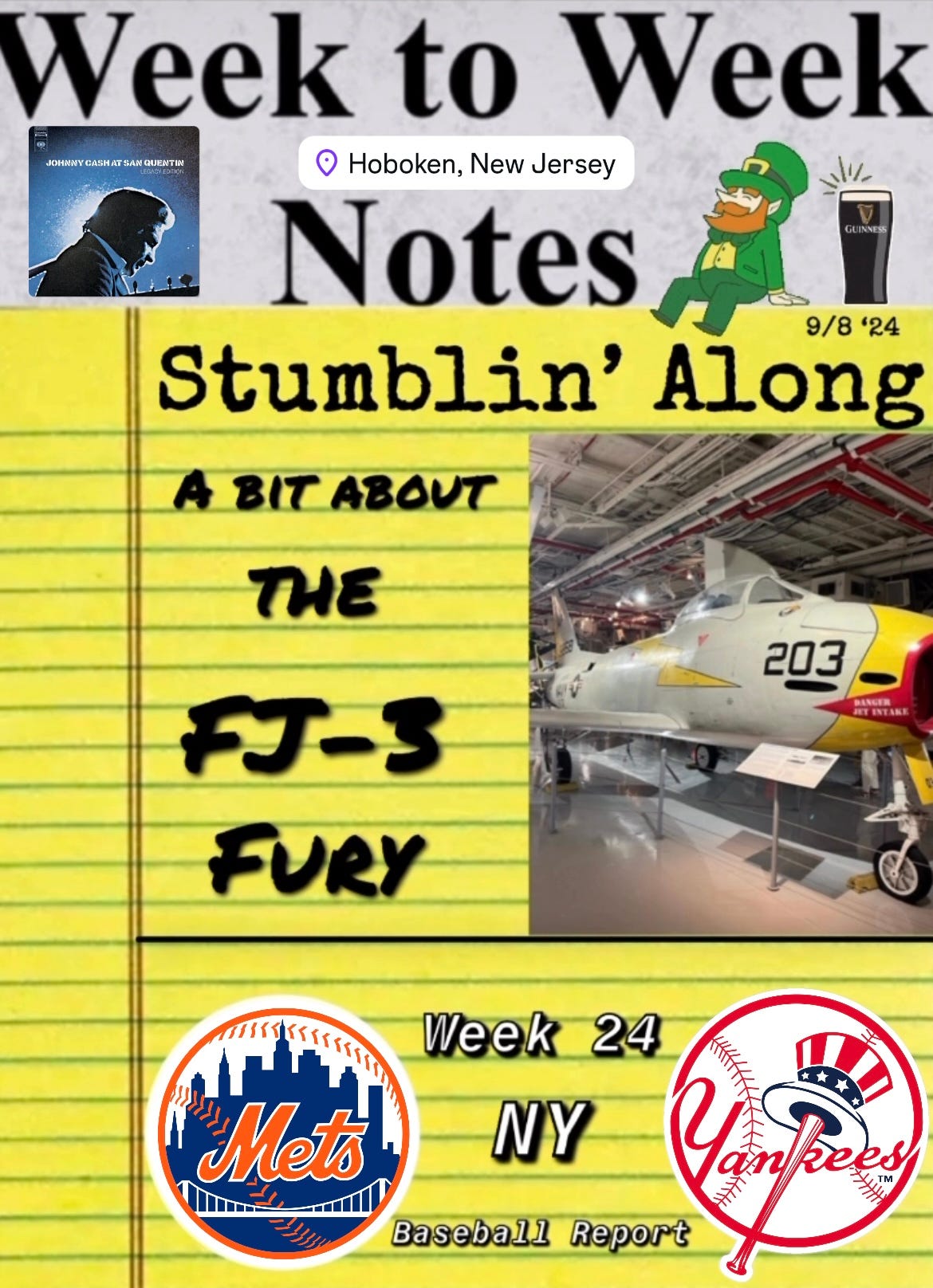
Stumblin' Along 9/8 '24
A Boy Named Sue

A Boy Named Sue
- FJ-3 Fury Plane
- NY Baseball Report Week 24
- YouTube Rabbithole
Alright @YouTheReader,
My dad’s birthday is tomorrow so I figured to go with a Johnny Cash tune that I heard quite a bit growing up. Today’s song is Cash’s A Boy Named Sue.
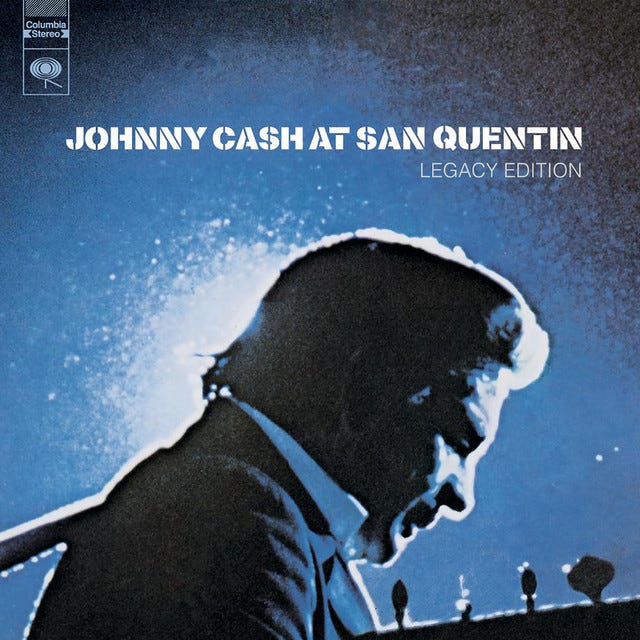
Shel Silverstein wrote the A Boy Named Sue and Johnny Cash made it famous by including it as a single on his live album At San Quentin. It peaked at #2 on the US Billboard Hot 100 in 1969. Silverstein had come up with the concept of the song thanks to his friend named Jean. His friend Jean Shepherd was also described as a writer/humorist, in fact he was the narrator voice for A Christmas Story. Great movie.
(Source: SongFacts)
The story of how Johnny Cash heard this song from Silverstein is pretty cool. According to Silverstein’s nephew Mitch Meyers it goes, “In those days in Nashville, and for all the people that would visit, the most fun that anyone really could have would be to go over to someone's house and play music. They would do what one would call a 'Guitar Pull,' where you grabbed a guitar and you played one of your new songs, then someone else next to you would grab it and do the same. There were usually people like Johnny Cash or Joni Mitchell, people of that caliber in the room.”
Johnny Cash’s wife, June Carter, heard Silverstein’s new song and thought it was right up Cash’s alley. When Cash left for San Quentin State Prison to record his new album with a live audience, Carter suggested he bring the lyrics. The first time Johnny Cash ever recorded A Boy Named Sue was while he was on stage.
“He had to read the lyrics off of the sheet of paper that was at the foot of the stage, and it was a hit. And it wasn't touched up, it wasn't produced or simulated. They just did it, and it stuck. And it rang. I would say that it would qualify in the realm of novelty, a novelty song. Shel had a knack for the humorous and the kind of subversive lyrics. But they also were so catchy that people could not resist them."
(Source: Carl Wiser interview with Mitch Meyers)
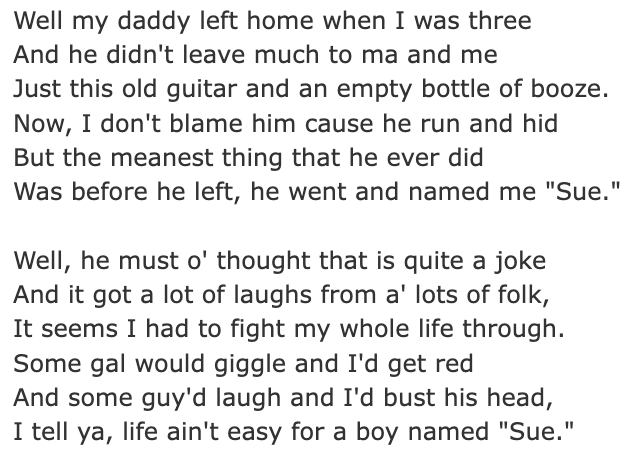
In case you’ve skipped over the lyrics, a father left his family and the last thing he did was name his son Sue. After getting picked on his whole life for having the name Sue, he finally confronts his dad at a bar which led to a fight on sight.
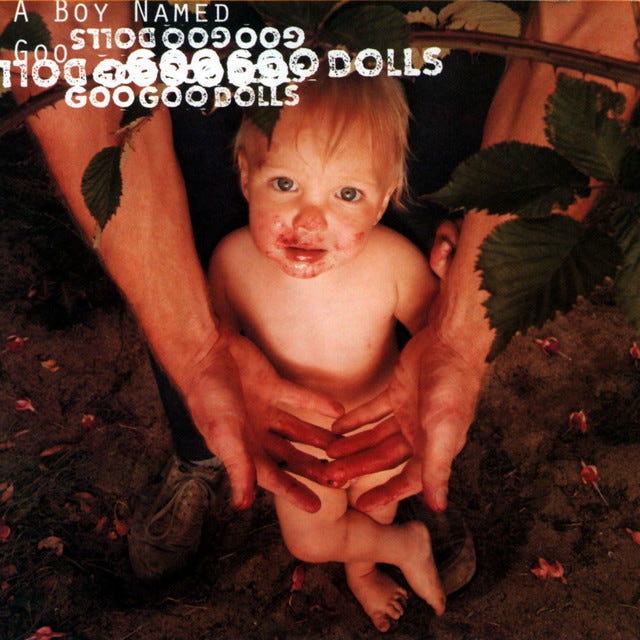
Sidenote: The Goo Goo Dolls named their album A Boy Named Goo as a play on A Boy Named Sue. It was the band’s breakthrough album which featured their first hit song, Name. Great tune.
While of course the father in this song is far from a good guy, there is somewhat of a redeeming quality here. He knew he wouldn’t be around so burdening his son with a name like Sue would make him grow up to be tough.
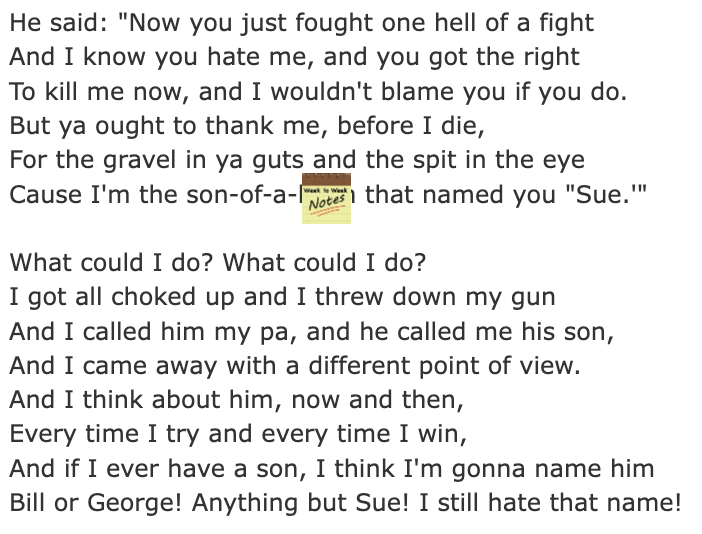
Great song and a funny ending.
On to a quick bit of history from my Stumblin’ Along The Intrepid Museum and then some local New York baseball…
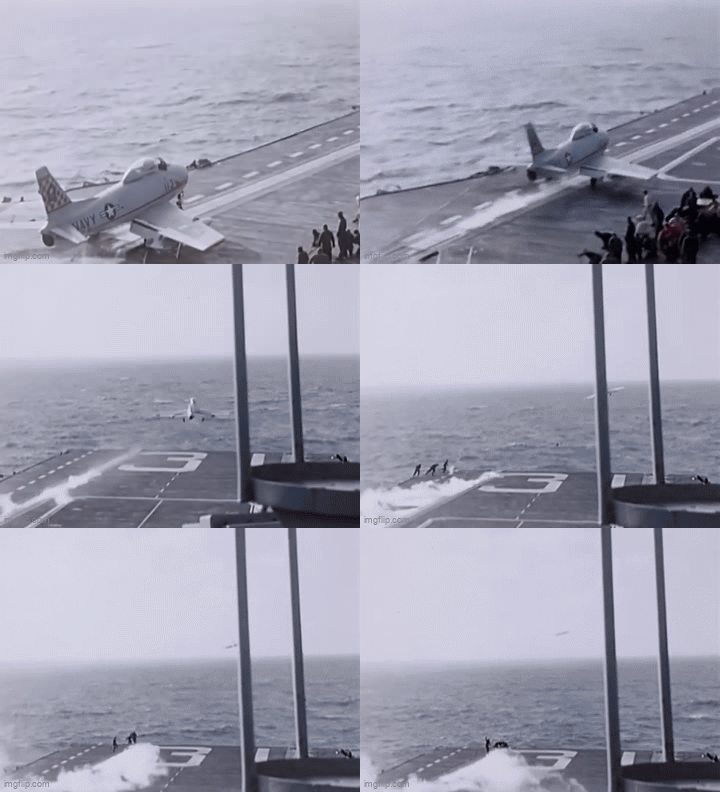
The FJ-3 Fury was built by the North American Aviation manufacturer. They had previously made other renditions of a similar jet fighter called the FJ-1 Fury for the US Navy during WWII in 1945. At the conclusion of the war, the North American Aviation engineers literally went back to the drawing board using data they captured from the German jets. Due to their limited use in WWII, the Fury series of jets became much more famous during the Korean War.

The FJ-3 Fury like the one at The Intrepid were equipped with leading-edge extensions on each wing and had an engine that was more powerful than their previous models. I’m no expert, but the leading-edge extensions seem to explain the flap movements you sometimes see on the wings of a passenger plane. These LEXs redirects air over the wing surface and improve airflow, which improves the handling of the plane. The updated wings enlarged the wing area and provided enough interior space that they could carry an extra 124 gallons of fuel. From 1954 to 1956, 538 FJ-3 Furies were built and they were used the US Navy, Marines, and Air Force from 1954 to 1962.

After the Korean War, between 1957 and 1960, several FJ-3s were modified to serve as drone controlled aircraft. These modified Furies were used in the testing program of the Vought Regulus missiles. The Regulus was an early type of cruise missile that carried a nuclear warhead. The FJ-3 Fury was used as the control aircraft during the testing of the pilotless Regulus. Essentially, the few Furies that worked with the Regulus were drone directors of the nuclear missile…How a pilot could manage to fly both a jet and a drone missile is beyond me so they must’ve modified the one-person cockpit into two.
(Source: Aircraft Info)
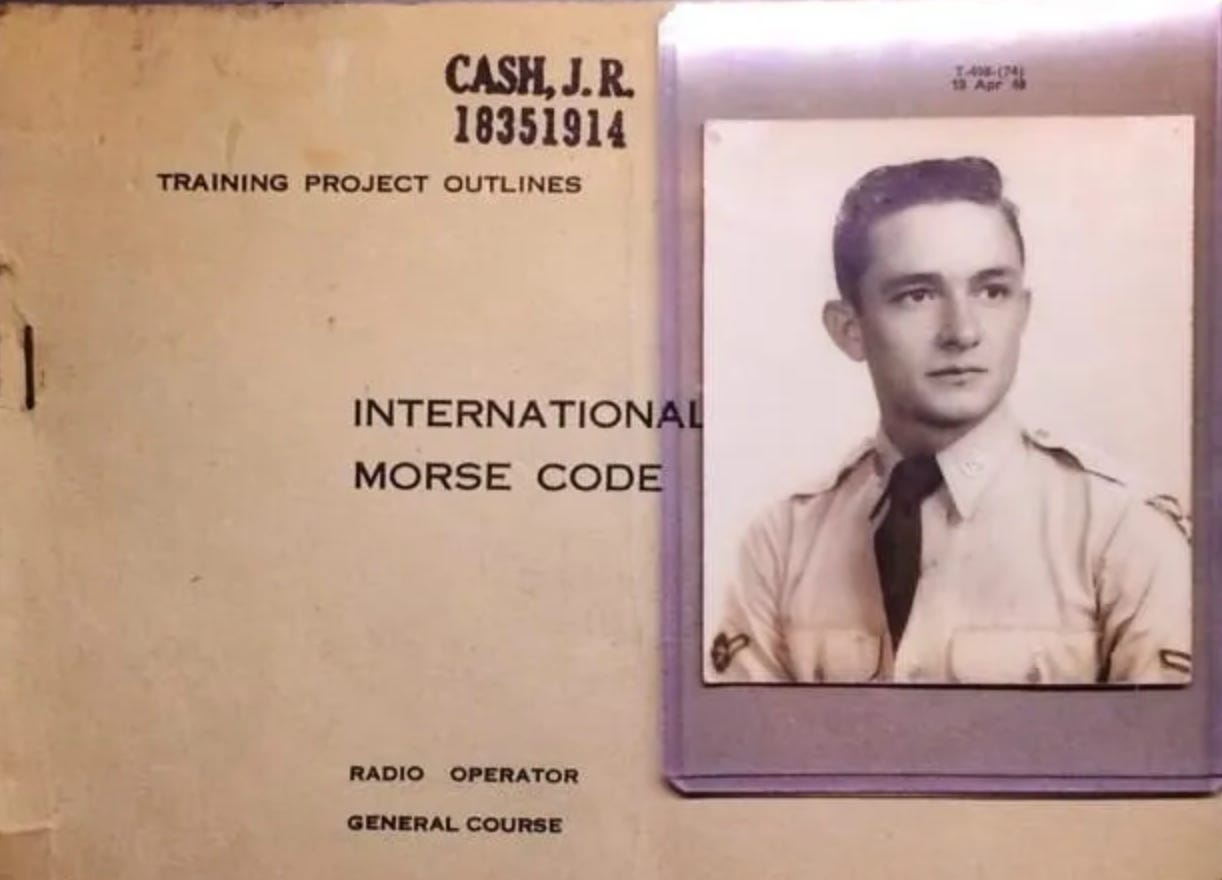
Now for some fun history to tie the Korean War jets with Johnny Cash, who once joked, "I spent 20 years in the Air Force from 1950 to 1954." While serving in the Air Force, Cash was not a pilot and he wasn’t in Korea. He was actually stationed in Landsberg, West Germany. On the front lines of the Cold War, Cash was a Morse code intercept operator. While the Soviet Union didn’t directly fight in the Korean War, they played a covert role of supply arms and training North Korea. Cash was assigned to listen in on Soviet communications and was under strict orders not to talk to anyone about his secretive position. On March 5, 1953, a lonely Johnny Cash manning his late night shift was a part of history as he decoded and the news of Joseph Stalin’s death. He was the first American to learn of the passing of the Soviet leader and stunned by the news he relayed his transcript it to his superiors, who then passed it along to President Eisenhower. His daughter, Rosanne, even confirmed the story…
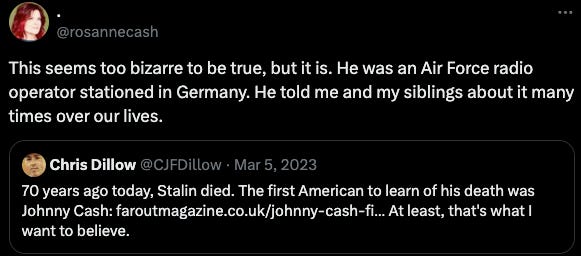
If Johnny Cash says he found out about Stalin’s death first, then your damn well sure he did. No questions asked.

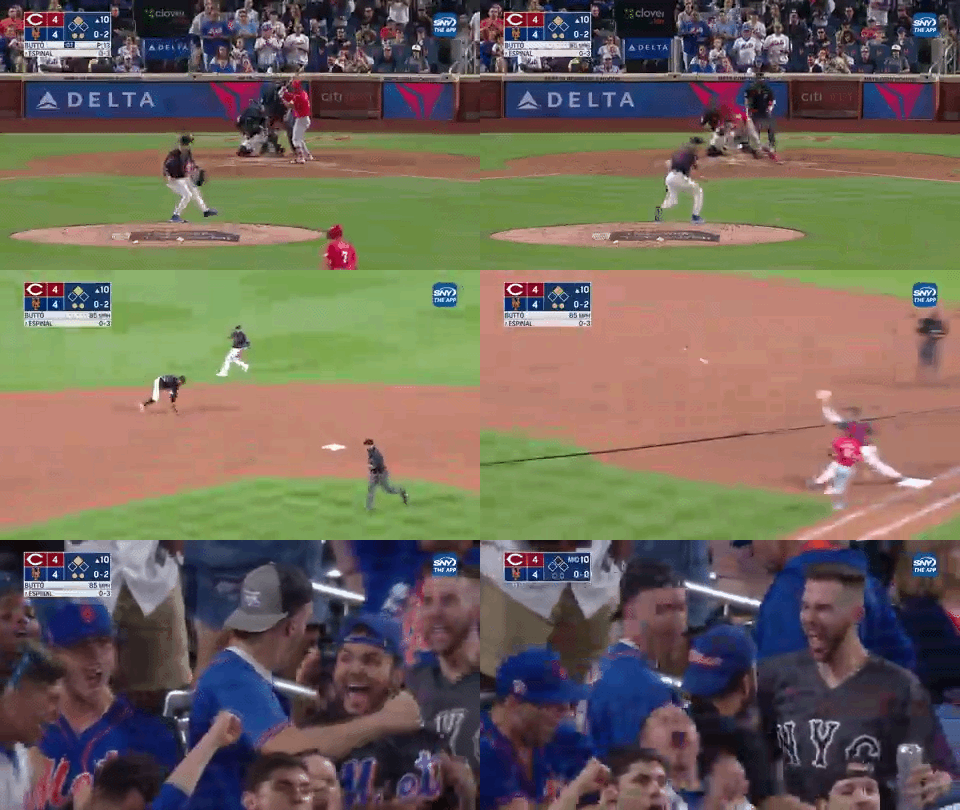
The New York Mets haven’t lost in over a week. At 78-64, they’ve positioned themselves into the 3rd Wild Card spot right ahead of the Atlanta Braves by a game. The Mets have eclipsed their Grimace 7-game winning-streak from June, as their 9-game winning steak heading into Sunday is their best this season. They are also only 2 games from their franchise-record of 11 wins in a row, which they’ve tied 5 times. Their most recent 11-game winning streak came on their ‘15 NL Pennant run season.
Speaking of streaks, SS Francisco Lindor just broke the Mets single-season on-base streak as he’s reached safely in 35 straight games. At 35 games in a row, the Mets leadoff hitter is now tied for 2nd-place with David Wright who did so from mid-September of ‘06 to the end of April in ‘07. The all-time longest on-base streak in Mets history is John Olerud’s 47-game streak which started on September 7, 1998 and finished the following season on May 8, 1999. The Mets shortstop leads the team in runs (100), RBIs (84), has the highest OBP (.342), and is 2nd in homers (30). The conversation around Francisco Lindor’s NL MVP chances have started to boil as many are saying Shohei Ohtani doesn’t play in the field and that’s half the game.
Game 136 (8/31)
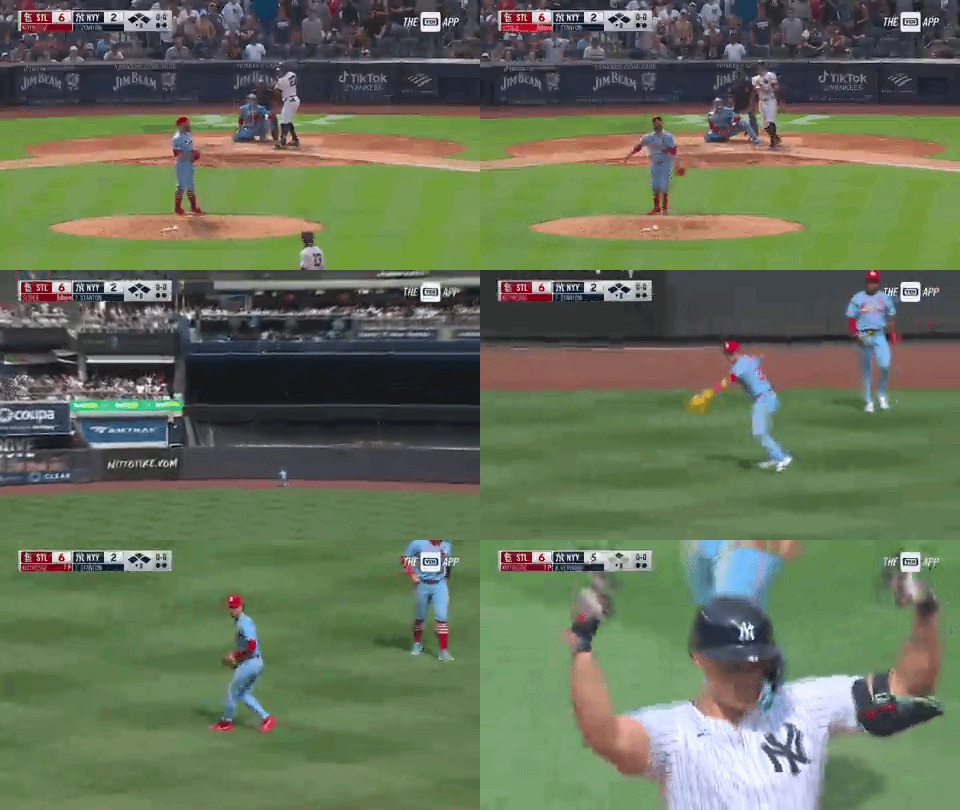
- Will Warren on the bump. I got the 3 TVs fired up with Penn State at West Virginia and Clemson vs Georgia. Austin Wells doubles in the 2nd and Anthony Volpe drives him in to make it 1-0 Yanks. Warren gets hit around pretty hard in the 3rd inning, allowing 4 runs. Mid-way through the game this one feels like yet another one where the Yankee bats show little fight. It’s not until the 8th inning where the lads get busy as Mike Stanton pinch hits with the bases loaded and nearly hits a grand slam. Instead his ball hit the CF wall for a double and 3 runs score which makes it a 1 -run game. In the 9th inning, Oswaldo Cabrera gets rung up on a pitch clock violation. Bull shit. Down to their last out, Juan Soto doubles and the Cardinals elect to intentionally walk Aaron Judge, but Austin Wells strikes out as the Yanks lose 6-5.
Game 137 (9/1)
- Every team in the MLB is wearing a Yello Ribbon pinned to their jersey for the start of Childhood Cancer Awareness Month. Anthony Rizzo is back in the Yankee lineup after missing a couple months with a fractured arm. Relief pitchers Ron Marinaccio and Scott Effross are also back on the Big League club. In the 2nd inning, Mike Stanton hits a friggin laser for a homer. Later in the 2nd, Jazz Chisolm doubles and then steals 3rd base while the pitcher isn’t paying attention. The throw to 3rd sails past the 3rd baseman, which leads to a cool Jazz slide at home plate. Unfortunately for the Yanks, Nestor Cortes didn’t have his nasty stuff as he allows 5 runs in 4 innings. The Yanks show a bit of fight in the 5th with a 3-run rally, but the St. Louis bats erupted for 14 runs. Yanks showed a little bit of life but ultimately lose 14-7 as they drop their home series to the Cardinals.

Game 138 (9/2)
- The Yankees are down in Texas against the reigning World Series Champions. The Yankees are facing off against Jack Leiter, the son of Al Leiter (former Mets ace and Yankee) and cousin of RP Mark Leiter Jr. Jack Leiter also went to high school at Delbarton in Morristown, NJ with Anthony Volpe. Gerrit Cole gets in and out of some 1st inning trouble without allowing a run. Gleyber Torees gets the scoring going with a 2-run double in the 3rd inning. The bats get another rally going in the 6th inning headlined by an Aaron Judge 2-run double down the line and an Anthony Rizzo ground-rule double with the bases loaded. Yankee fans start fearing the worst when Gerrit Cole decides to take himself out of the game in the 7th inning. Fortunately it turns out to just being a calf cramp. To cap off the night, Mike Stanton hits a deep drive to dead center, his 25th homer of the season. Yanks win 8-4.

Game 139 (9/3)
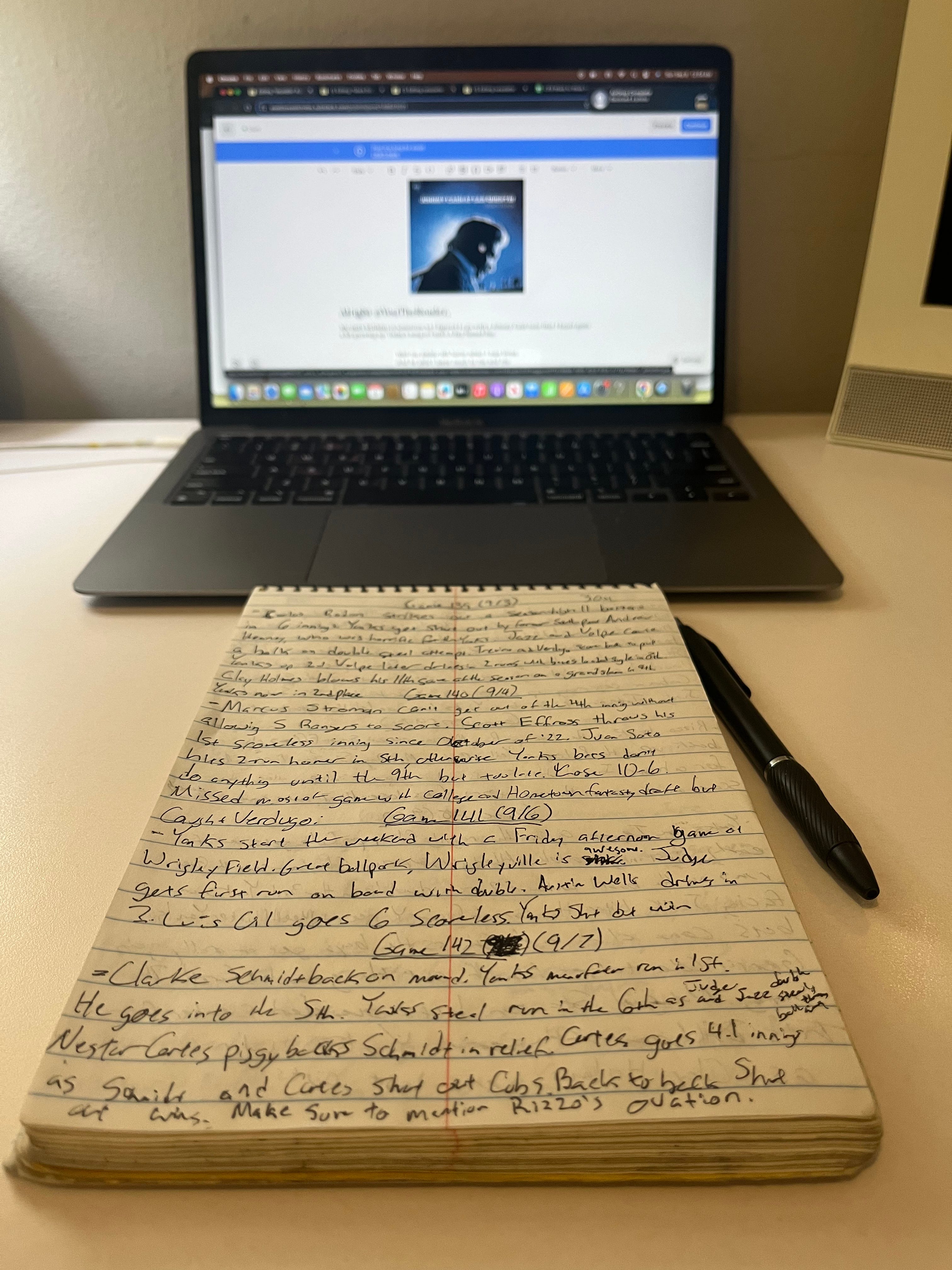
- Carlos Rodon goes 6 strong innings as he strikes out a season-high 11 batters. The bats get shut down by former Yankee pitcher Andrew Heaney, who was absolutely terrible in his few months with the team (7.32 ERA). Yanks don’t score until Heaney is relieved as Jazz and Volpe single. Their speed then forces the pitcher to balk as they attempt at a double-steal. Jose Trevino brings in Jazz on a fielder’s choice while Alex Verdugo plates Volpe on a single. Anthony Volpe then gets back in on the action in the 8th inning as he hits 2-run bases loaded single to put the Yanks up 4-1. To start the bottom half of the 8th, DJLM can’t come up with an easy chopper at 1st base which leads to Rangers cutting the lead to 4-3. It may not have mattered anyway as Closer Clay Holmes comes into the 9th and proceeds to allow a walk-off grand-slam. Yanks lose 7-4 and are now in 2nd place in the American League East.

Game 140 (9/4)
- After a brutal loss, Marcus Stroman can’t get out of the 4th inning as he allows 5 runs on 9 hits. Down 5-0, Juan Soto hits a 2-run in the 5th. Random Yankee lefty reliever who had an 8.03 ERA with the Toronto Blue Jays this season, Tim Mayza, then allows 3 runs in the 6th. Down 10-2, Yankee bats don’t do anything until 2 outs in the 9th inning when Trent Grisham hits a grand slam. Duke Ellis then extends the night with a single and Jazz Chisholm reaches on an infield hit. With the tying run on deck, Mike Stanton gets robbed of a home run to end the game. Aside from the late inning tease, the only other positive takeaway from game was Scott Effross pitching his 1st scoreless inning of relief since October of ‘22. Yanks lose 10-6.

Game 141 (9/6)
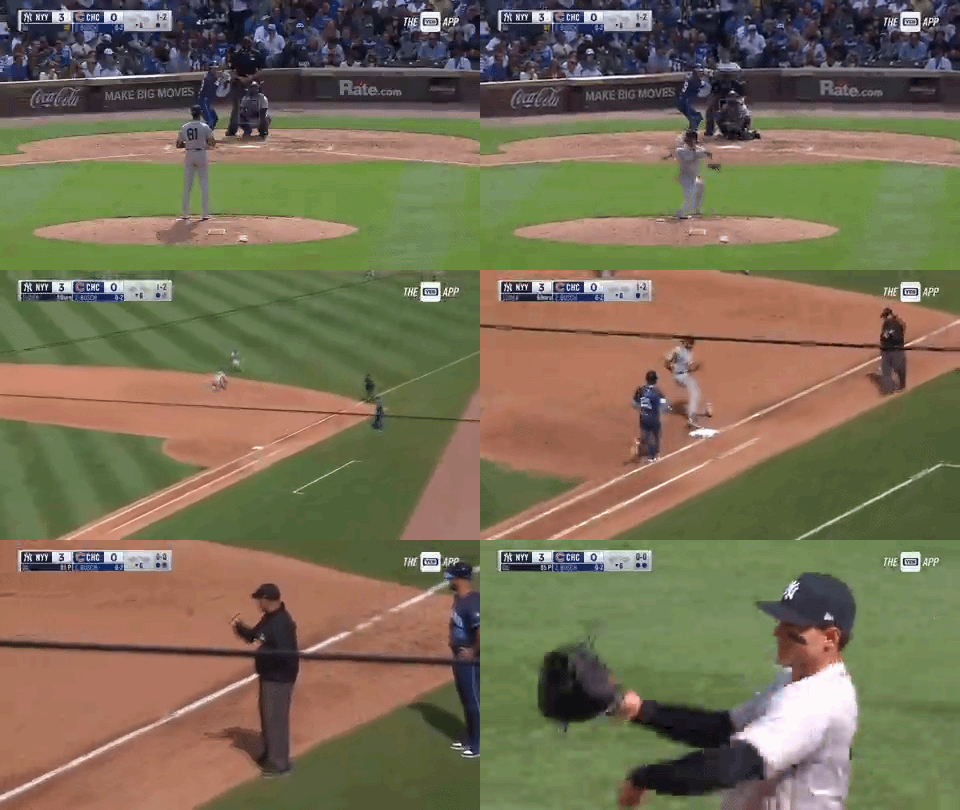
- The Yankees travel to the Windy City for 3 straight afternoon games at Wrigley Field. Great ballpark, Wrigleyville is awesome. Aaron Judge drives the first run of the series in with a double in the 3rd. Austin Wells then follows that up by scoring Soto and Judge on an opposite field single. Luis Gil pitches fantastic as he goes 6 scoreless innings of no-run ball. Jake Cousins, Tommy Kahnle, and Luke Weaver also throw an inning of scoreless ball each as Weaver picks up his 1st career save. Yanks win 3-0.
Game 142 (9/7)
- Clarke Schmidt is back on the mound for the first time since May 26th. The Yankees manufacture a run for him in the 1st inning as Schmidt pitches 4 & 2-thirds without allowing a run. The Yanks steal another run in the 6th inning as Judge and Jazz double steal which forces an errant throw. Nestor Cortes piggybacks Schmidt in relief as the southpaw goes 4 & 1-third of no-run ball. With Schmidt and Cortes’ effort, the Yanks shut out the Cubs for the 2nd straight game. The Bronx Bombers are now 82-60 on the season. With 20 games left to play, the Yankees are a half-game ahead of the Baltimore Orioles for 1st Place in the AL East.