Stumblin' Along 8/11 '24
Fortnight

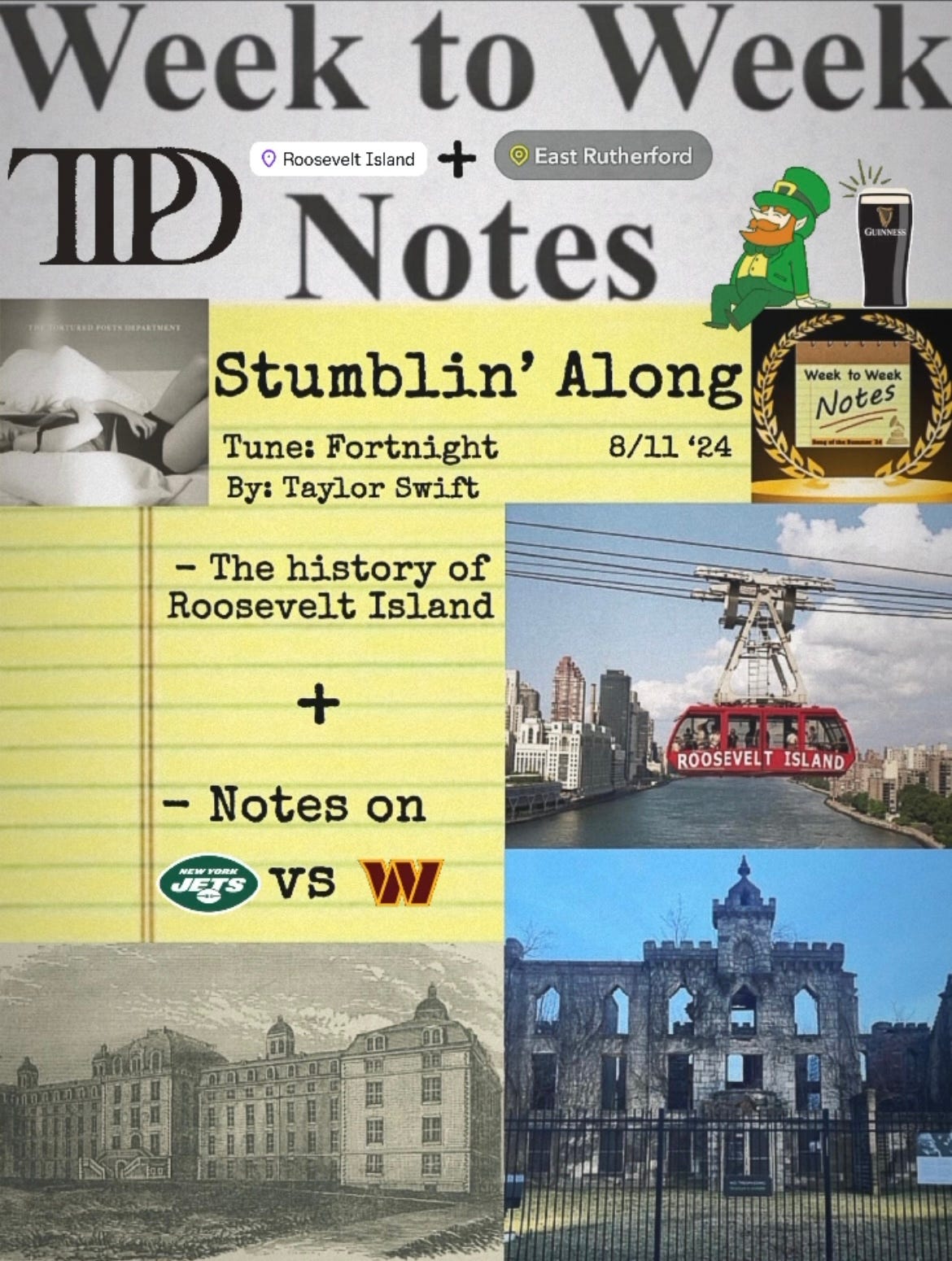
Fortnight
- Roosevelt Island
- Jets vs Washington
- YouTube Rabbithole
Alright @YouTheReader,
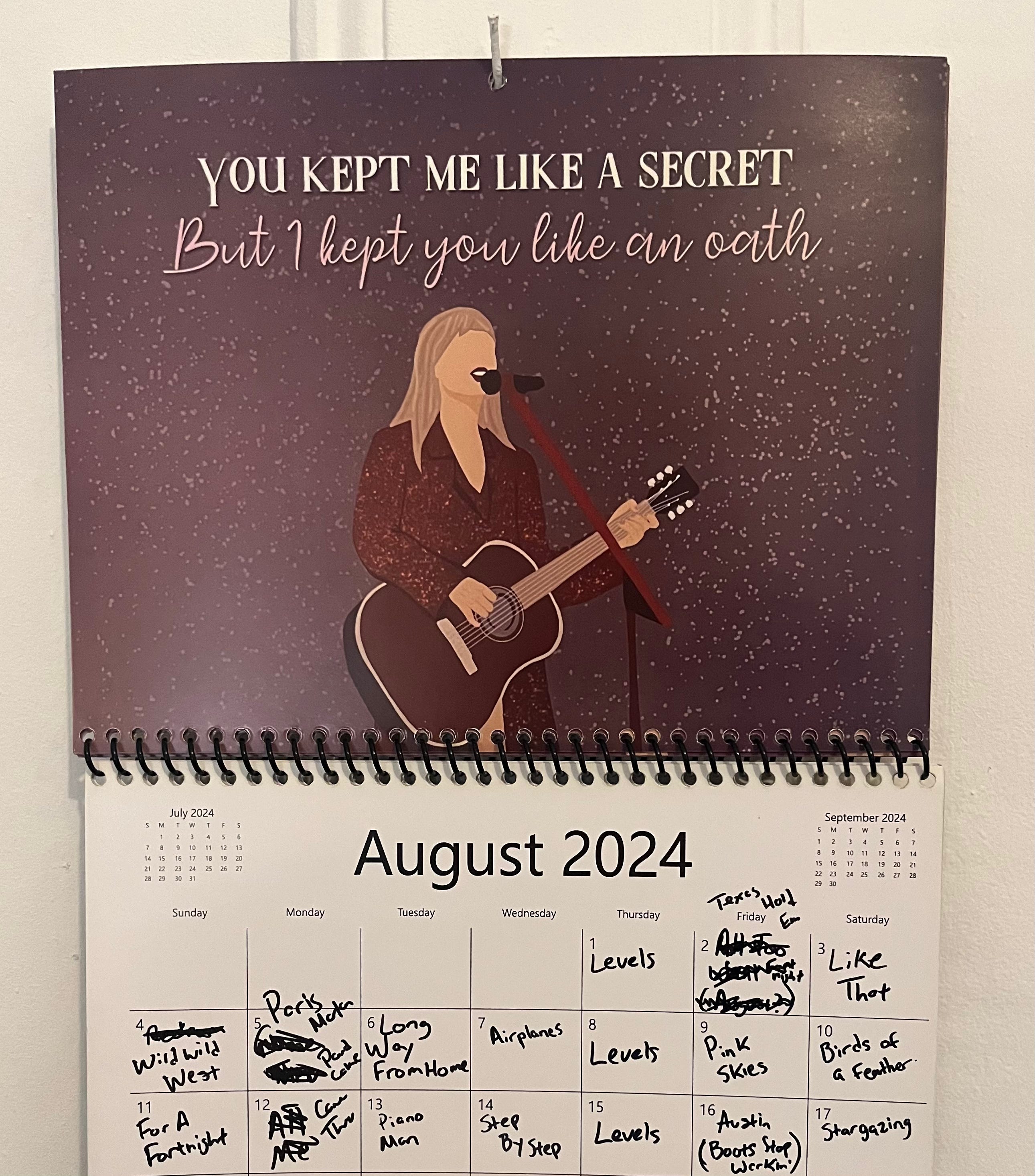
Right out the gate, the Taylor Swift oracle calendar my mother gifted me for Christmas had All Too Well as this month’s song. Full disclosure, I don’t think Week to Week Notes has earned the right to dissect the lyrics to such a ten-minute tune just yet.
Thus today’s tune is Taylor Swift’s Fortnight…

Jeez, more gloomy lyrics to start. I’ll try my best to lighten the mood…

OMG Taylor, same girl. Who knew me and Taylor Swift had so much in common?

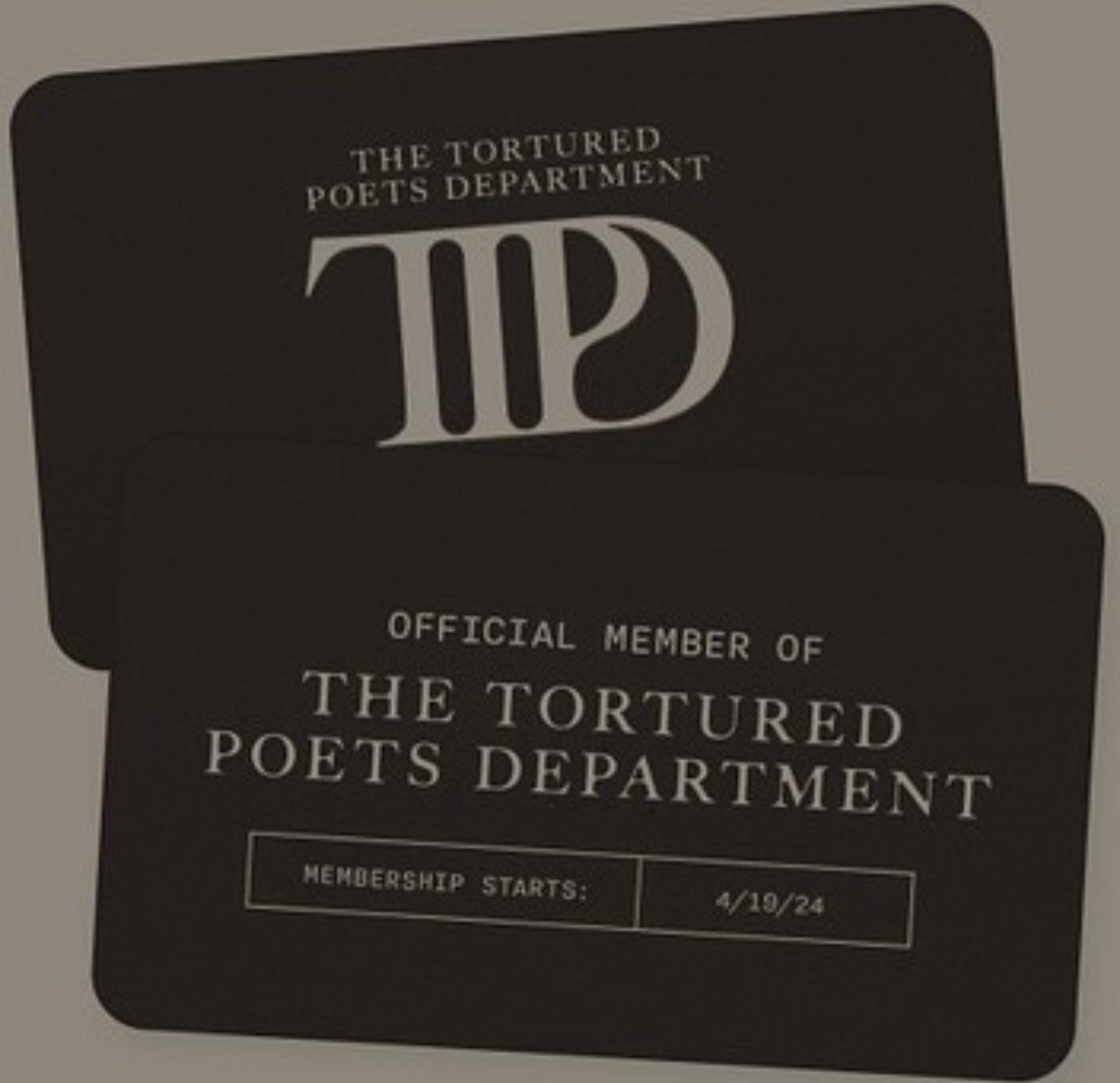
Spoken like a true tortured poet, I’m still in awe at the fact she sent me membership via Spotify.

A fortnight is 2 weeks so this sounds like a fling. Now she and the subject in question are only neighborly, chatting about casual things like the weather. “To water flowers” could mean to accept praise when someone gives you your flowers or it could be to tend to responsibilities. Being that Taylor just admitted she’s been on the booze, she sounds jealous that the subject’s wife tends to his needs in ways she couldn’t.

Sidenote: How do you think Taylor cures her hangovers? I’ve been on a coconut water with zero-sugar Pedialyte kick lately. Coconut water alone can taste vile so you throw some flavored electrolytes in there and it’s a do-it-yourself Body Armor.


Wow, we’re not in Kansas City anymore and she’s come a long way from the Teardrops On My Guitar days.
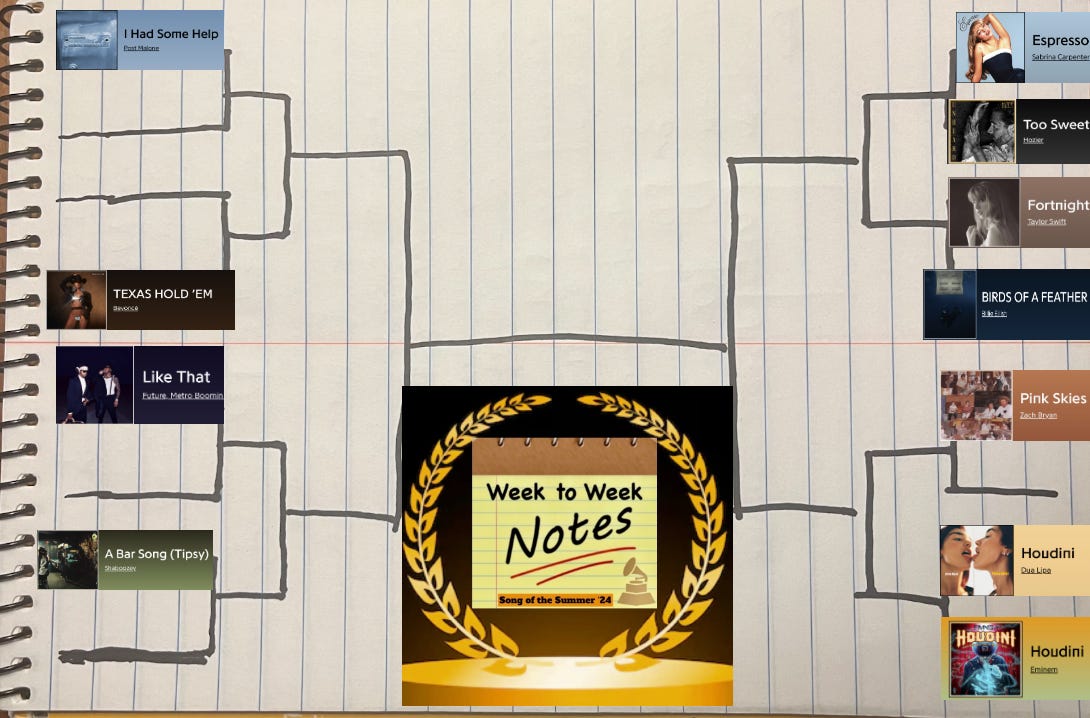
One would expect the Billies vs Swifties 1st Round matchup for Song of the Summer will be highly anticipated.
Lastly, this is all fun and games; but in regards to the scary situations surrounding Taylor Swift and her fans, it’s beyond despicable that women and children are targets. The only way to combat that kind of hate is through resolve. Hopefully, with added safety measures and heightened awareness, she can resume her tour as soon as possible.
On to Stumblin’ Along…
Roosevelt Island
This past January I took a trip to Roosevelt Island for some pints of Guinness. After tending to some on-the-ground journalism, the only bar that serves a proper pint over there is Granny Annie’s Bar (@grannyanniesbarandkitchen). To get there, you can take the Roosevelt Island Tramway over the East River. Check out PPP Week 78 (Vol I) for the bar's review.
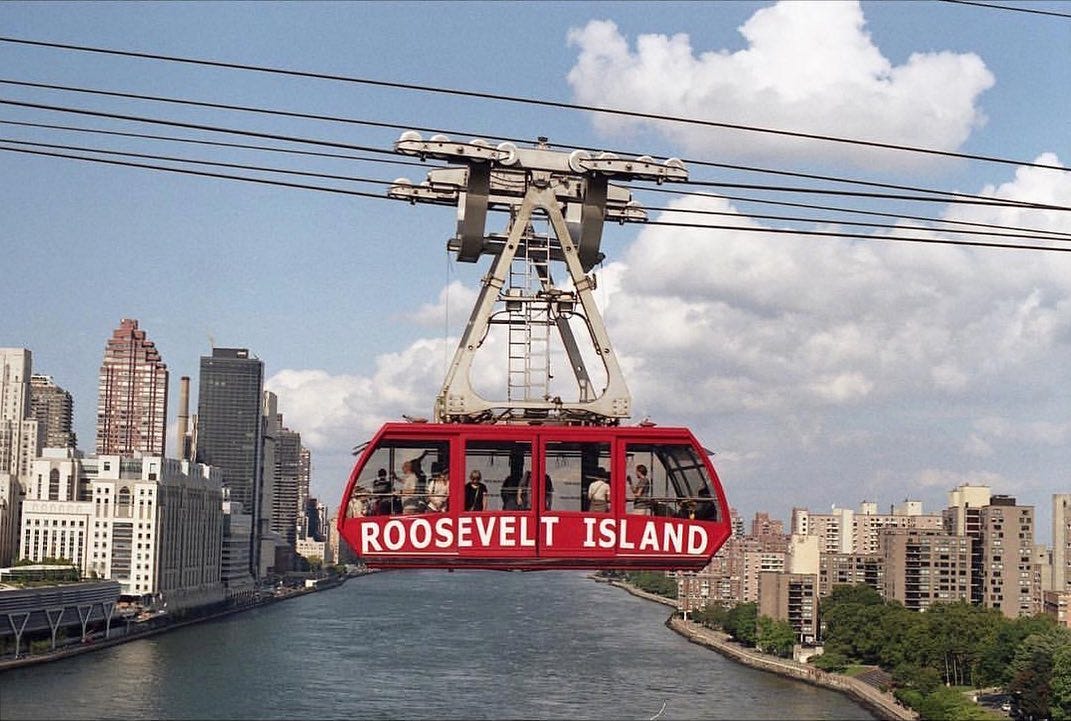
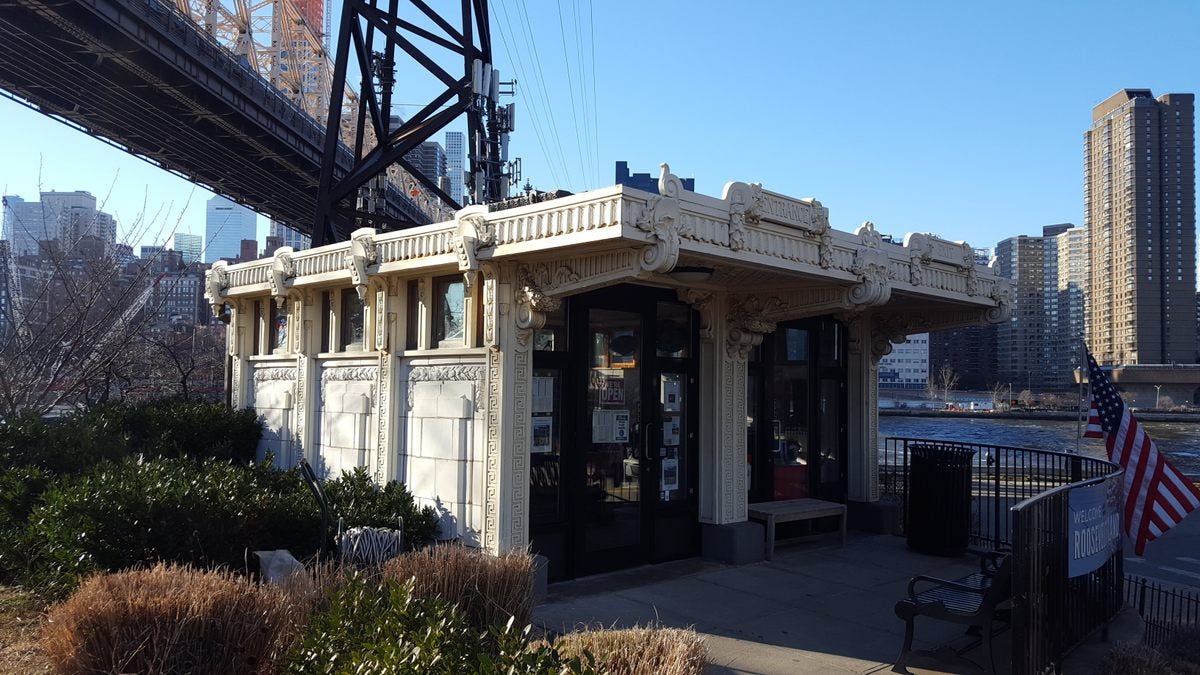
The kiosk the Roosevelt Island Tram takes you to was built in 1909. The staircases located by the kiosk used to lead to a 9-story elevator to the Queenboro Bridge, which was originally built for trolleys instead of cars. The trolley system service ended in 1957 and wasn’t replaced with the Roosevelt Island Tram until 1976. The tram was only supposed to be temporary while The City worked on the subway, but it became popular with a nice 2-minute view of Manhattan. The Beaux-Arts kiosk is now used as an informative tourist gift shop.
The island was orignally called Minnahannock and it was Lenape land until the Dutch bought it to be a part of New Amsetedam in 1637. Once the Dutch lost New Amsterdam to the British, a military officer by the name of John Manning owned it. Under Manning’s control, the island was known for it’s “Bowl of Rum-Punch” entertainment. Officer Manning had a daughter named Mary, who got married to a Robert Blackwell, and thus the Blackwell Island name stuck for nearly 2 centuries. The land was purchased by New York City in 1828.
(Source: Landmarks Preservation Commission)
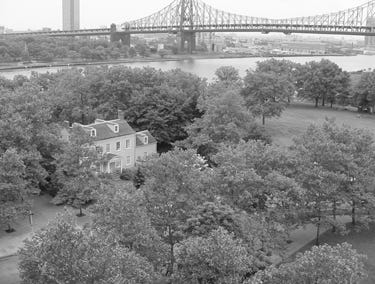
The island was briefly under British control during the Battle of Long Island in the American Revolution. The British used the island for American prisoners of war. After the war, James and Jacob Blackwell were looking to sell the 107 acres of land. James Blackwell ran an advertisement that it “was about four miles from the city” and it had “two small Dwelling Houses, a Barn, Bake, and Fowl House, a Cyder Mill, a large orchard, stone quarries and running springs.” Nobody was interested in purchasing it so in 1796 the Blackwell family built a house. Blackwell House is still standing today, it’s one of the oldest buildings in NYC.
(Source: Roosevelt Island Historical Society)
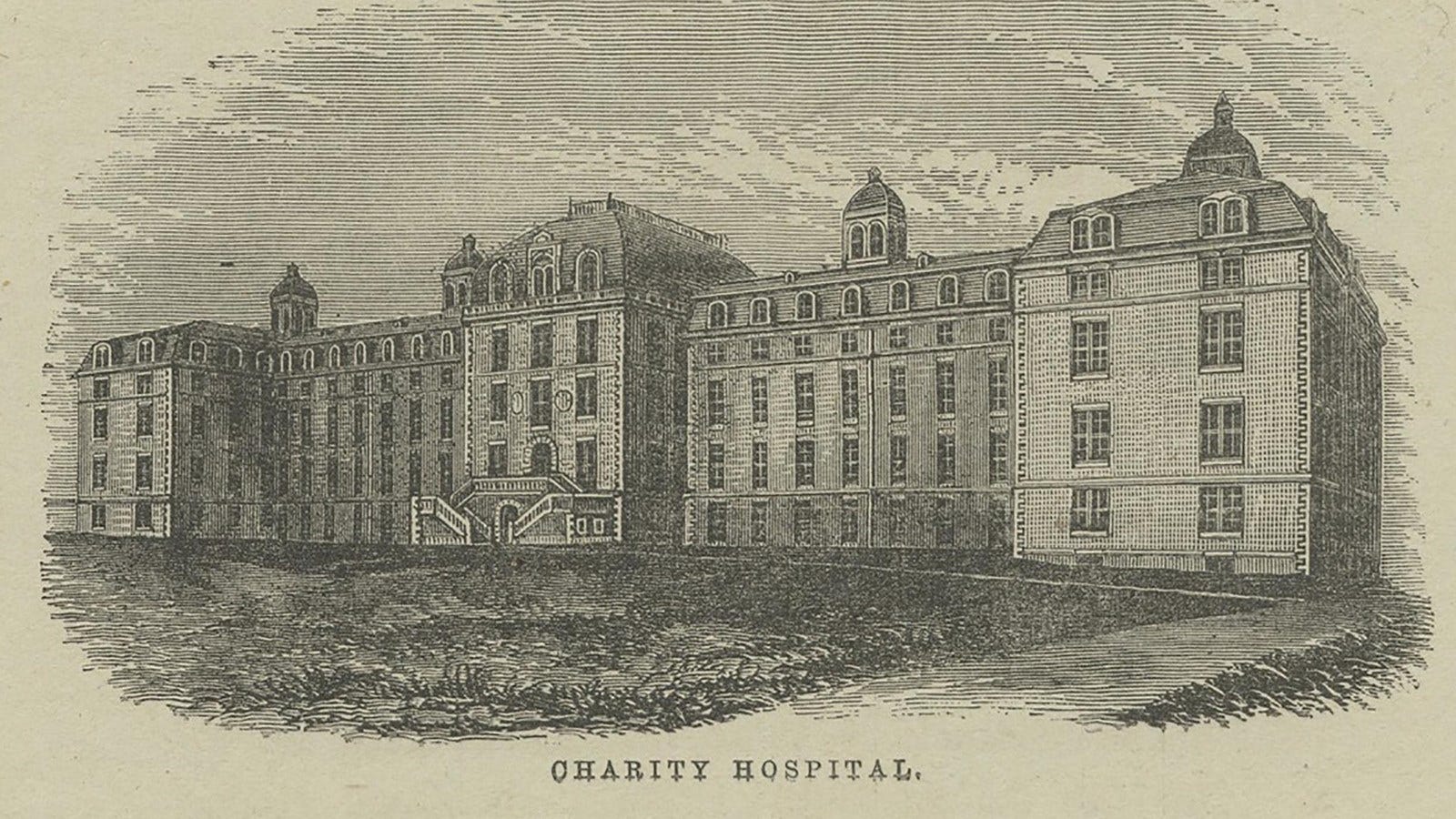
As soon as New York City purchased the land, they decided it would be best used for as institutional development rather than industrial or residential real estate. In 1832, a penitentiary was built on the island. It’s purpose was to physically isolate prisoners from the city and from the mainland. Prisoners weren’t the only ones held at Blackwell Island as it also served as an almshouse (charitable building for people in need) and it had a hospital for “incurables.” The incurables in this instance were people with chronic or severe mental or physical disabilties. Throughout the 19th century, wards and heads of the institutions would stay at the Blackwell House.
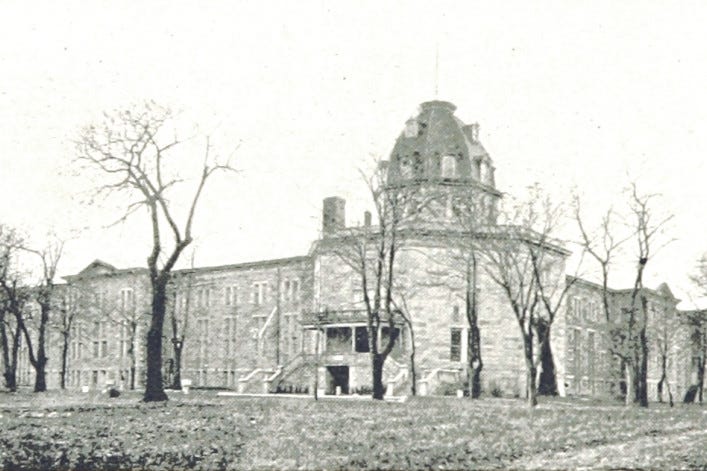
In 1839, the New York City Lunatic Asylum was opened on the northern end of Blackwell’s Island. It was the first of it’s kind in The City. The building itself, The Octagon, was made of granite mined from the island. Before it’s opening, patients were sent to Bellvue Hosptial in Manhattan, where it was overcrowded and underfunded. When they established the NYCLA, patients had more space for physical activities and therapeutic treatments; however, it soon became overcrowded and underfunded. In 1842, Charles Dickens, the British writer who wrote famous novels like A Christmas Carol and Oliver Twist, visited the US of A. Dickens went on a tour to the island, calling the building itself “elelgant” but “everything [at the Asylum] had a lounging, listless, madhouse air which was very painful.” One could only imagine the stories that went on in a New York City asylum in the 1800s. Although much of the New York City Lunatic Asylum would be destroyed, the Octagon Tower, still stands. They built 2 high-rise aparment buildings around it as it houses much of the 14,000 residents who live on Roosvelt Island today. The Octagon was originally designed by Alexander Jackson Davis… no relation if you’re wondering.
(Source: RIHS)
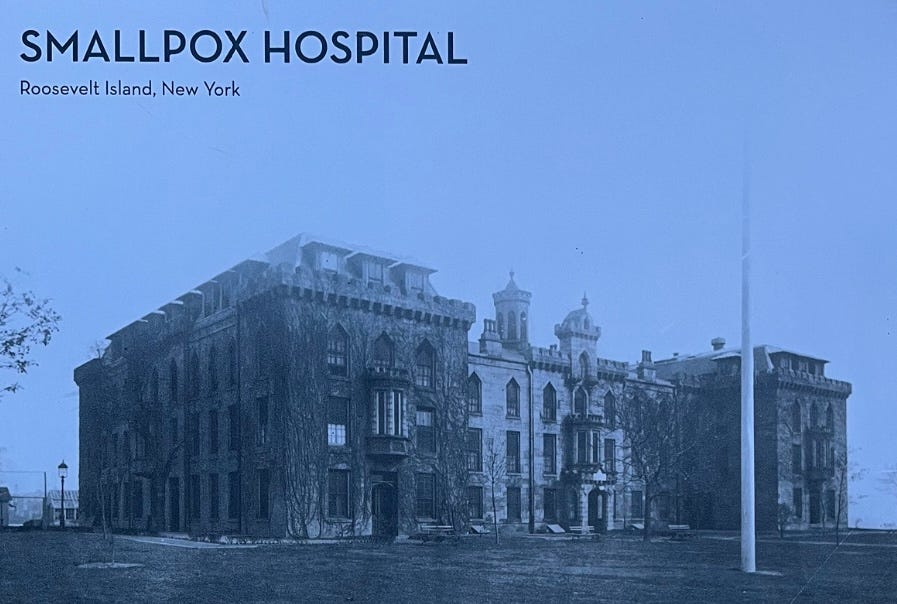
One of the “incurbale” diseases that sent people to Blackwell Island was smallpox. The origins of smallpox are unknown because smallpox-like rashes could be found on Egyptian mummies from 3,000 years ago. The earliest writings of the disease come from China in the 4th Century and India in the 7th Century. Historians claim it started spreading to Europe in the 11th Century due to the Crusades. The Europeans then spread it to Africa in the 16th Century and when Europeans started settling in America in the 17th Century, it ravaged the Native American population. On average, 3 out of every 10 people who got smallpox died. Those who didn’t die, survived with severe scars from the fevers and rashes. The English doctor, Edward Jenner, is credited for creating the chain to the smallpox vaccine. In 1796, he noticed that milkmaids who had been exposed to cowpox were protected from smallpox. He tested out his theory out on one of his gardners son’s 8-year-old named James Phipps. Jenner injected Phipps with material from a cowpox sore and then later exposed him to smallpox. The boy never developed smallpox and when he grew up Jenner gave him some of his land for the achievement.
(Source: CDC)
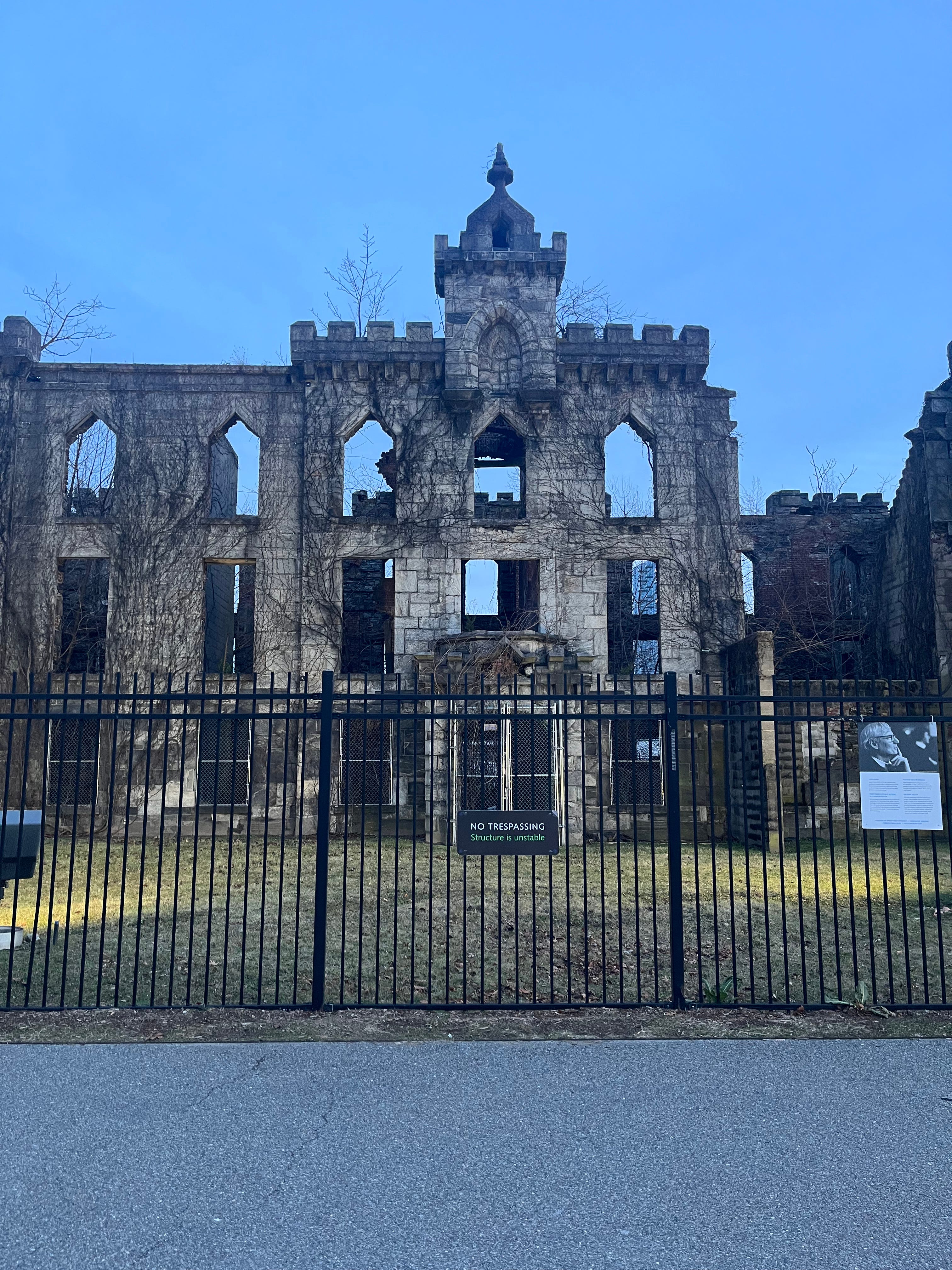
Half a century after Edward Jenner’s findings, the United States and much of the world was still dealing with smallpox. New York City decided to build and open The Smallpox Hospital a week before Christmas in 1856. They again spent good amount of time, effort, and money on the architecture of the Gothic Revival structure as it was designed by American architect James Renwick Jr. The Smallpox Hospital on Blackwell Island was the first hospital in the country dedicated strictly to the highly contagious and deadly viral disease. As smallpox began to eradicate, the hospital was renamed to Riverside Hospital in 1875, before being converted to the Home for Nurses of the Maternity and Charity Hospital Training School in 1886. The original building would have wings expanded for classrooms and dorms. In the 1950s, the nursing school closed and the building would become abandoned. Today the granite structure still stands as a shell of itself and it is even moreso creepy to look at in person. That said, still kinda cool from a historical perspective.
(Source: The Ruin)
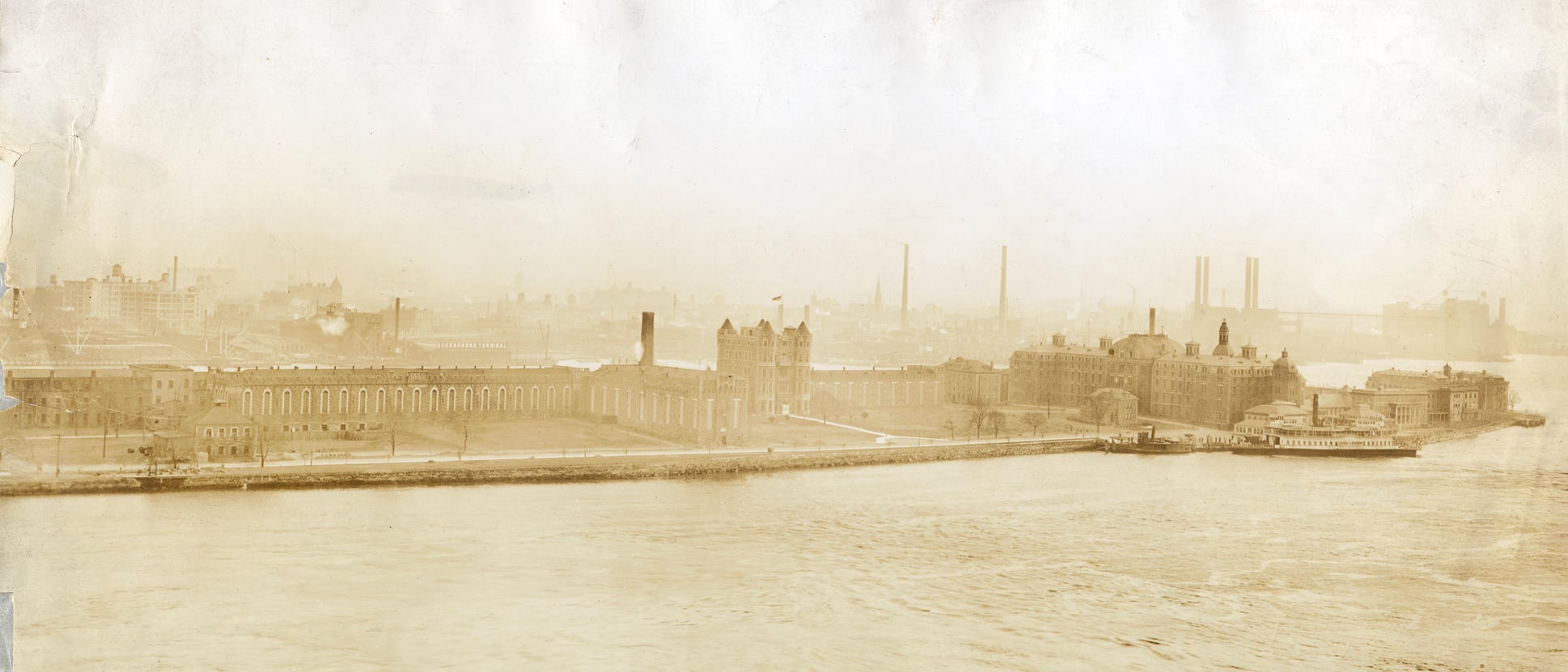
The last of the asylum patients on Blackwell’s Island were moved to other hospital in the early 1900s. Inmates also were booted off the island once Rikers Island was established in 1936. The island itself would be renamed Welfare Island in 1921, probably for some public relations purposes. As more and more of the institutions on the island started to leave, New York City, in partnership with New York State Urban Development Corportation, saw the land as an opportunity to redevelop it into affordable housing. In 1969, NYC leased the land to UDC for 99 years.
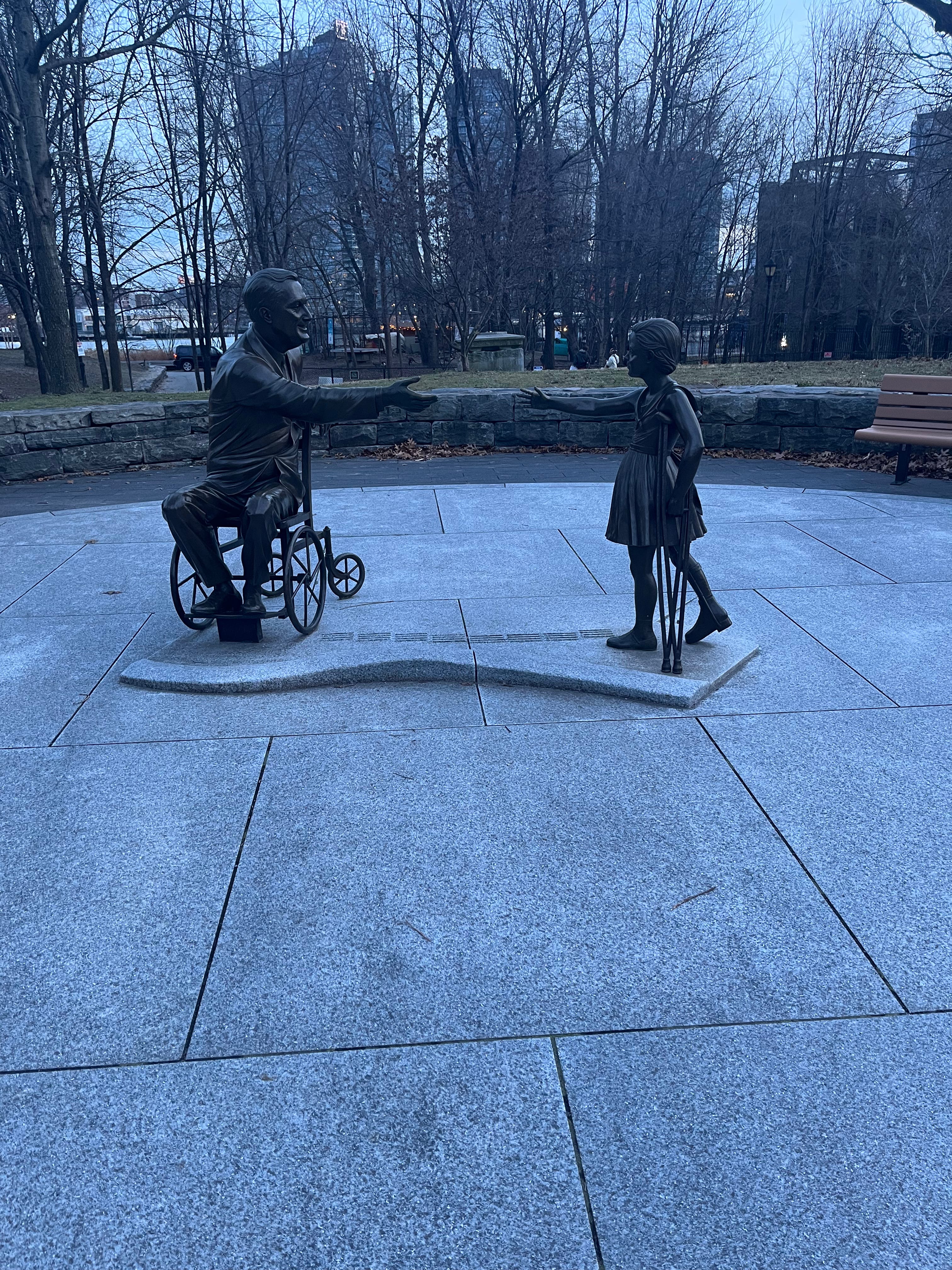
The island finally got it’s current name, Roosevelt Island, in 1973 thanks to the Four Freedoms Foundation. President Franklin D. Roosevelt lived with polio his whole life and thus the name change was a way to honor the disability history associated with the island.
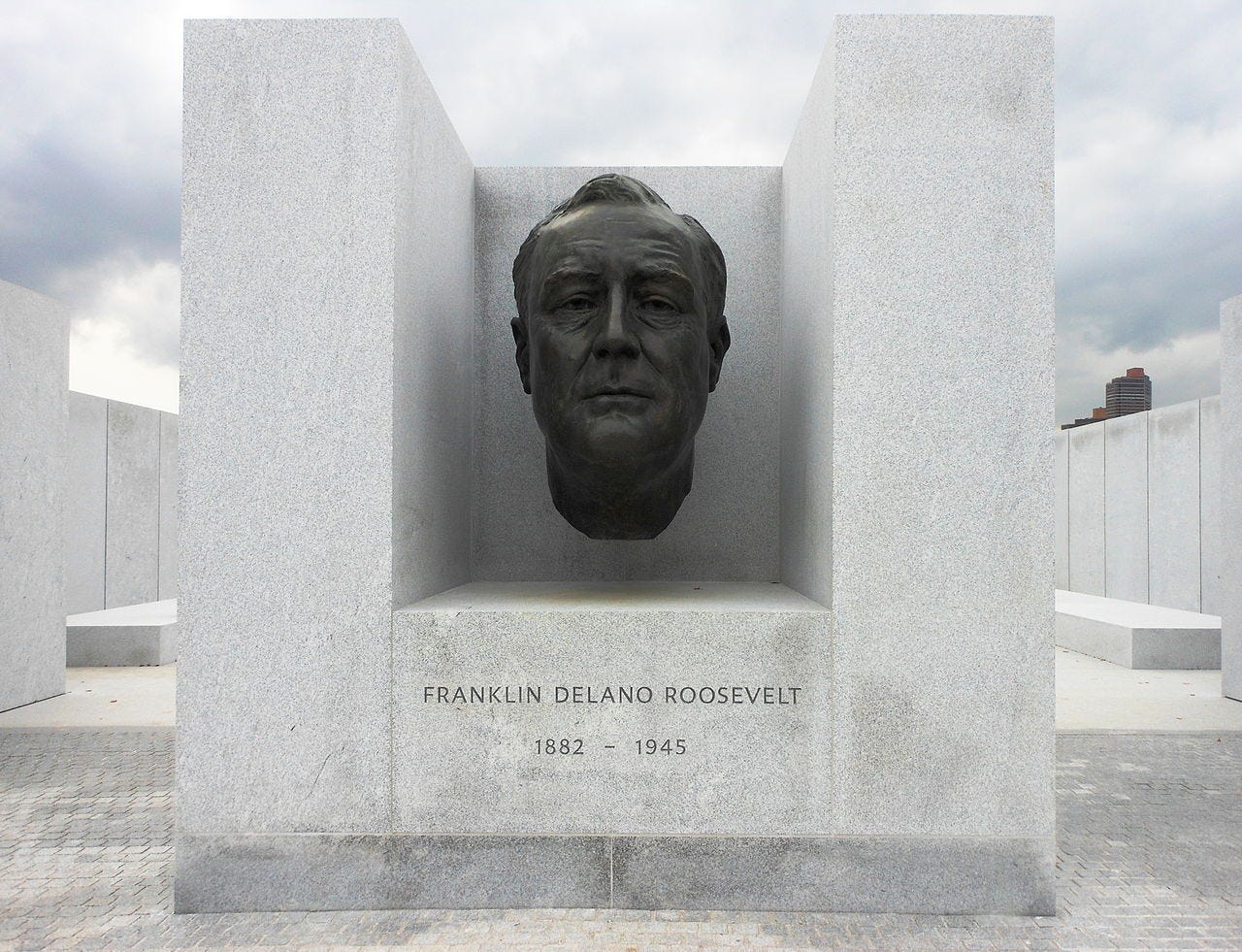
On Roosevelt Island is the Four Freedoms Park dedicated to FDR. I didn’t get to check it out because it was turning into dusk, thus more on FDR at a later date when I find the time to ride the Roosevelt Tram again.
Now to some sports…
Jets vs Commanders
Preseason Week 1
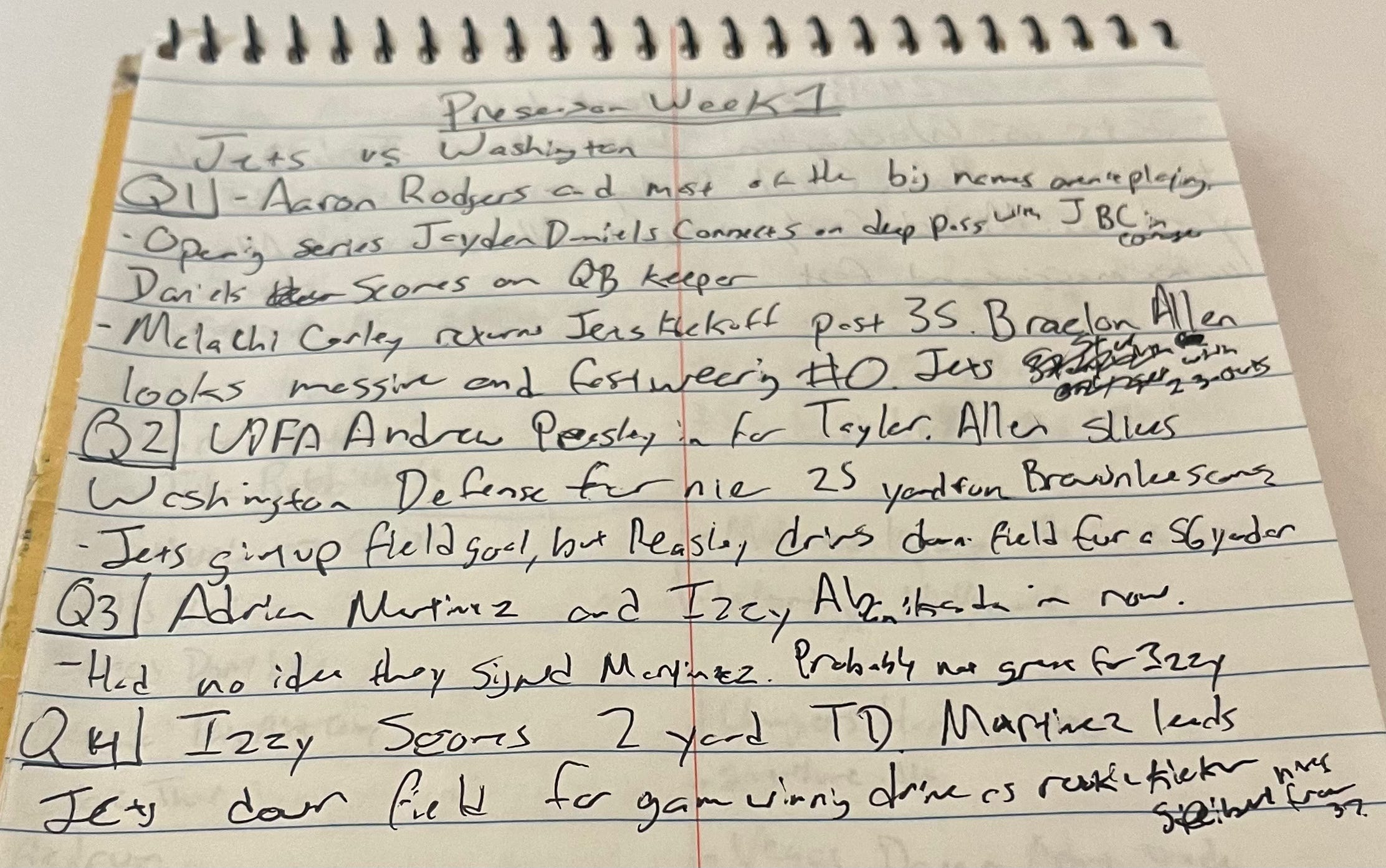
Notes In Case You Can’t Read the Scribble…
Quarter 1
- Aaron Rodgers and most of the big names are sitting out in the opening preseason game.
- Opening series, Commanders rookie QB Jayden Daniels hits Dayami Brown deep with Jarrick Bernard-Converse in coverage. Not bad coverage by the 2nd year 6th rounder out of LSU, nice catch by Brown and good throw. Jayden Daniels eventually gets Washington to the goal line where he scores on a QB keeper option play.
- Rookie WR Malachi Corley returns the Jets kickoff past the 35. He might be a weapon with the new rules. With Tyrod Taylor in at QB, Jets go 3-n-out on first 2 possessions, but rookie RB Braelon Allen looks massive and fast sporting #0.
- Jets UDFA DT Leonard Taylor has a nice TFL to end 1st Quarter. Recurited as a 5 star prospect, he didn’t have great production at Miami, but may have the tools to be coached up.
Quarter 2
- UDFA QB Andrew Peasley is in for Tyrod Taylor. Braelon Allen slices the Washington defense for a 25-yard gain. Peasley later finds WR Jason Brownlee for 6.

- Jets give up a field goal, but Peasley drives down the field right before half to tie score at 10.
Quarter 3
- UDFA QB Adrian Martinez is now in at QB with Izzy Abanikanda at RB.
- I had no idea Martinez was signed, he had long college career at Nebraska. Also these must be very important reps for Abanikanda if he wants to make the 53. Didn’t catch most of the 3rd Quarter because the Yanks were on and my nephew crawling is distracting.
Quarter 4
- Izzy Abanikanda scores a 2-yard TD. Leonard Taylor picks up a sack. Martinez leads the Jets for game-winning FG off the foot off backup kicker Austin Seibert.