Stumblin' Along 6/1 '25
Little Secrets

Little Secrets
- TD’s Top 10 Famous American Spies
- Yanks Week 10 Notes
- YouTube Rabbithole

Alright @YouTheReader,
Today’s tune is Passion Pit’s Little Secrets because I needed a song to go with spies.
Secrets… spies…It kinda plays…
Anyway, Tom Cruise’s Mission: Impossible sent me Stumblin’ Along a spy ring rabbit hole. So, as one does, I devised a Top 10 American Spies Power Rankings…
10. Nathan Hale
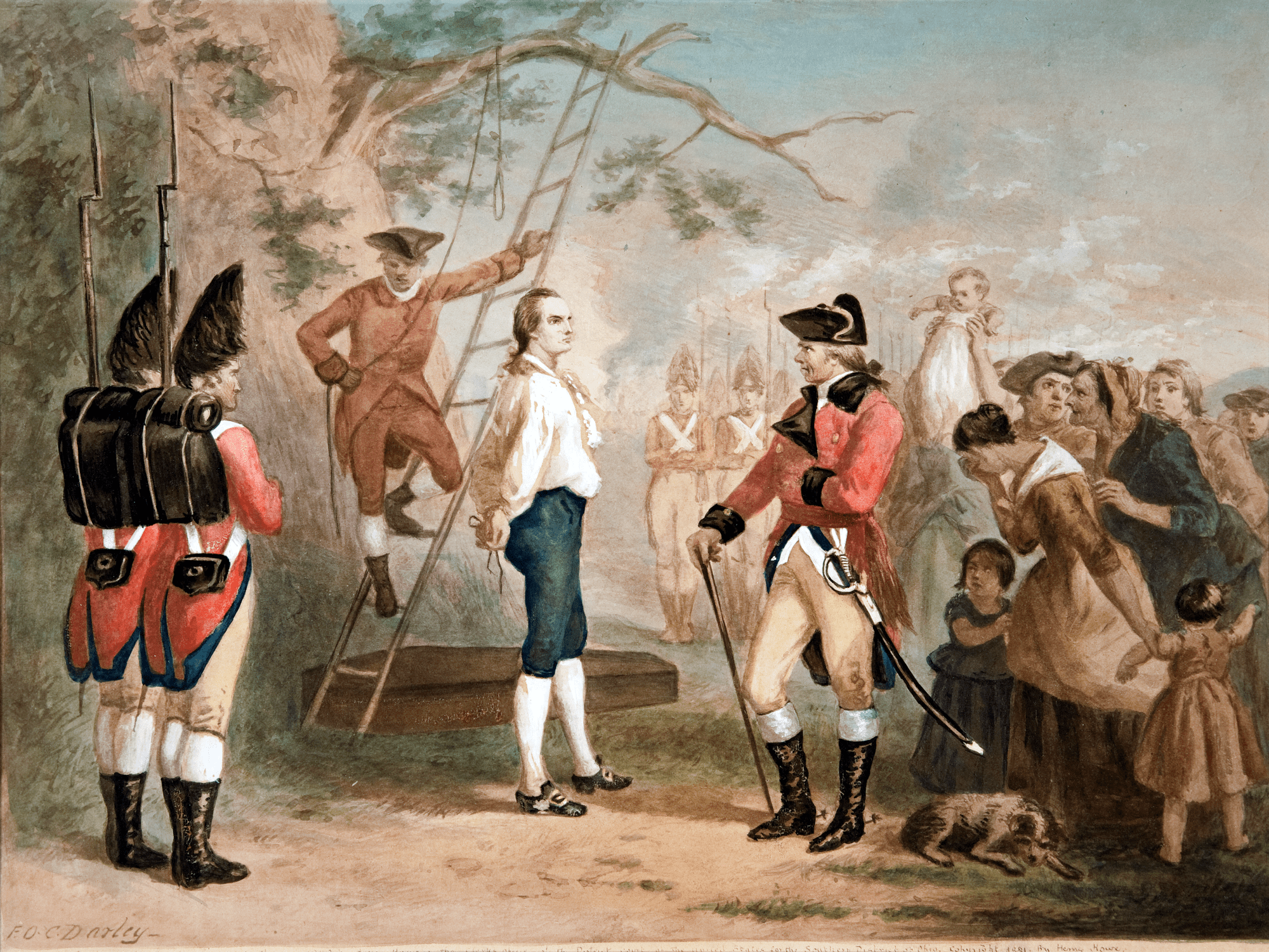
Nathan Hale was born in Colonial America back in 1755. He grew up in Connecticut and at the age of 18 graduated from Yale University, then known as Yale College. When the American Revolutionary War broke out in 1775, Hale joined the Connecticut militia. At 21 years of age, Nathan Hale volunteered to spy on British-occupied Long Island. He went out East for the summer of 1776, cosplaying as a schoolteacher looking for work with his Yale diploma. After a week of taking notes for George Washington’s Continental Army, Nathan Hale was captured by the British Army. His last words before being hanged were, “I only regret that I have but one life to give to my country.” Pretty badass.
(Source: CIA.gov)
9. Nathaniel Sackett
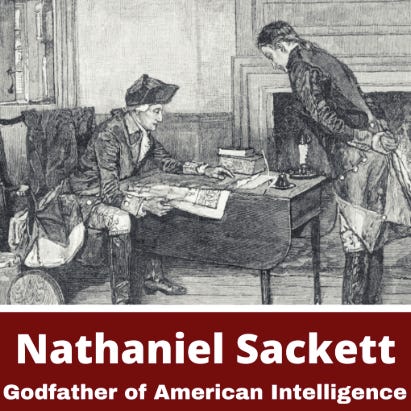
Nathaniel Sackett was born in Orange County, New York, during the colonial era in 1737. While he was serving as a member of the New York Provincial Congress, Sackett was assigned to the Committee of Detecting and Defeating Conspiracies. General George Washington tasked Nathaniel Sackett with the creation of the first Secret Service. Sackett devised code names that Washington would admittedly forget, as the future 1st US President would state in a letter, “I have forgot the name and must be reminded of it again.” Aside from confusing GW, Sackett’s best contribution, which produced his nickname as the “Godfather of American Intelligence”, was his mentorship of Benjamin Tellmadge. The young officer was friends with Nathan Hale from their days at Yale and would eventually take over Sackett’s role of running intelligence for the Continental Army. After the American Revolution, Sackett fell on hard times and attempted to establish a new state in modern-day Ohio before they were ready. When George Washington first took office, Sackett was one of many people who reached out looking for a job in the new government. President Washington rejected Sackett’s job request, but was complimentary of his role as the original leader of American espionage.
(Source: Founder of the Day)
8. Josephine Baker
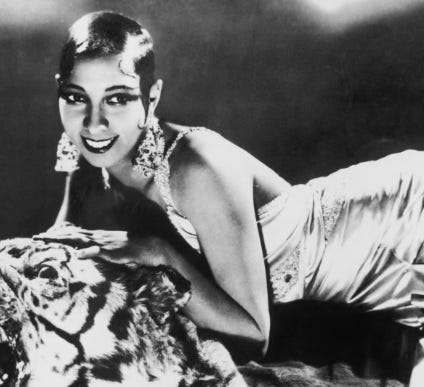
In 1906, Freda Josephine McDonald was born in St. Louis, Missouri. Both of her parents were entertainers whose careers never took off, but they would bring their young daughter on stage with them. Freda McDonald would often dance for money from onlookers on the street, until one day her routine caught the attention of an African American theatre troupe. At 15, she decided to run off with the performing group and get married, dropping her first name while taking her husband’s last name of Baker. Josephine Baker became famous in New York City during the Harlem Renaissance before moving to Paris, where she went on to dance and sing in several successful major motion pictures. When France declared war on Germany in 1939, Baker was recruited by the Deuxième Bureau (French Intel) because her fame would still allow her to attend and perform at Axis-occupied clubs or parties without drawing much suspicion. Once Germany invaded France, Baker fled Paris to live in her Château des Milandes home in southern France, where she sheltered resistance fighters and Jewish refugees. Using her celebrity and invisible ink on her music sheets, Josephine Baker shared detailed information with Allied intelligence on the whereabouts of Axis forces. Pretty badass.
(Source: Women’s History)
7. Robert Hanssen
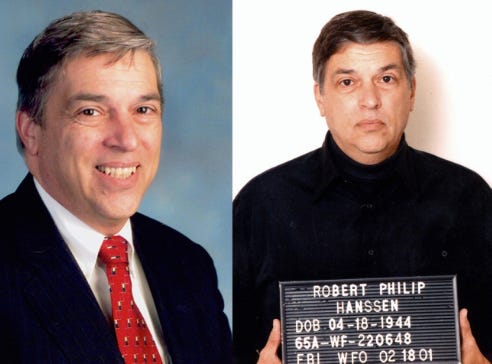
Robert Hanssen was sworn into the FBI on January 12, 1976. By 1978, the Midwesterner-turned-FBI special agent was tasked with compiling a database of Soviet Union intelligence in New York City. After about a year of working on Soviet secrets, Hanssen approached the Soviet KGB offering his services to the Russians. Using the code name “Ramon”, Hanssen became a KGB agent in 1985. Due to his expertise as a counterintelligence agent, Hanssen went decades without being detected by the FBI. In one of the more embarrassing moments in US Intel history, the FBI even tasked Hanssen with searching for the mole within the bureau, who was, in fact, Hanssen himself. By 2000, the FBI and CIA had collaborated to secure original Russian documentation of an American spy who appeared to be Hanssen. Their goal was to catch him “red-handed”, so by January of 2001, his small office in the FBI Headquarters was bugged, and by February of 2001, 300 agents were assigned to work on monitoring his engagements. On February 18, 2001, Robert Hanssen was caught red-handed in a residential park attempting to make a drop-off of classified materials in a plastic bag. Hanssen pleaded guilty to 15 counts of espionage, claiming his only motivation was financial incentives. Bad guy spy.
(Source: FBI.gov)
6. George Koval
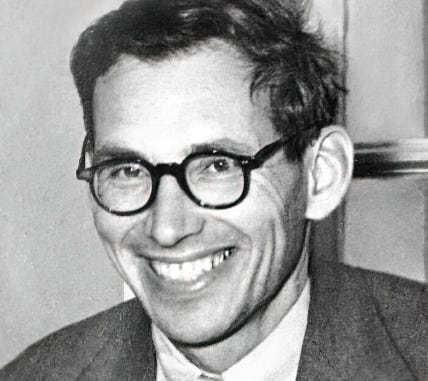
George Koval was born in Sioux City, Iowa, to a family of Belarusian immigrants on Christmas Day, 1913. In the middle of the Great Depression in 1932, the Koval family decided to move to the Soviet Union, joining a collective farm in Russia. George Koval quickly distinguished himself as a talented member of the commune by becoming the farm’s primary mechanic. While attending the Mendeleev Institute of Chemical Technology in Moscow, the Soviet Union’s Main Intelligence Directorate (GRU) recruited Koval to join their spy agency. In 1939, the GRU assigned Koval to return to the United States. There, he moved to New York City, where he was drafted into the U.S. Army for World War II. After training for the US Army, Koval was accepted into the Army’s Specialized Training Program to study electrical engineering at City College of New York before being selected for the Army’s Special Engineer Detachment in August of 1944. By 1945, Koval was transferred to a top-secret American lab in Dayton, Ohio, with the task of helping develop a polonium-based “initiator” for the implosion bomb. After helping with the American efforts to create nuclear weapons, Koval was honorably discharged by the US Army in 1946. He spent 2 years receiving a bachelor’s degree in electrical engineering at CCNY, before hopping back on a ship to the Soviet Union, never to be seen in the US again. Throughout Koval's tenure in the US Army, he was passing along detailed information on the projects to the Soviet Union. Koval’s story only came to light after he died in 2006. Russian Prime Minister Vladimir Putin posthumously awarded George Koval with a Hero of the Russian Federation Medal for “ his courage and heroism while carrying out special missions…He was the only Soviet intelligence officer to penetrate the U.S. secret atomic facilities producing the plutonium, enriched uranium, and polonium used to create the atomic bomb.” Bad guy spy.
(Source: Atomic Heritage Foundation)
5. Sarah Edmonds


Back in 1841, Sarah Edmondson was born in British North America, before it was known as Canada. Her father was hoping to have a son who could help him with his farm, so he was resentful of Sarah, forcing her to run away from home by the time she was 16. She shortened her last name from Edmondson to Edmonds and even disguised herself as a man known as Franklin Thompson so she could immigrate to the United States. After a stop in Hartford, Connecticut, where she worked as a Bible salesman, Edmonds moved to Flint, Michigan, and enlisted in the Michigan Infantry for the Civil War under her Franklin Thompson alias. During the Battle of First Manassas in 1861, Edmonds worked as a hospital attendant before being assigned the duties of mail carrier for the regiment. While carrying mail, Edmonds was also tasked with espionage missions behind the Confederate lines. With her experience as a master of disguise, Edmonds once pretended to be an Irish peddler amongst Confederate troops. While she suffered a freak injury in a mule accident in 1862, she was still considered valuable in her role to relay messages and orders from Union headquarters to the front lines. Eventually, Edmonds would contract malaria in 1863, but couldn’t seek medical attention, fearing that “Franklin Thompson” would be discovered. So, Edmonds ditched her disguise and became a full-time female Union nurse in 1863. The following year, Edmonds published her memoir, Nurse and Spy in the Union Army, and donated the profits to various soldiers’ aid groups. It wouldn’t be until 1884 that “Franklin Thompson” would be awarded a pension from her role as a mail carrier. In 1897, Edmonds became the only woman ever to be admitted into the Grand Army of the Republic (Union Army Frat). Pretty badass.
(Source: Battlefields)
4. Philip Henson
Philip Henson was born in Alabama in 1827. His father was a Federal Indian Agent appointed to serve as an ambassador to Native American nations. Henson’s father passed away when he was 12 years old, but due to his travel experience out west with his father, he was able to get a job as a mail carrier for the US Government. On the eve of the American Civil War, Henson was on his way out to Texas to drop off mail for Texas Governor Sam Houston, who’d been removed from office because he refused to take an oath of loyalty to the Confederacy. When Henson got to Houston, the former Governor presented him with a role as a scout and spy for the Union. His first job as a scout and spy was to travel through the war, up to Illinois, and provide Colonel Ulysses S. Grant a briefing. Throughout the American Civil War, Henson played a key role as a Union spy behind Confederate lines, as he was able to relay valuable battle tactics to Colonel Grant while giving misinformation to Confederate Generals with whom he was confiding. Henson would eventually get arrested by Confederate General NB Forrest, but was luckily able to escape death. After the Civil War and Abraham Lincoln’s assassination, Philip Henson was tasked by General Grant to investigate John Wilkes-Booth thoroughly. Once Grant got into office, Henson received the special job title as the first Special Secret Service Agent of the United States. Pretty badass.
(Source: The Daily Nonpareil)
3. Virginia Hall
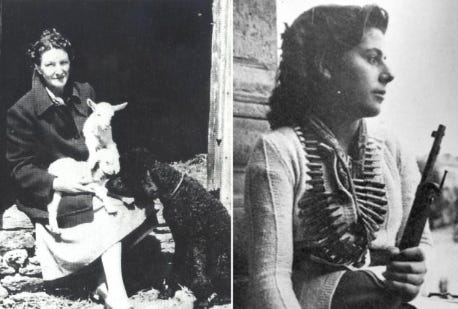
Virginia Hall was born a redhead in Baltimore, Maryland, in 1906. A bright student, Hall attended Harvard University, where she studied French, Italian, and German. With the idea of continuing her studies in mind, at 25, she moved to Europe to travel abroad. In 1931, she landed a position as a Consular Service Clerk at the Embassy of the United States in Warsaw, Poland. 2 years later, Hall was transferred to Izmir, Turkey, where she suffered a serious hunting accident and lost her left leg below the knee. Fitted with a wooden leg, the injury cost Virginia Hall a chance to become a diplomat, but with the outbreak of World War II in France, she decided to join the ambulance corps. After France fell to Germany, Hall fled to England, where she volunteered to serve with the British Special Operations Executive. Hall’s mission with the British SOE was to organize agent networks, assist with the escape of prisoners of war, and recruit French citizens to run safe houses. She quickly built up a reputation known as “The Limping Lady.” After her efforts in WWII, Virginia Hall was awarded a Distinguished Service Cross. President Harry Truman said of The Limping Lady, “Miss Hall displayed rare courage, perseverance, and ingenuity. Her efforts contributed materially to the successful operations of the Resistance Forces in support of the Allied Expeditionary Forces in the liberation of France.” Determined to continue a career in intelligence, Virginia Hall joined the CIA in 1951. Hall moved to Venice and worked with the National Committee for a Free Europe, a CIA front associated with Radio Free Europe. During her 15-year tenure with the CIA, Hall ran multiple networks to establish support for resistance groups in Iron Curtain Countries in Eastern Europe. Pretty badass.
(Source: CIA.gov)
2. Benedict Arnold
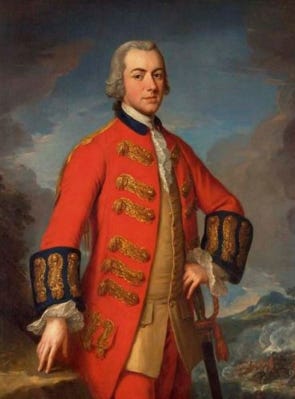
Benedict Arnold was a Redcoat liar and a thief, but a very famous bad guy spy.
1. Harriet Tubman
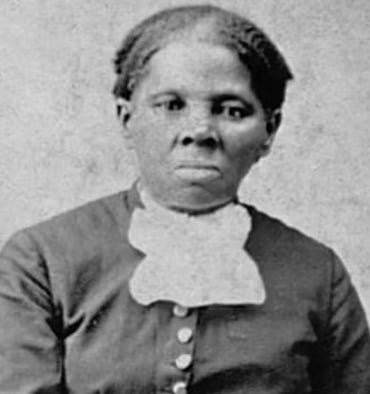
Harriett Tubman was born into slavery around 1822 in Dorchester County, Maryland. Growing up, she was an expert hunter, lumberjack, and field worker, which helped her later in life as an adult. Tubman fled to Philadelphia in 1849. Once free, she became a key operator of the Underground Railroad. This secret network provided shelter and assistance to escaping slaves as they traveled up to the North. Harriett Tubman daringly returned to Maryland at least 13 times over a decade to rescue her parents, brothers, and friends, earning her the nickname “She-Moses.” During the American Civil War, Tubman volunteered for the Union Army and was tasked with forming a spy ring. When the Emancipation Proclamation came into effect in 1863, Tubman was down in Hilton Head, South Carolina, becoming the first woman to lead an armed military operation known as the Combahee Ferry Raid. The secret mission was to rescue and recruit slaves to fight in the Union Army. With the help of Colonel James Montgomery, on the night of June 1, 1863, the two helped liberate more than 700 slaves along the Combahee River. Pretty badass.
(Source: History Channel)
Game 52 (5/25)
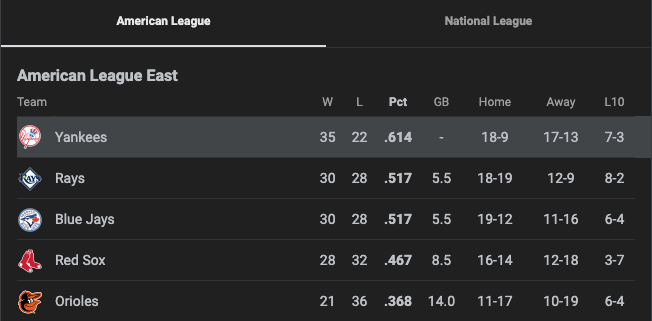
- The Yankees are in Colorado for the Sunday rubber match with the lowly Rockies. Yanks get on the board first in the 1st when Paul Goldschmidt goes 1st to 3rd on an Aaron Judge blooper, later scoring on a Cody Bellinger fielder’s choice. Will Warren makes his first start in Colorado. His breaking ball seems to be a bit less effective in the altitude, as he gives up two early runs. Anthony Volpe helps the Yanks tie the game again in the 2nd inning, tripling off the Right-Centerfield wall, and then scores on a J.C. Escarra double. The Yankees tack on 2 more runs in the 5th inning as the game goes into a 75-minute rain delay. Once play resumes, Escarra picks up his 3rd hit of the day to score The Martian. Up 5-3 entering the 9th, Luke Weaver allows his first home run of the season, but gets out of trouble with 2 Rockies on base, picking up his 8th save. Yanks win 5-4.

Game 53 (5/26)
- A rare 9:38 PM ET first pitch as the Yanks take on the Anaheim Angels. Ryan Yarbrough allows a lead-off home run to Angels SS Zach Neto. It would be the only run the Yankees would give up the rest of the night. The Yankees don’t get a runner on base until the 4th inning when Ben Rice singles, which is followed up with a Trent Grisham single, an Aaron Judge single, a Cody Bellinger bases-loaded walk, and an Anthony Volpe bases-clearing double. Yanks tack on another run in the 8th when Austin Wells gets an RBI sac-fly. Luke Weaver comes into the game in the 9th for a 4-run non-save situation. Yanks win 5-1 as Yarbrough goes 6 innings with 7 strikeouts.

Game 54 (5/27)
- Ben Rice gets the Yankees on the board in the 4th inning with a solo shot. Carlos Rodon makes a SportsCenter Top 10 Play on his jump throw down the 3rd base line. After the Knicks lost Game 4 in Indy, Bellinger earns a trip to 3rd base on a routine deep fly ball that gets dropped. Volpe capitalizes on the Angels’ error, singling Bellinger in. In the 7th inning, Oswald Peraza smokes a 111 mph home run to dead center. It would be huge if he could start hitting. Yankees get another superb defensive play from Trent Grisham diving in the 7th. Rodon gives the Yankees 7 shutout innings with 10 strikeouts. Devin Williams nearly blew the game in the 9th inning as the Yanks don’t want to overwork Weaver. Yanks hang on to win 3-2.
Game 55 (5/28)
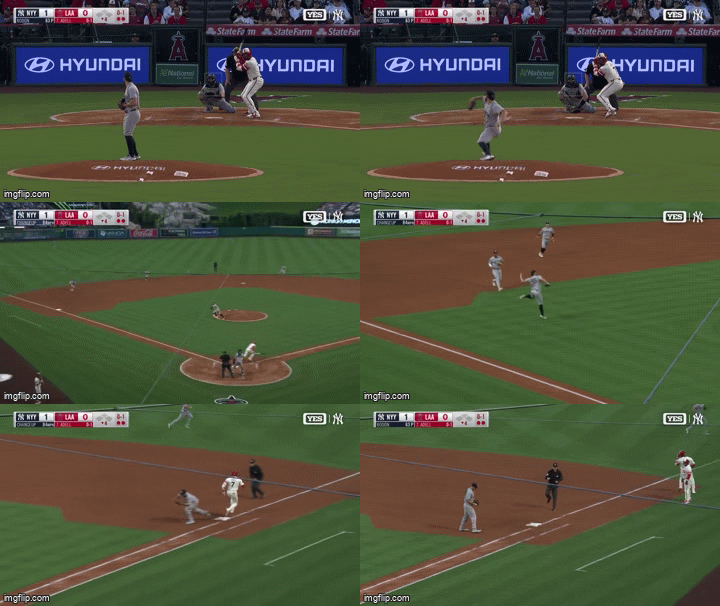
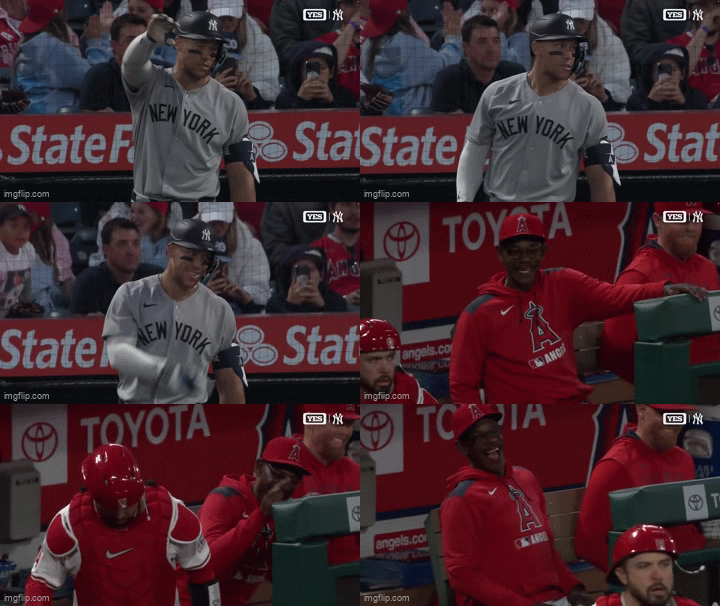
- Paul Goldschmidt leads the game off with a blooper to RF that he hustles for a double. Angels’ manager, Ron Washington, intentionally walks Aaron Judge, as Volpe eventually hits a sac fly to put the Yanks up 1-0. In the 2nd inning, with Grisham on 2nd and Goldy on 3rd, Washington again elects to walk intentionally walk Judge as the two share a laugh. Clarke Schmidt gives the Yankees 6 shutout innings as Ian Hamilton, Tim Hill, and Mark Leiter Jr. complete the Yanks’ 5th shutout victory of the season.
Game 56 (5/30)
- Yankees at Dodgers on Apple TV. Aaron Judge hits a 446-foot bomb to straight-away CF to put the Yanks up 1-nothing in the 1st. Shohei Ohtani follows that up with a solo homer in the bottom half of the 1st. Austin Wells and Trent Grisham respond in the Top of the 2nd with two homers of their own. By the 3rd inning, Goldschmidt is launching an opposite-field home run to make things 5-2. Ohtani goes yard again in the 6th, as Freddie Freeman knocks Max Fried out of the game with an opposite-field double. These baseballs are juiced. The Yankees get out of the 6th inning on a Goldy double-play, but the Dodgers go up 6-5 by the end of the inning. In a 1-run game in the 7th, Boonie picks Yerry De Los Santos to face the top of the Dodgers’ lineup, and he gives up 2 more tack-on runs. Fried and the bullpen shit the bed. It happens. Yanks lose 8-5.

Game 57 (5/31)
- The Fox pregame show featuring Derek Jeter, Alex Rodriguez, and David Ortiz has a segment asking who you’d rather have, Aaron Judge or Shohei Ohtani? ARod, like a total sellout, says Ohtani because he has a few more steals than Judge. Big Papi, surprisingly, says Judge. Jeter calls this whole segment stupid, that’s why he’s The Captain. Will Warren gets batted around in the 1st inning as he gives up 4 runs on 4 singles, a double, 2 walks, and 40 pitches. In Warren’s 2nd inning of work, he gives up a 3-run bomb to Max Muncy. It’s 7-0 Dodgers before the Knicks vs Pacers Game 6 tips off. After Warren gets pulled, Brent Headrick isn’t any better, as he gives up 3 more runs. Down 10-0, Aaron Judge hits two solo home runs, as the Yankees eventually get absolutely embarrassed in an 18-2 loss.
Move to Make?
- With the Yankees’ bullpen being taxed out thanks to the Dodgers, adding an arm such as Sean Boyle to the 40-man roster and calling him up makes sense. Boyle was selected by the Yanks in the 25th Round of the 2018 MLB Draft. The 28-year-old has pitched his way from Rookie Ball to Triple-A with the organization, throwing to a 3.68 ERA while averaging over a strikeout an inning in 116 minor league games. Boyle last pitched for Scranton/Wilkes-Barre on Tuesday night and could serve as the Yankees’ long man out of the pen.