Stumblin' Along 5/12 '24
Stumblin' In (Vol II)

Stumblin’ In
- Mother’s Day
- Creative Little Garden (Revisit)
- YouTube Rabbithole
Alright @YouTheReader,
Happy Mother’s Day to all the Moms out there!
I’ve gotten myself into a heap of trouble this Mother’s Day Weekend in the hopes of getting a pint of Guinness with Jennifer Aniston. Lucky for me my mother is an absolute saint and has been putting up my tomfoolery since birth. In fact, she almost encourages the shenanigans as yesterday morning she sent me her own list of Top Ten Fictional Moms with some honorable mentions for this Thursday’s His or Her Words, Not Mine. As a way to make up for the wrongdoings, here is another Mother’s Day of one of her favorite songs…
Today’s tune on this Sunday Stumblin’ Along is Stumblin’ In by Suzi Quatro and Chris Norman.

This song was released in 1978. It was written by Mike Chapman and Nicky Chinn. Chris Norman was the frontman for the band called Smokie. Chapman and Chinn had previously written for Smokie before the band decided to cut ties with the writing tandem. Chapman was producing Suzi Quatro's album “If You Knew Suzi”, which they were recording in Cologne, Germany. By random happenstance, Smokie received an award in nearby Düsseldorf and after the ceremony, Quatro & Chapman joined them at a party where music broke out.

According to Chapman, "Suzi was playing bass, and Chris was there with his arm round her, and they were singing into a mike, and I thought what a fantastic duet they’d make because they looked so great together. The next day, I was in the studio with Suzi, and during a break, I came up with the line, 'Our love is alive'…I looked at Suzi and said 'What about this, with you and Chris? Wouldn’t it be great?' and she said it sounded fantastic.”
(Source: The Record Producers)
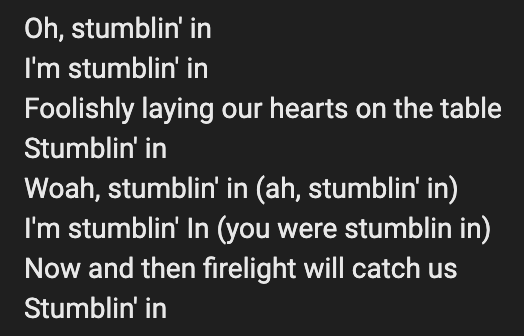
Chapman finished writing the song with Chinn, and the duet was included on Quatro's album. This song peaked on the Billboard Hot 100 in 1979 at #4 in the US. Prior to Stumblin’ In, Suzi Quatro had never been on the US Top 40 and Smokie’s "Living Next Door To Alice” had reached #25. Stumblin’ In, a song that happened under random happenstance at a party, ended up being the biggest hit for everyone involved. It is a great tune @Mom.
It also plays well with Stumblin’ Along…
The History of Mother’s Day in the US
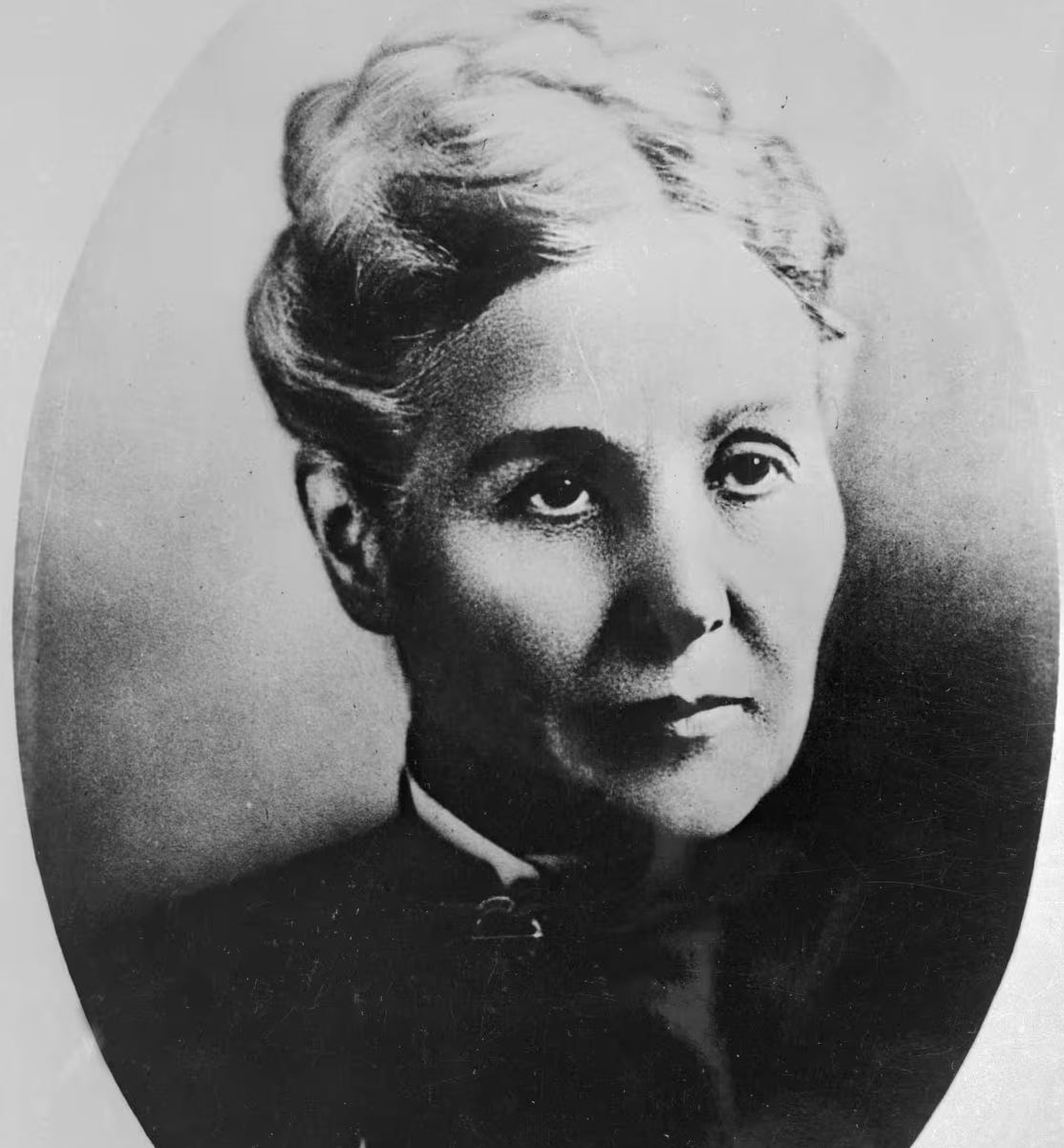
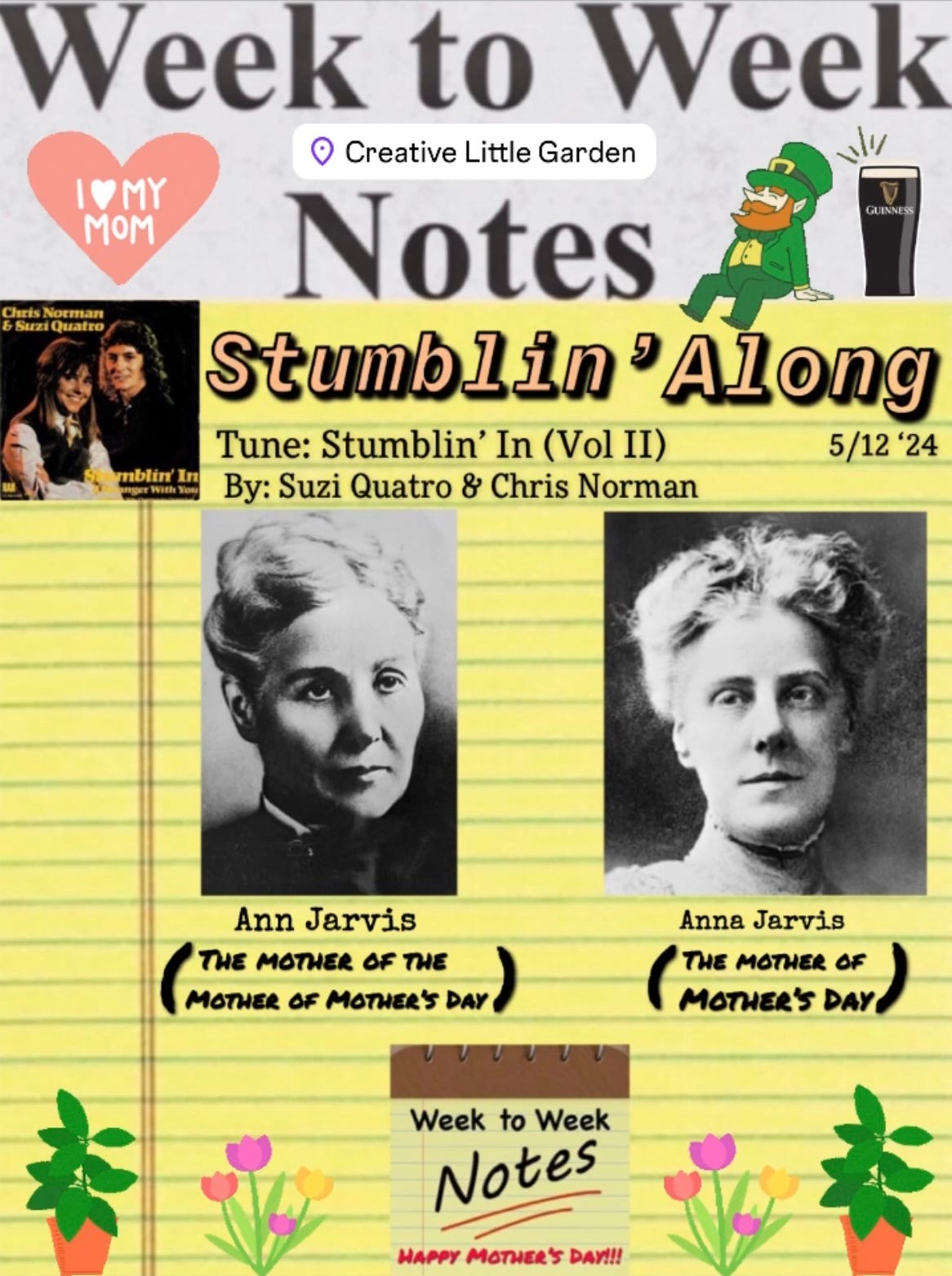
Anna Jarvis is the Mother of Mother’s Day in the United States. Born on May 1, 1864, in Webster, West Virginia, Jarvis was 1 of the 13 children. Sadly of the 13 children, Anna was 1 of only 4 to reach adulthood as infant- and child-mortality rates there and throughout Appalachia were extremely high in those days. In 1858, 6 years before Anna was born, her mother Ann Jarvis started organizing Mother’s Day Work Clubs to educate the families in Appalachia. She would give tips such as promoting the use of boiling water to prevent the spread of diseases.
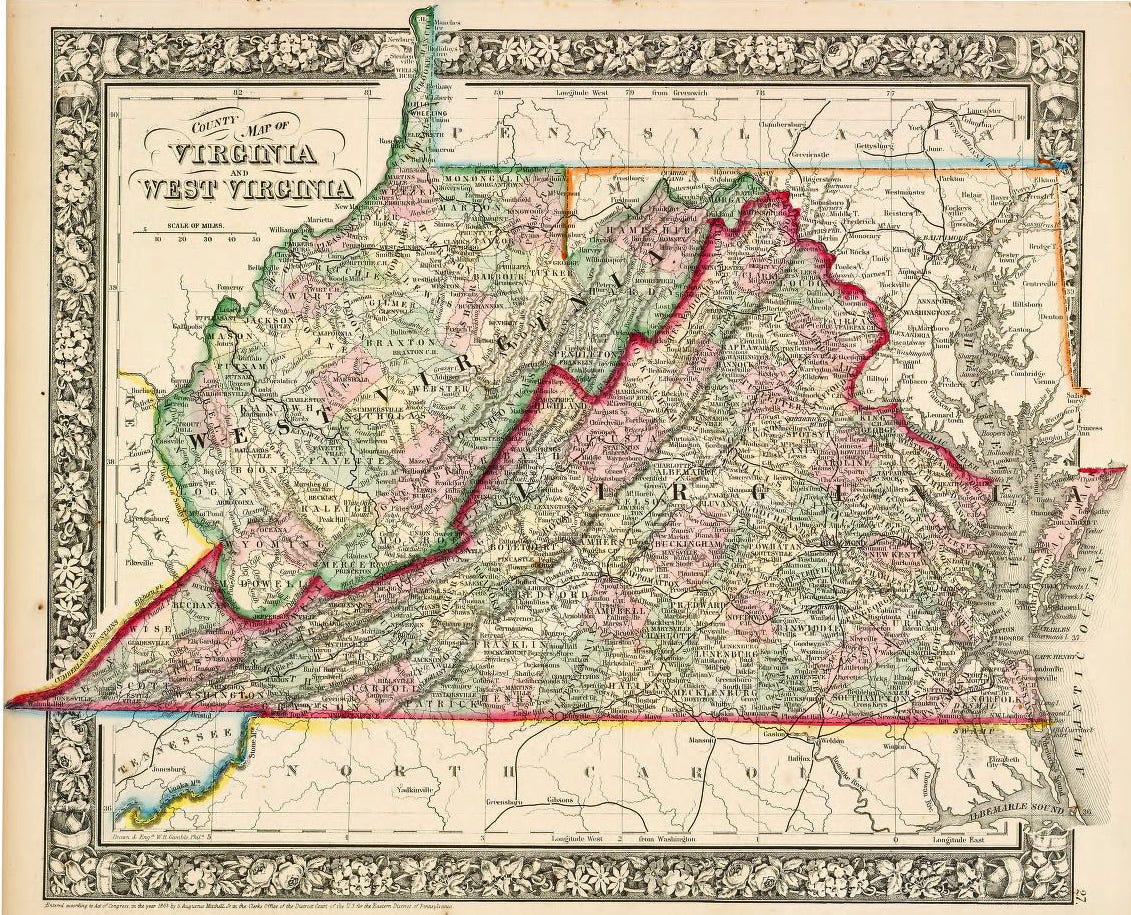
The Jarvis family moved to the newly formed Webster County in West Virginia right around the outbreak of the American Civil War. Webster County was on the border of the Union and Confederate lines. The Battle at Philippi, which took place just 15 miles from Webster County, was one of the earlier battles of the American Civil War. With the population of West Virginia being mixed with loyalties to opposing sides, Anna Jarvis’ mother urged members of the Mother’s Day Work Clubs to remain neutral and to take care of both sides’ soldiers. After the Civil War, Ann Jarvis tried to further reconcile differences by establishing a Mothers’ Friendship Day, where Union and Confederate veterans would break bread.
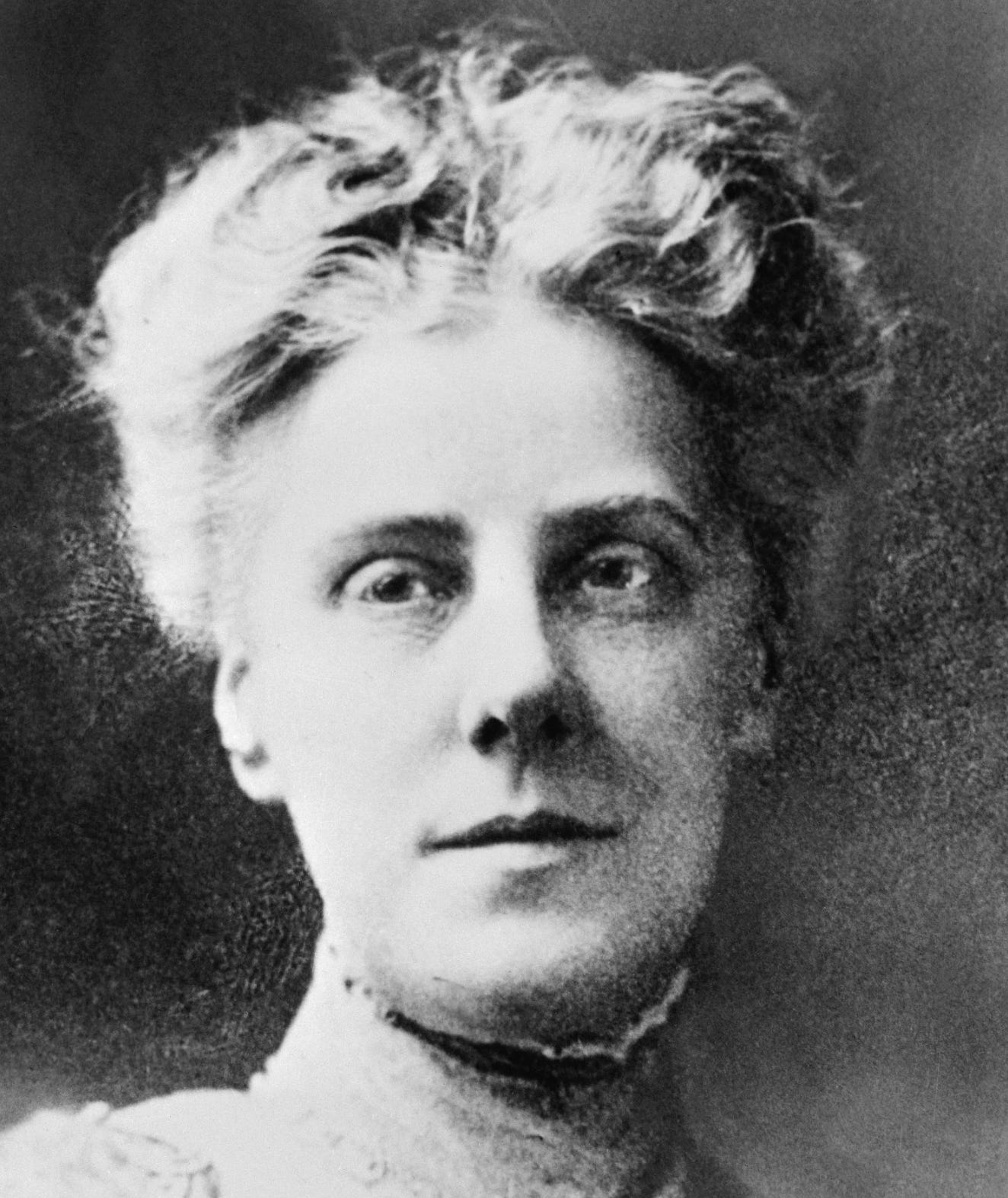
When Anna Jarvis was 12 years old, her mother was teaching Sunday school classes when she stated the prayer, “I hope and pray that someone, sometime, will found a memorial Mother Day commemorating her for the matchless service she renders to humanity in every field of life. She is entitled to it.” This had a deep effect on Anna Jarvis, who would go on to state the same prayer at the time of her mother’s memorial service in 1905 and she added to it, “By the grace of God, you shall have that Mothers Day.” This led Anna Jarvis to begin a letter-writing and public-speaking campaign urging local, state, & national figures to support a new holiday. She and her supporters started observing the 2nd Sunday in May for the holiday, which is still the case to this day. Within a decade of her mother’s passing, Anna Jarvis was able to get President Woodrow Wilson to sign into effect Mother’s Day as a national holiday in 1914.


Anna Jarvis’ idea of Mother’s Day was supposed to be about a son or daughter honoring their mother and not so much the celebration of all mothers. Her intentions behind the holiday were not supposed to be as communal as she envisioned. She resented the fact that by the 1920s, the holiday had become centered around cards, flowers, candies, and gift-giving. By 1925, when the organization American War Mothers used the holiday to fundraise, Jarvis crashed the event and was arrested for causing a public disturbance. As if that wasn’t enough, in 1935 Anna Jarvis accused First Lady Eleanor Roosevelt of “crafty plotting” by using Mother’s Day in fundraising material for charities trying to combat high maternal and infant mortality rates. Jeez, sounds like Eleanor was just trying to help. Anyway, Anna Jarvis, the mother of Mother’s Day would sadly die childless, in debt from taking legal action to end Mother’s Day as a national holiday, and alone in an insane asylum.
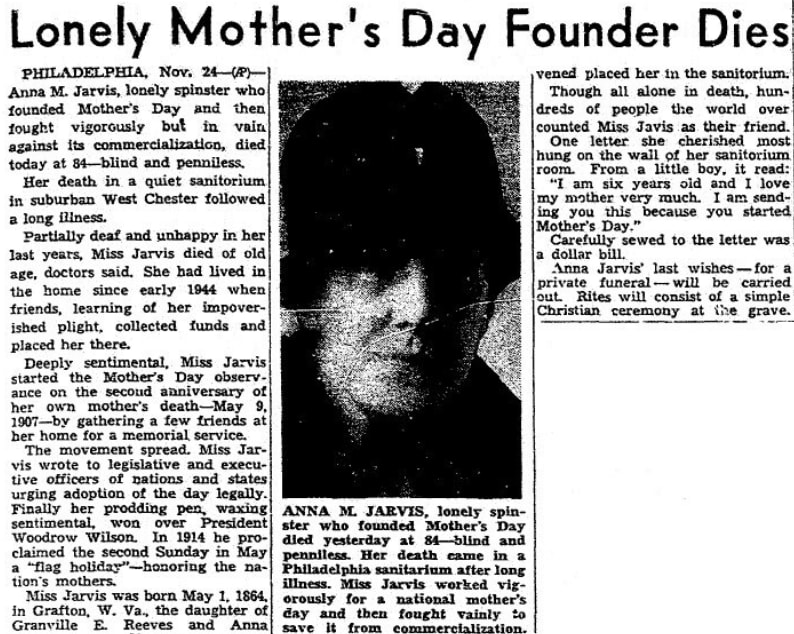
(Source: History Channel)
Well yikes, ladies, I did not see that ending coming, but I guess sometimes that’s how the cookie crumbles. Here is a more wholesome piece on last year’s Creative Little Garden that I Stumbled Along last May…
Creative Little Garden
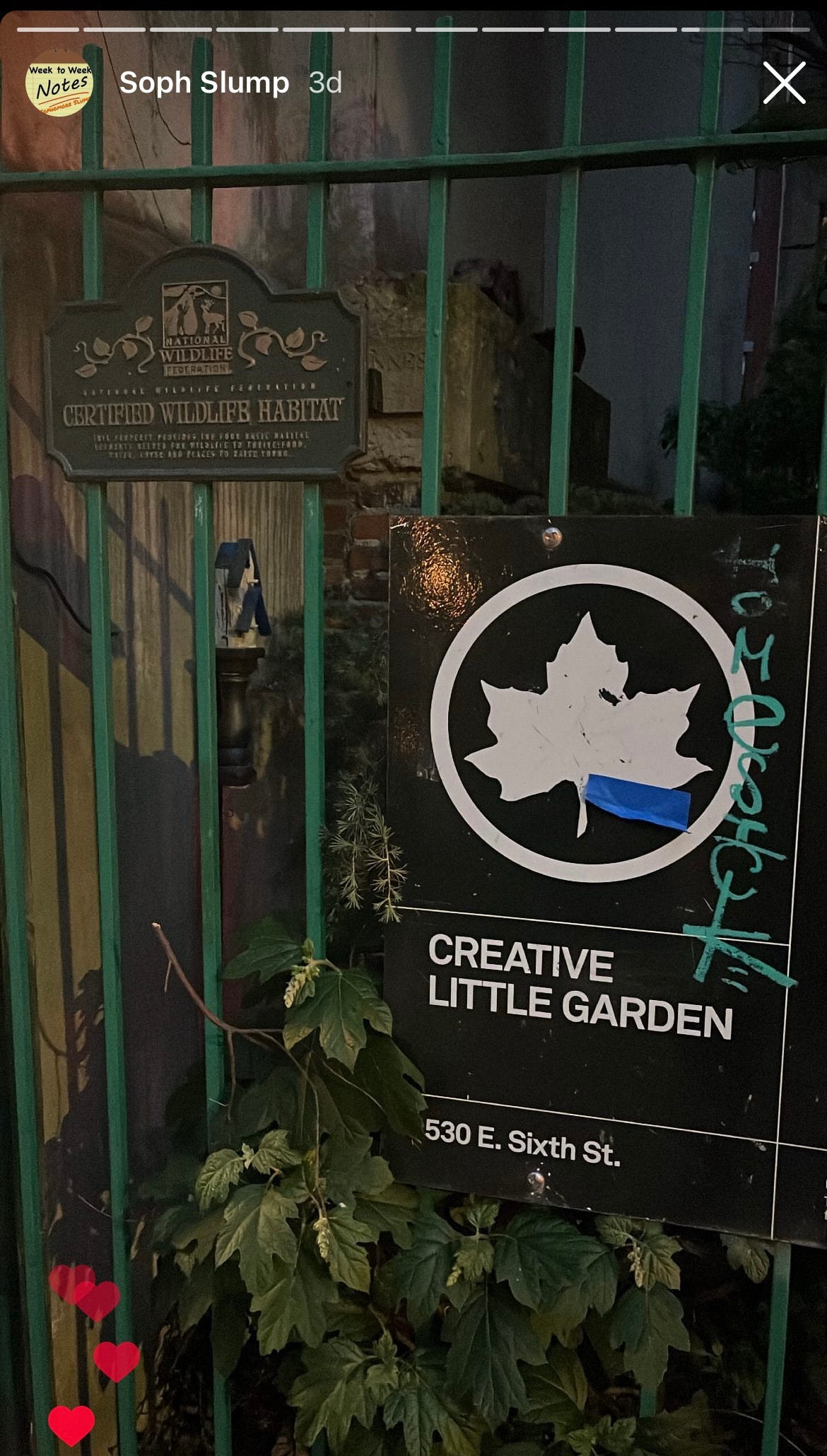
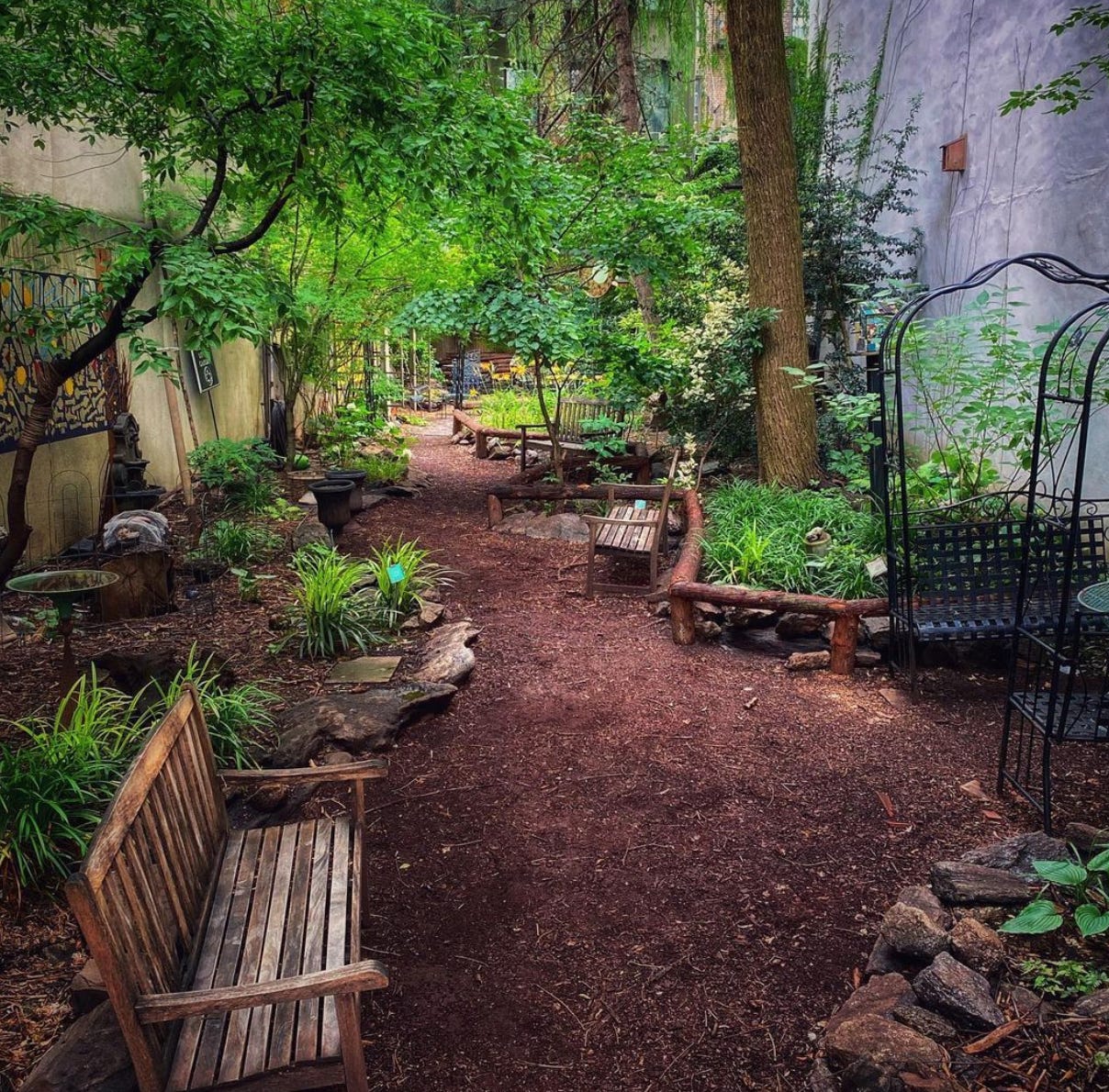
Located at 530 East Sixth Street, Creative Little Garden is a Certified Wildlife Habitat. The Garden in East Village was founded in 1978. The space of land actually has a bit of history to it prior to the 70s. The area of the East Village was originally settled by Germans in the 1840s and was known as ‘Kleindeutschland’ meaning Little Germany. By 1855, The City only consisted of Manhattan but was considered the 3rd largest “German” city in the world, after Berlin and Vienna. German-Americans in The City at the time represented over 60 percent of all cabinetmakers, cigar makers, and barbers. In 1855, they also accounted for more than 50 percent of all bakers, shoemakers, locksmiths, tailors, and, of course, brewers. On the other hand, only about 9 percent were laborers, and 11 percent, served pints. (Source: LESPI) One of the German-owned bars in the area was Atlantic Garden, a beer garden and music hall established by William Kramer in 1858.
Maybe we’ll do a bit more on this spot later, sorry I got distracted with the history of beer in the area. Anyway, by the 1880s, the Irish started invading the East Village. The Germans said enough with that, we’ll head over to Williamsburg in Brooklyn. Eastern Europeans and Italians also started densing up the population. There was a good mix of immigrants in the area and they were there because of the garment factories (@Fellas that means clothing factories, it’s okay I had to look it up too). Then, in the 1910s, the subway system started to become a thing and people were able to move out of the slums right next to factories, they could afford to start to spread out all over The City so the population in the area started to decline. Then in the 1950s, Puerto Ricans moved into the area around Creative Little Garden, and the area that was once Kleindeutschland was now nicknamed Loisaida.
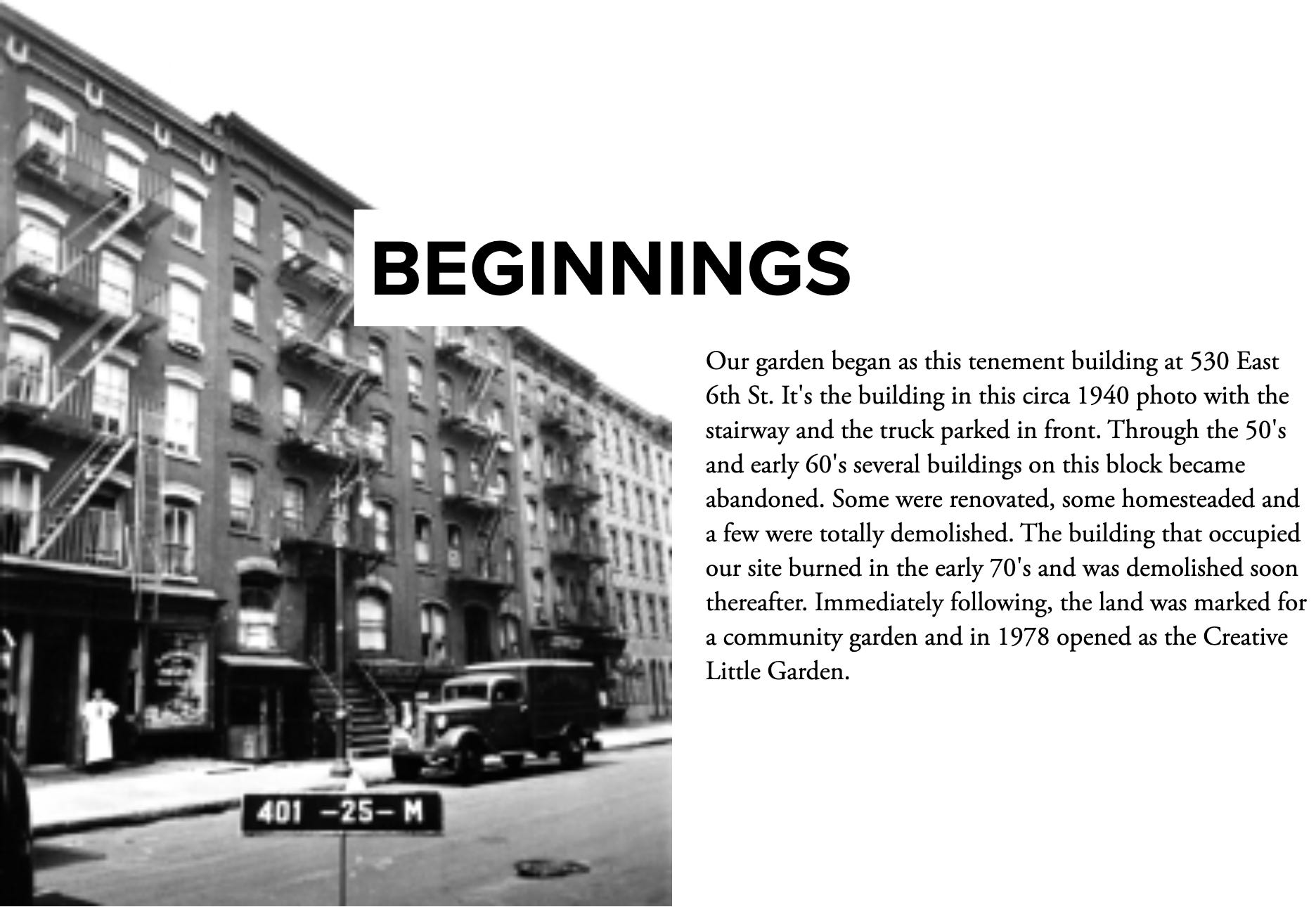
More population declined in the area in the 1960s and buildings all around the spot started to become abandoned. In the 1970s, a mix of Spanish, African American, and Bohemians took over. Many buildings were now being “homesteaded”. Some buildings (including the one that stood where our garden is now) were totally demolished. (Source: Creative Little Garden)

This brings us to 1978 when The City leased the plot of demolished land to Françoise Cachelin, the leader of NYC Parks GreenThumb. GreenThumb is proud to be the nation's largest urban gardening program, today sustaining over 550 community gardens and supporting thousands of volunteer gardeners throughout New York City. The Creative Little Garden at 530 East Sixth Street was one of the first initiatives. According to Creative Little Garden, Cachelin was an outspoken and staunch supporter of individual and community rights, and without her, the garden would not be here today. Françoise passed away in ‘03, but GreenThumb still continues to take inspiration from this former member of the French Resistance and spirited advocate for the rights of downtown residents.
The Creative Little Garden had a couple of hiccups, namely in ‘06 when neighboring buildings were being renovated and a large portion of the garden ended up in the neighbors’ basement. It's a "community backyard," maintained by volunteers from the surrounding neighborhood. There are no plots tended by individual gardeners, instead, members collaborate on the landscaping of the whole park. Everyone, not only members, can relax, read, have lunch, work on their laptops, or just enjoy the sights, sounds, and smells of our garden. They routinely have Music Under The Willow and the garden even has its own stage area for performers.