Stumblin' Along 3/9 '25
Green Fields of France

Green Fields of France
- A Bit About Jimmy Walker
- YouTube Rabbithole
Alright @YouTheReader,
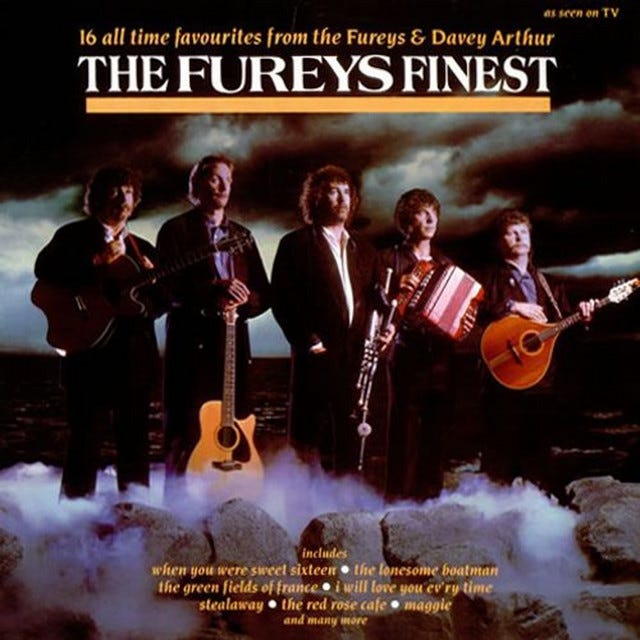
Today’s tune is The Furey’s Green Fields of France.
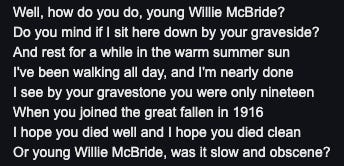
Young Willie McBride was an Irish soldier who fought in World War I. During WWI, 10 Irish soldiers fought and passed away under the name William McBride. The song’s writer, Eric Bogle, chose McBride because it rhymed with graveside. Records fail to confirm that McBride was 19 years old, as he may have been 21, but either way, the point is that he was so young.
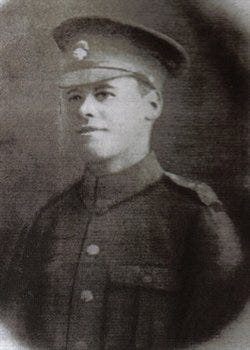

Green Fields of France was originally named No Man’s Land by the Scottish-born Australian folk songwriter. The Furey Brothers and Davey Arthur's version of the song is the most popular.
1916 was a massive year for Irish Independence. A total of 206,000 Irishmen served in the British forces during the war, 140,000 of whom were volunteers. When the war first broke out, nobody imagined how brutal it would become. Technology and weaponry in the early 1900s might seem very simple as compared to today, but this was a time when soldiers like Young Willie McBride may have thought they’d be heroic charging at their enemies on horseback.
The Last Post is often played at fallen soldiers’ funerals, and The Flowers of the Forest is a famous bagpipe burial song. Being that McBride was Irish and WWI’s gruesome nature, there’s a good chance he may have been buried in mass with others at a “Tomb of the Unknown Soldier.”
Bogle used Young Willie McBride to represent all the fallen soldiers of “The Great War” generation. According to the Irish Independent…
“Interested in becoming a cobbler before war broke out, a teenage Willie would serve his time in the 'shoe trade'. Initially he worked as an apprentice in Aitkens, Cootehill. He then went to Irvinestown for a short time before moving to work in Belfast. Eager to do his bit for the war effort, Willie enlisted in the army in Belfast just nine months before his death. He would serve with the 9th Battalion of the Royal Inniskilling Fusiliers which was formed in Omagh in September 1914 and was known as 'the Tyrones'. Interestingly, the 12th battalion of the Inniskilling Fusiliers fought against the Irish rebels on Easter week in 1916 in Dublin with two of its soldiers dying and seven being wounded. On the day Willie McBride was killed fighting conditions in the trenches were even more devastating and bleak than usual. The rain poured in, men stood in water up to their waist – many half-waiting for death. Furious German shelling came on a continuous basis and sick men tried to hold onto their positions. It simply was hell on earth. The end was inevitable for most, including Willie McBride.”
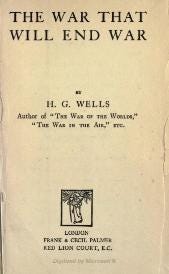
World War I was widely sold to the public as “the great war to end all wars.” The phrase was popularized by a science fiction writer by the name of H.G. Wells.
It's a sad Sunday song, but a great one at that.
On to some Stumblin’ Along history…
A bit about Jimmy Walker
A couple of years ago, I doing a Guinness Challenge and Pint&Pen&Paper at Neary’s Pub on the Upper East Side when I met a best-selling author, Jamie MacGuire. He got a kick out of the Guinness reviews and sent over his article on Jimmy Walker: The Mayer Who Loved New York.
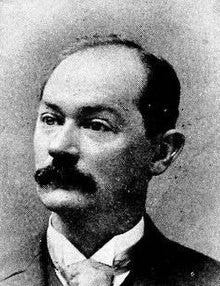
On June 19, 1881, James J. Walker was born in Greenwich Village, Manhattan. His father, William H. Walker, was from County Kilkenny. William Walker was a carpenter who specialized in cabinetmaking before opened up his own lumberyard in the West Village. His mother, Ellen Ida Walker, was the daughter of Irish American New York politician, James E. Roon. My guess is this 19-century Irish-American power couple named their son after his grandfather, who also ran a few Irish saloons as a liquor dealer in West Village in his day. After many years of manual labor, William Walker got into NYC politics himself, joining the New York State Assembly in 1892.
(Source: Village Preservation)
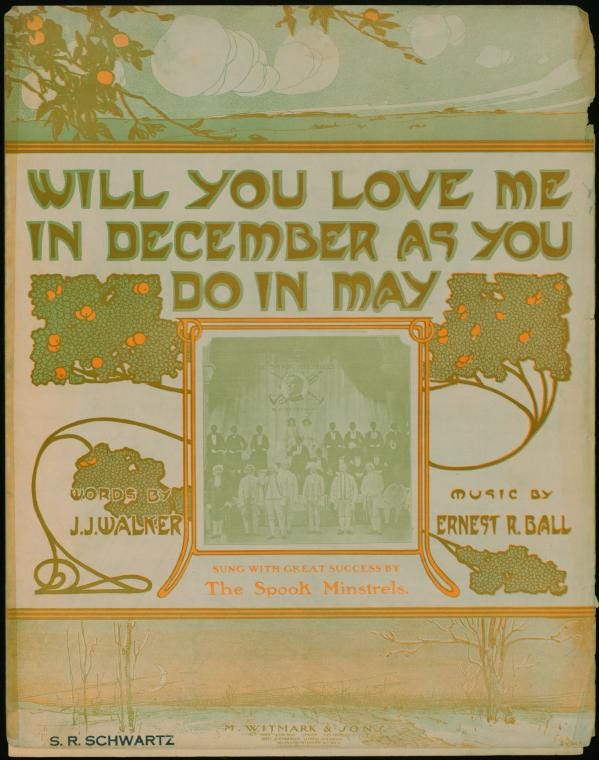
William Walker had high hopes that his son would become a lawyer and politician. Jimmy Walker on the other hand had other interests. Not much of an alter boy while attending Catholic Schools, Jimmy Walker earned the nickname “Little Jimmy Talker” from one of his pastor’s at St. Joseph’s Church. Walker wasn’t much of a student, having dropped out of college, before eventually graduating from New York Law School in 1904. Despite the law degree, Walker was much more interested in becoming a song writer and entertainer. In 1906, Jimmy Walker wrote the tunes There’s Music In The Rustle Of A Skirt and Will You Love Me in December as You Do in May?, which were popular in it’s day.
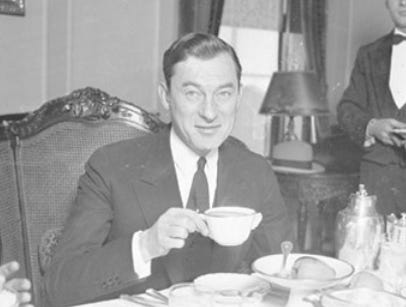
Despite making a name for himself on the Broadway scene, Jimmy Walker eventually adhered to his father’s wishes by getting involved in politics in 1909 and passing the bar exam in 1912. Being that his dad had political connections with the NY Governor at the time, Al Smith, Jimmy Walker quickly was elected to the state assembly in 1910, before taking a senate seat in 1914. He brought some of the Broadway flair to the Senate Floor as he was described with a “Pixie smile, the ‘vivacity of a song and dance man,’ a charm that made him arrive n the Senate Chamber like a glad breeze’ The Prince Charming of Politics.” With Al Smith’s help, Walker was able to keep a low profile despite spending much of his time in the lime light. Smith covered for Walker’s partying habits as he saw the young politician had potential as the next major of New York City during the Roaring 20s.
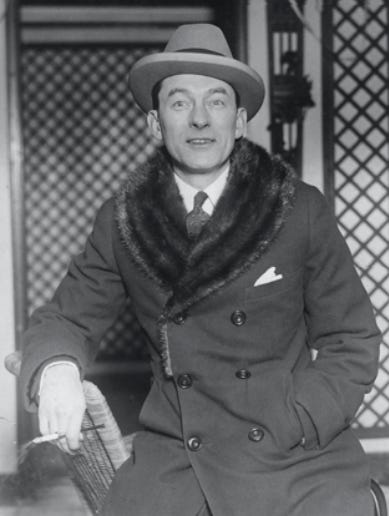
When Al Smith wanted Jimmy Walker to run for mayor in 1925, the governor wanted Walker to stay out of the speakeasies. One of his famous hangouts was the cellar of the 21 Club. While federal agents would raid the premises, Walker had his own private hidden booth. Once he started running mayor, Walker wisely brought the parties to private penthouses on the Tammany Hall’s dime instead. The 1925 election was no sure thing for Walker as the incumbent mayor, John Francis Hylan, was quite popular, and could attack Walker for some alleged corruption. Walker had allegedly made friends with crooked businessman, known gangsters, and some beautiful chorus girls.

While Walker’s late night banters made him beloved by working class voters, it was the middle-class who weren’t as impressed with the charade. Smith and Walker’s strategy to defeat Hylan relied on social welfare legislation, the legalization of boxing, and repealing certain blue laws that banned Sunday afternoon baseball. During a campaign speech, Walker opined, “I like the company of my fellow human beings. I like the theatre and am devoted to healthy outdoor sports. Because I like these things, I have reflected my attitude in some of my legislation I have sponsored — 2.75 percent beer, Sunday baseball, Sunday movies, and legalized boxing. But let me allay any fear there may be that, because I believe in personal liberty, wholesome amusement and healthy professional sport, I will countenance for a moment any indecency or vice in New York.” Walker also publicly condemned the KKK and opposed the Prohibition of alcohol.
(Source: Bowery Boys History)
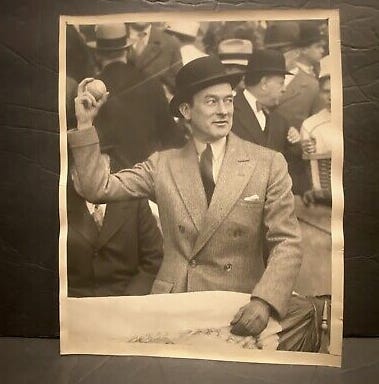
After defeating Hylan in 1925, Jimmy Walker became the 97th mayor in New York City history. Nicknamed by writers of his day as “the late mayor”, Jimmy Walker famously arrived 90 minutes late to his own wedding day and 2 hours late for getting sworn into the mayoral office. During his first term as the mayor of NYC, Walker created the Department of Sanitation, which made considerable improvements to the city’s playgrounds and parks. He also played a major role in approving the Board of Transportation’s contracts in order to expand the City’s subway system.


In 1929 during his mayoral re-election campaign, Jimmy Walker found a fierce competitor in Fiorello LaGuardia. The Italian-American politician criticized Walker for his decision to raise his own salary from $25,000 to $40,000, to which Walker responded, “That’s cheap! Think what it would cost if I worked full time.” This was a joke in that during Walker’s first 2 years in office, he managed to take 7 vacation trips that totaled over 143 days. On one of his trips, Walker even met Benito Mussolini. Nonetheless, Walker was able to defeat LaGuardia by over half a million votes because of his sense of humor. His other famous one-liners were…
“No girl was ever ruined by a book.”
“A reformer is a guy who rides through a sewer in a glass-bottomed boat.”
“Counting time is not as important as making time count.”
“Three things a man must do alone: Be born, die, and testify.”
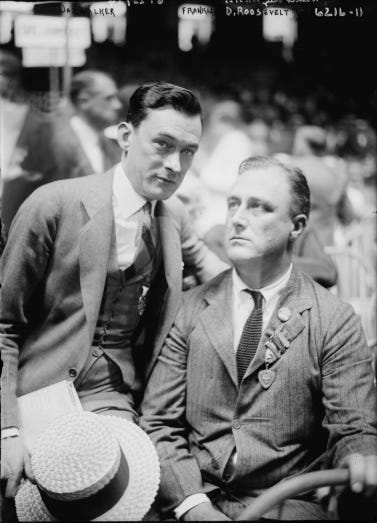
Eventually much of Jimmy Walker’s fun began to sour during the Great Depression. Suddenly, when the Stock Market crashed having an extravagant mayor didn’t really fit with the City’s vibe. Walker and Franklin Delano Roosevelt had connections to each other from Roosevelt’s days in the NYC political scene. Once FDR got into the presidential office, one of his first easy wins was cutting ties with his old friend. FDR needed to do something to shake up NYC’s reputation for corruption and Walker couldn’t have been a more obvious scapegoat. Walker’s administration was under investigation for multiple accusations of fraud and FDR decided to preside over the hearings himself. Rather than let FDR remove him from mayoral office, Jimmy Walker decided to resign on September 1, 1932.
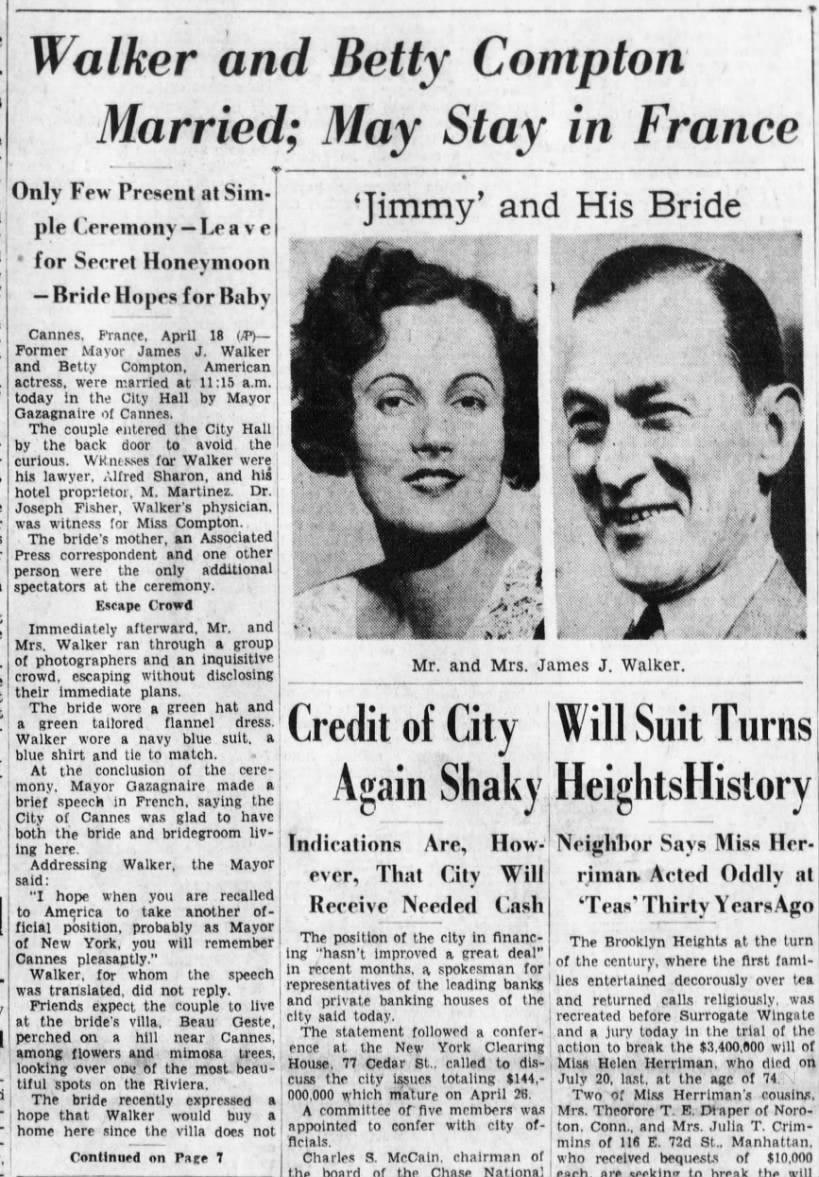
After never being charged with a crime for his behavior as mayor, naturally Jimmy Walker decided to take a Euro Trip. He brought his new wife, Betty Compton, who was previously an actress and musician. The two spent 3 years traveling Europe before returning to New York in 1935. When Walker returned, he was still very popular with much of the public. Walker frequently was a toastmaster at banquets and even became president of Majestic Records. Heading a music label seemed to fit more of Jimmy Walker’s style.


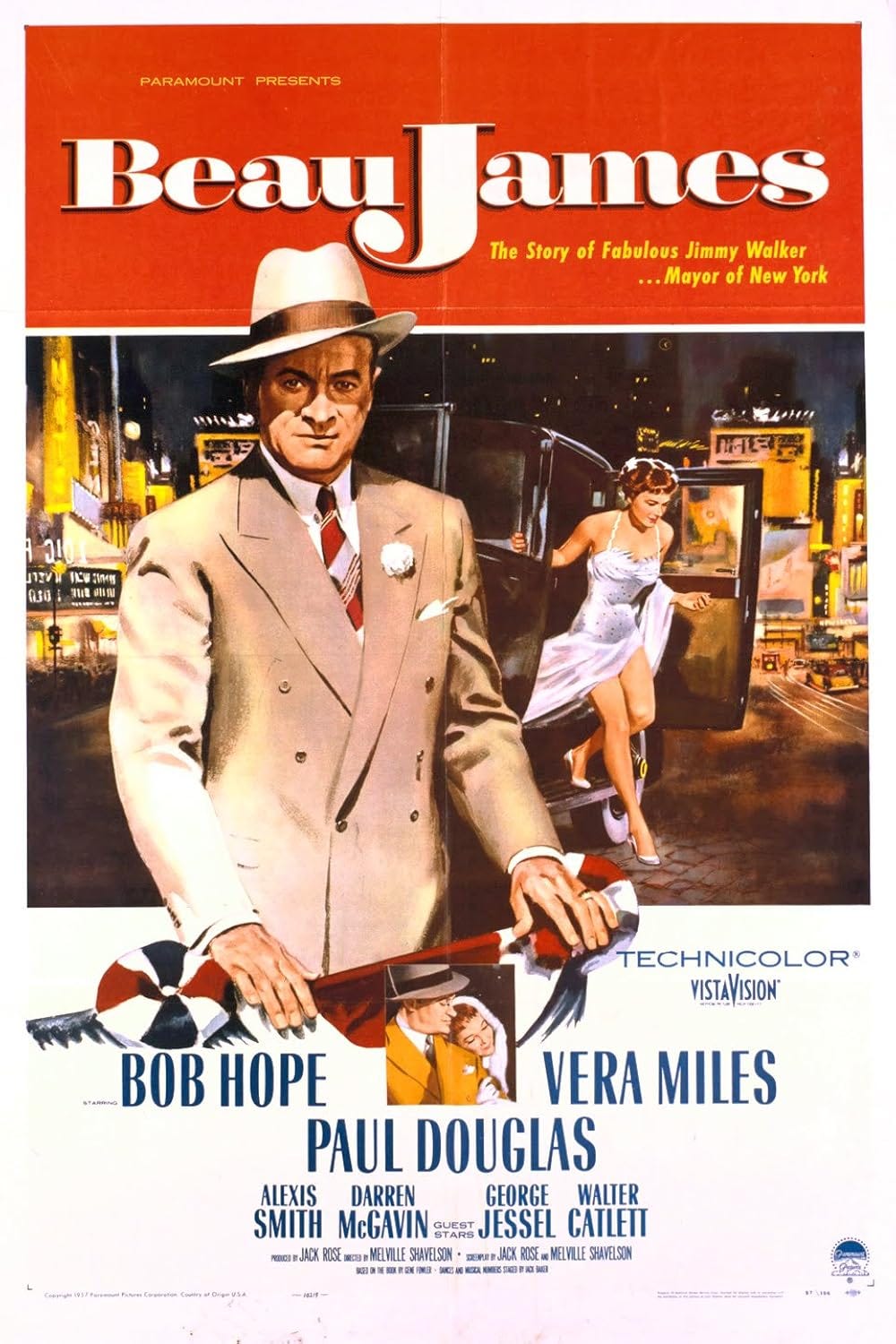
At 65 years of age, Jimmy Walker passed away in 1946. Jimmy Walker’s father, William H. Walker, had an idea to build a park in Greenwich Village in 1888. Originally known as Hudson Park since 1896, New York City decided to name the park after Jimmy Walker in 1947. It’s undergone multiple renovations with a baseball field even being added to the playground. A decade after his death, Jimmy Walker also had a film made about him in 1957 called Beau James. It romanticized the New York City mayor as a symbol of the jazz era, overlooking some of the scandal. While far from perfect, Jimmy Walker was a product of his time and seemed to be the perfect caricature of the mayor of The City during the Roaring Twenties.