Stumblin' Along 3/22 '26
Schoolyard Days

- A bit about Pearl River
Schoolyard Days
- YouTube Rabbithole
Alright @YouTheReader,
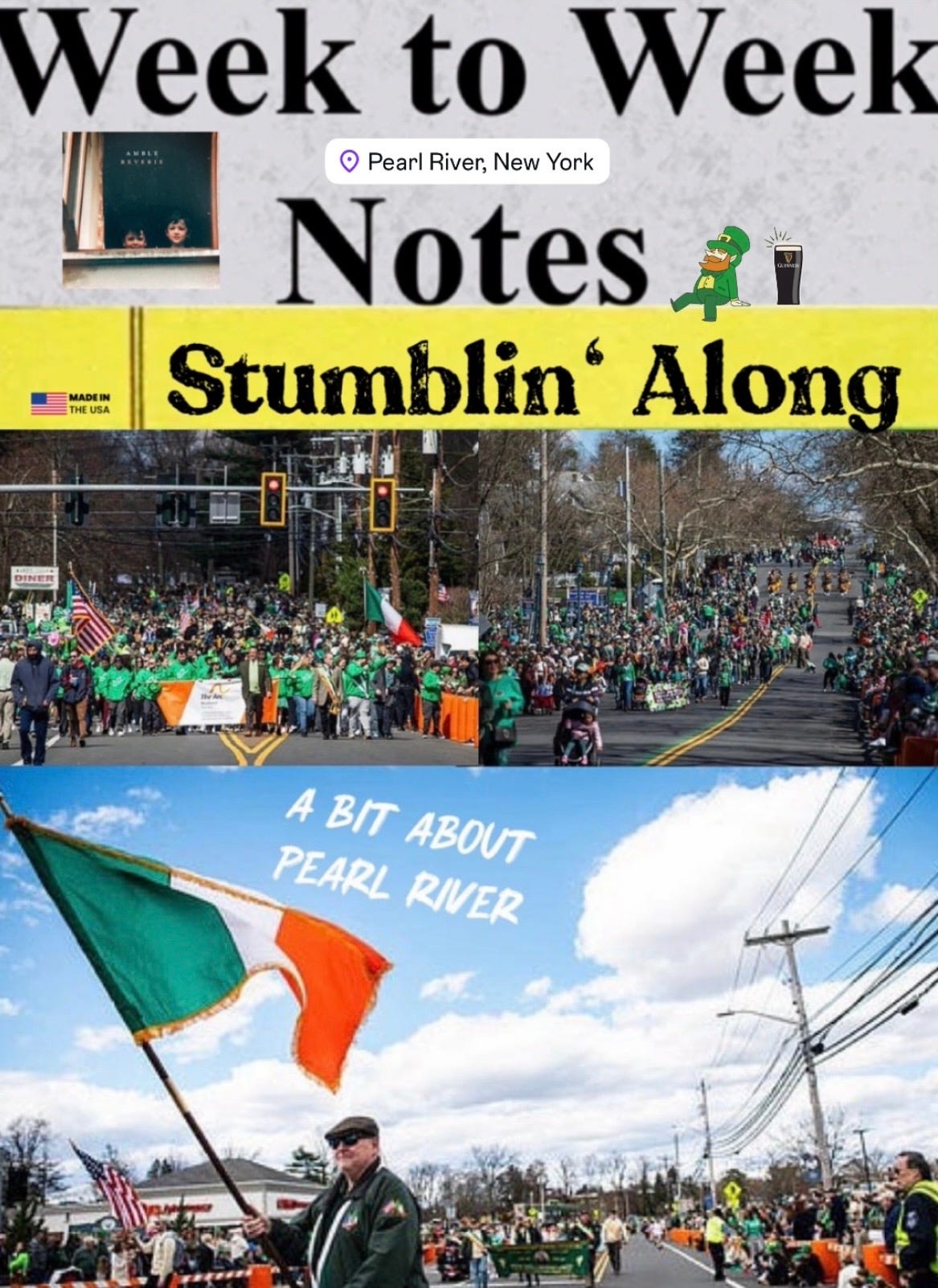
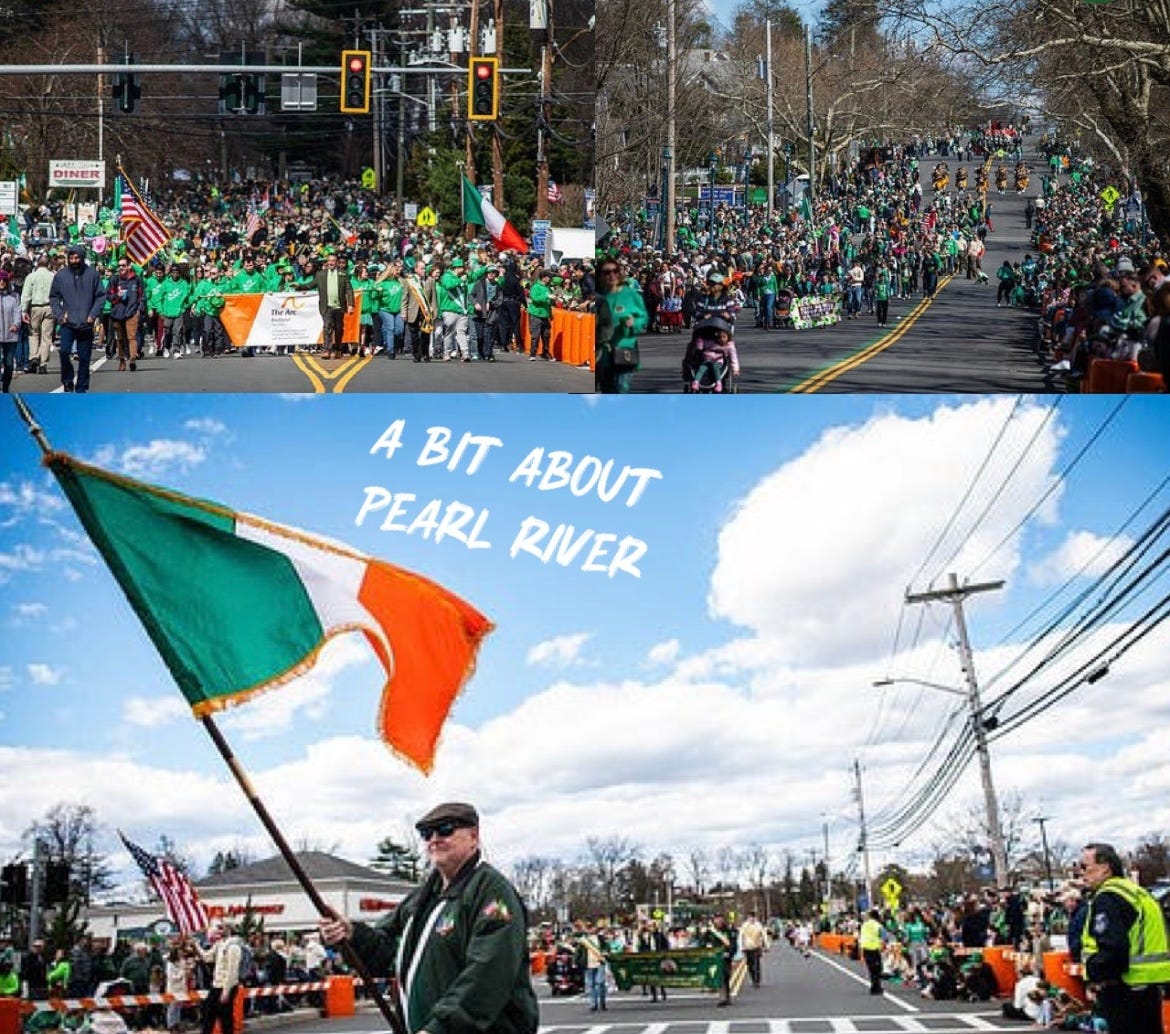
Today is the 63rd Annual Saint Patrick’s Day Parade in Pearl River, New York, so here is…
The earliest written record of the Town of Friendly People goes back to June 25, 1696, when two Irish lads, Daniel Honan and Michael Hawdon, purchased the land from the Indians. In those days, technically, the King of England had to sign off on property purchases, so Honan and Hawdon got the thumbs up from King William through New York Governor Benjamin Fletcher. The purchase of the Hackyackawck land was known as the Kakiat Patent. In 1716, a fella named Daniel De Clarke then purchased a big chunk of the Kakiat Patent, which is how today there is a Clarkstown. After initially being a part of Orange County, in 1798, Rockland County was formed because it made things easier for residents to handle jurisdictional matters and allowed for the creation of their own courthouses.
(Source: Library of Congress)
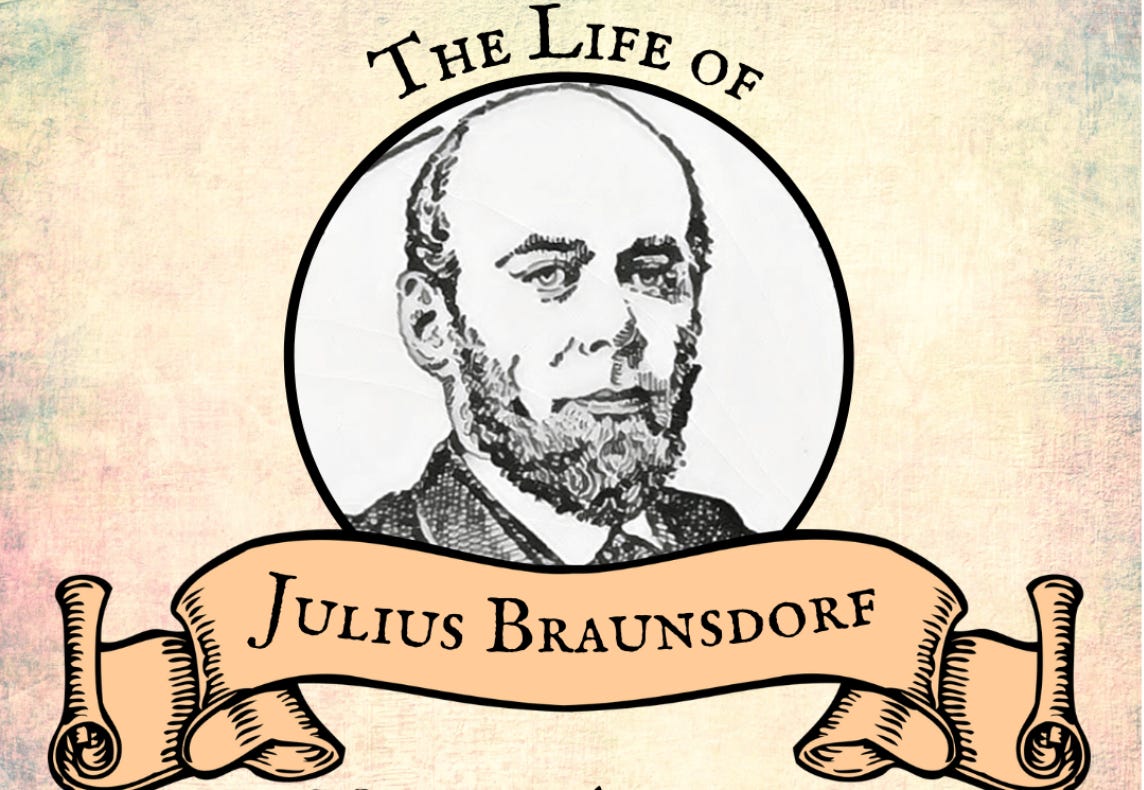
Mostly used as farmland throughout the 1800s, Julius Braunsdorf decided to switch things up in Rockland. Born on April 25, 1829, in Danzig, Prussia (today known as Gdańsk, Poland), Julius Braunsdorf married Miss Julia Schmidt in Germany. The Braunsdorf couple got busy quickly, having ten children and emigrating to the United States, likely sometime in the 1860s. They originally settled in Nanuet in 1864. After winning a patent court fight in 1870 against rival holders of a sewing machine, the Braunsdorf family could afford 95 acres of land that bordered New Jersey and was called Muddy Creek. The town of Muddy Creek was swamplands with five different sections nicknamed Middletown, Sickletown, Pascack, Muddy Brook, and Naurashaun. Upon acquiring the town of Muddy Creek, Braunsdorf renamed it Pearl River because he allegedly found pearls in the creek, and the name had a better ring to it.
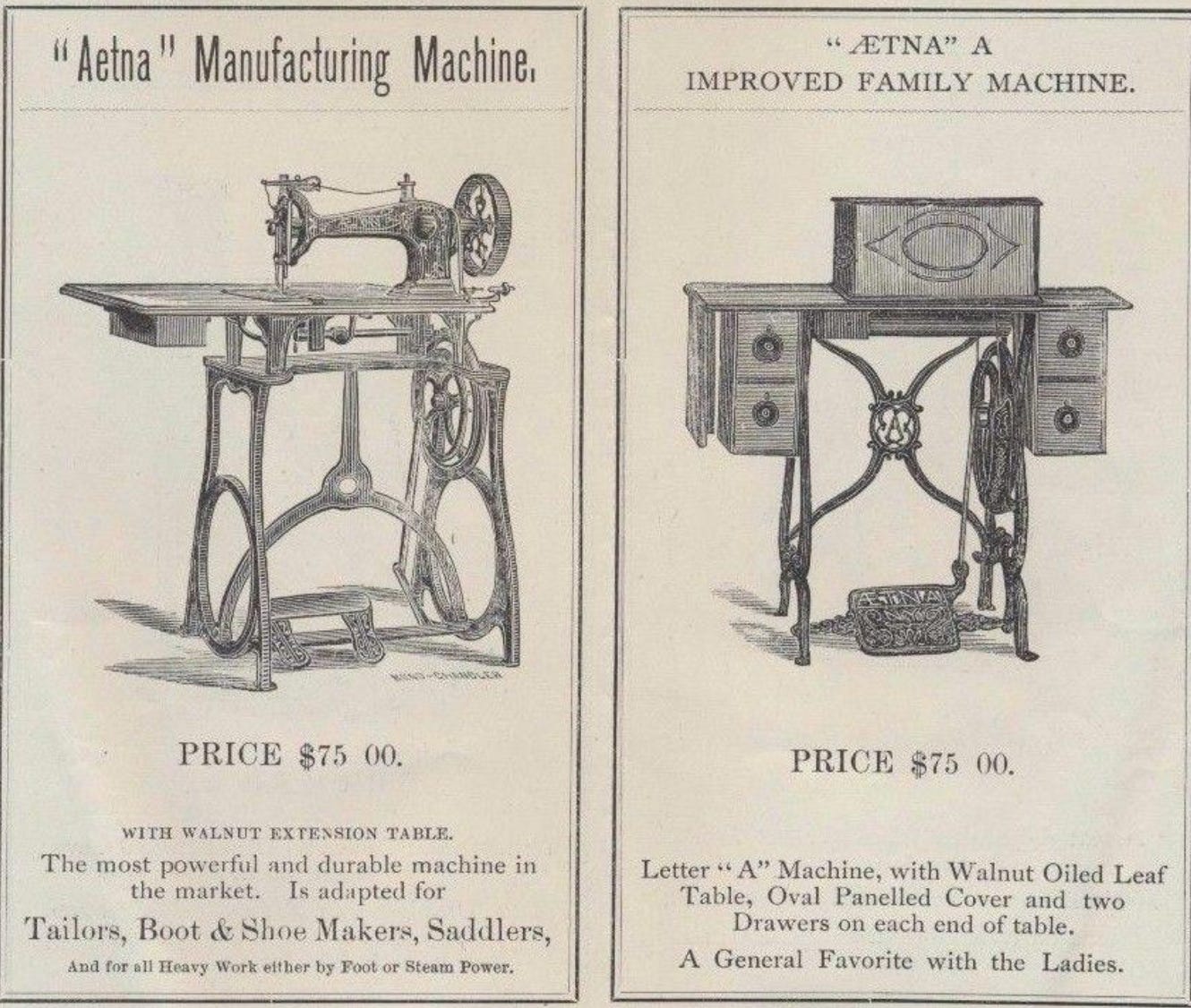
Julius Braunsdorf’s first order of business was attracting skilled workers and businesses. He created the Aetna Sewing Machine Company in 1872. The company didn’t just sew clothes; it produced machinery for printing presses, electrical generators, and carbon arc lamps. Six years before Thomas Edison, Julius Braunsdorf invented the carbon arc light bulb in 1873. Braunsdorf’s lightbulbs were installed in New York City harbor to help with ships at night and were the first electric lights ever used in Washington, DC. He was awarded a patent for the lightbulb in May of 1880; however, at just 51 years of age, he passed away just 3 months after receiving the patent. Many are saying that had Braunsdorf not passed away so soon, his name would be in the history textbooks as the inventor of the lightbulb instead of Thomas Edison.
(Source: Fiddle Base)
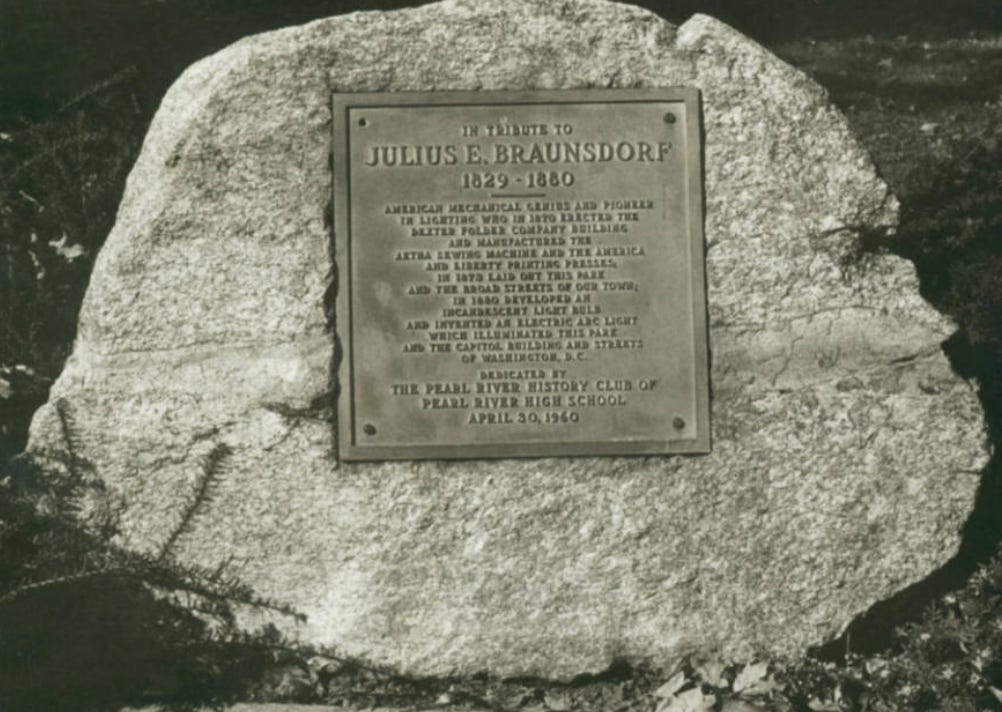
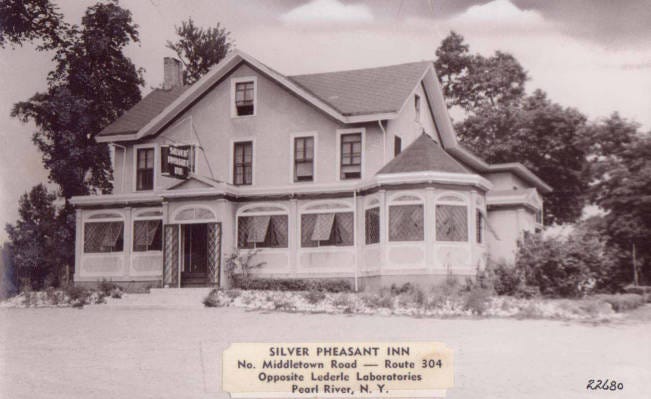
More on Julius Braunsdorf, the man was named the “Father of Pearl River” for a reason. Braunsdorf donated land for the construction of the Pearl River Train Station. Before the Pascack Valley Line, the train route was run by the Erie Lackawanna Railroad Company. Built in 1871, the train station always ran to Hoboken, New Jersey, where you could catch a ferry to Manhattan. Braunsdorf was also responsible for other public works, such as giving up land for the first school building, creating the downtown Pearl River Memorial Park, running the first general store, and serving as Pearl River’s first postmaster. Before the Braunsdorfs moved to the Muddy Creek, the town only had two streets (Pearl Street and Washington Avenue). He was responsible for drawing out and naming Central Avenue, Franklin Avenue (after Benjamin Franklin), and William, John & Henry, which were named after 3 of his sons. Not only did he lay out the land of the town, but he built houses for the factory workers and even established a popular showplace on North Middletown Road, which would later be known as Silver Pheasant Inn. I’m almost 99% positive you can still grab a bite to eat there today; it’s just now called AquaTerra Grille.
(Source: 1960 Journal News Article: Julius Braunsdorf’s Unknown Facts)
Once Braunsdorf passed in 1880, another businessman moved on as the Aetna Sewing Machine Company building would become the factory for Dexter Folder Company. Founded by Talbot C. Dexter, we’re not talking about the folders you would stuff your homework in; Talbot Dexter revolutionized how newspapers, books, and magazines were folded during manufacturing. He invented the Cleveland Folding Machine, which was named not after the city in Ohio but President Grover Cleveland. It’s important to note the factory itself was responsible for producing the folding machine, which would then be sold to publishers and manufacturers.


One of the first successful companies based out of Pearl River, Dexter Folder Company started out with 50 employees and grew to over 300 after WWII. The company was even incorporated in 1894, so it was a pretty big deal. By the 1950s, Dexter Folder Company would merge with Goss Printing Press Company and Miehle Printing Press to form Miehle-Goss-Dexter. You can still visit a part of the old factory of Dexter Folder Company today if you grab a pint at Defiant Brewery, located on Dexter Plaza right next to the train station.
(Source: Maple Shade History)
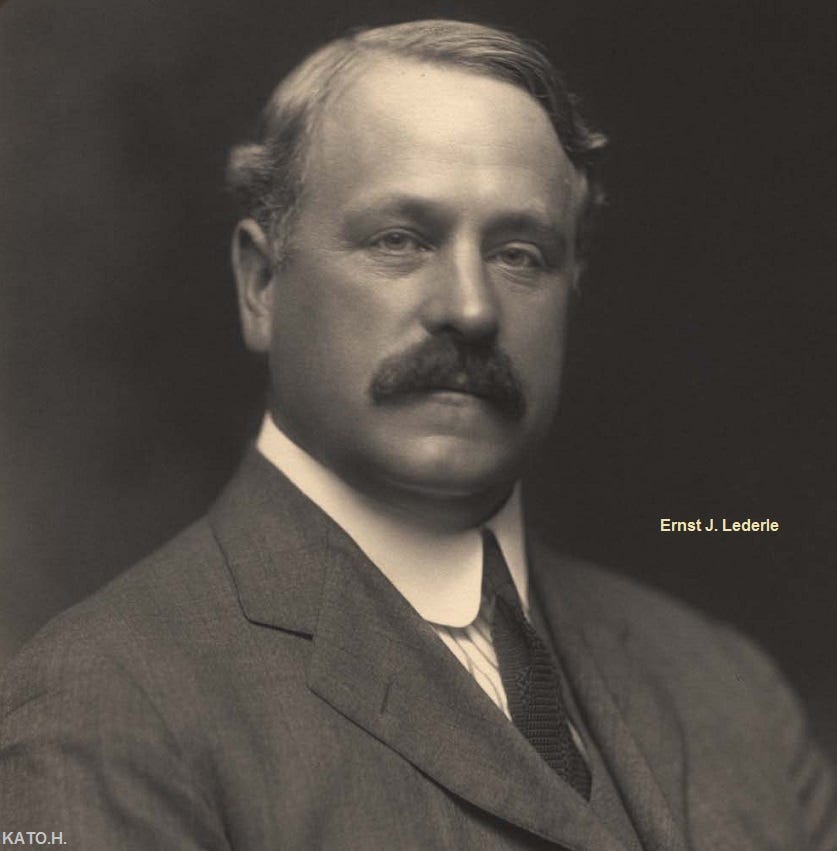
Okay, here’s where shit starts to get a bit more interesting. From 1902 to 1903, Dr. Ernst J. Lederle served as the New York City Health Commissioner. With the influx of newly arrived European immigrants living in tenement apartments came the rapid spread of disease. During his first term as NYC Health Commish, Lederle implemented a forced vaccination program against smallpox that treated 810,000 people. The elite chemist decided to step down as health commish in 1904 to begin a consulting business. In 1906, Dr. Lederle formed Lederle Antitoxin Laboratories in New York City, as he saw the business opportunity and the need to develop new medical products. A year into his new venture, Lederle Labs expanded by purchasing a 99-acre dairy farm in Pearl River, NY. In 1908, there were over 40 employees on the site; however, by 1910, Ernst J. Lederle returned to serving as the NYC Health Commish and was forced to relinquish all authority over his labs.
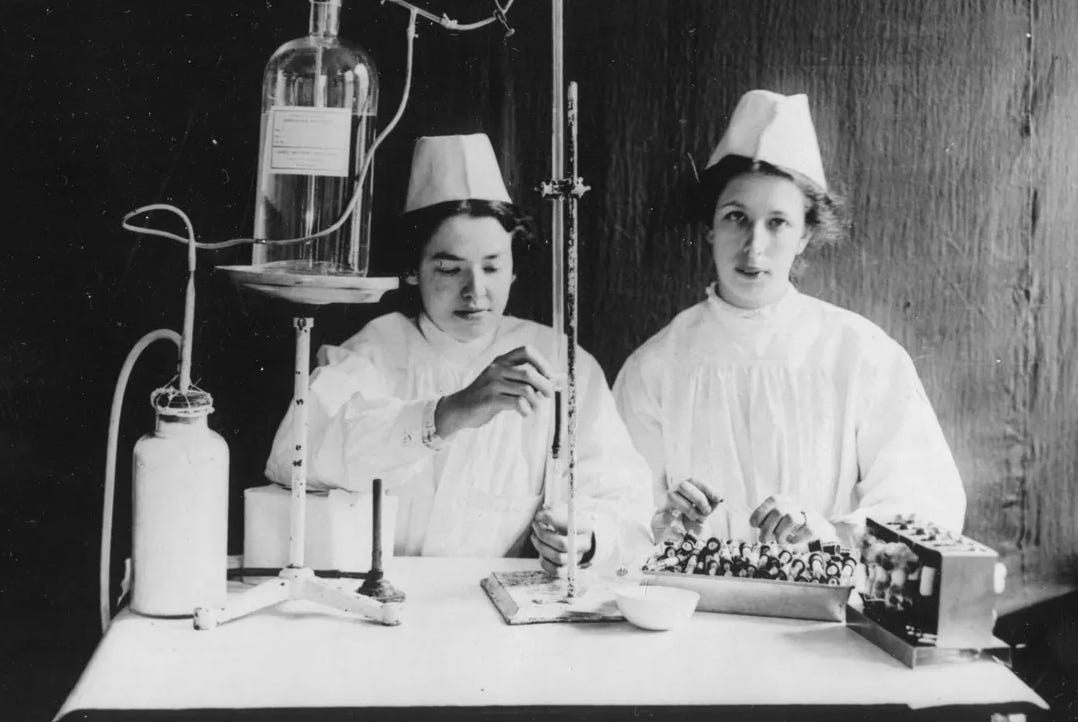
Despite Ernst J. Lederle leaving the company he built, his Pearl River campus still played a major role during World War I. With a staff of about 100 employees, they produced the only gas gangrene antitoxin, 1 million smallpox vaccines, and tetanus antitoxin for the Doughboys. In 1925, Lederle Labs was responsible for the diphtheria antitoxin medication used to prevent an outbreak of the 674-mile Iditarod Trail Dogsled Race to Nome, Alaska (otherwise known as the movie Balto).
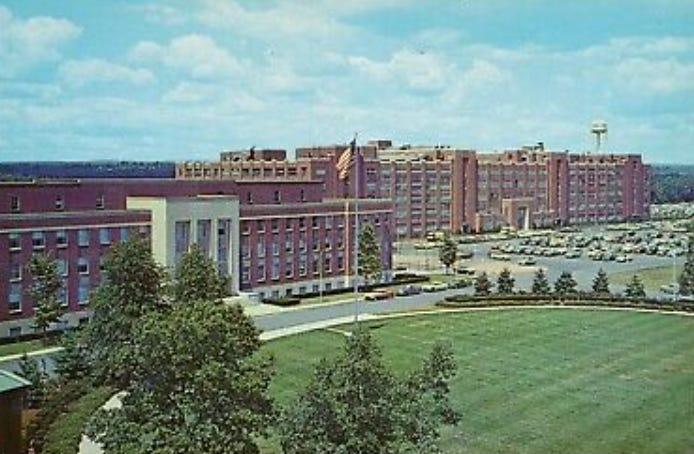
Lederle Laboratories would get bought by American Cyanamid in 1930, but their name remained on their products. During World War II in 1942, Lederle Labs produced a third of all typhus vaccines, one-half of all gas gangrene antitoxin, one-quarter of all blood plasma, one-third of all influenza vaccines, and one-half of all tetanus vaccines for the armed forces. Lederle Labs was also responsible for other breakthroughs, such as Aureomycin in 1948 (treated bacterial infections that penicillin couldn’t), Orimune in 1963 (oral polio vaccine that gave permanent immunity), Centrum in 1978 (the multi-vitamin), and Novatrone in 1988 (a potent anti-cancer agent).
(Source: Lohud)
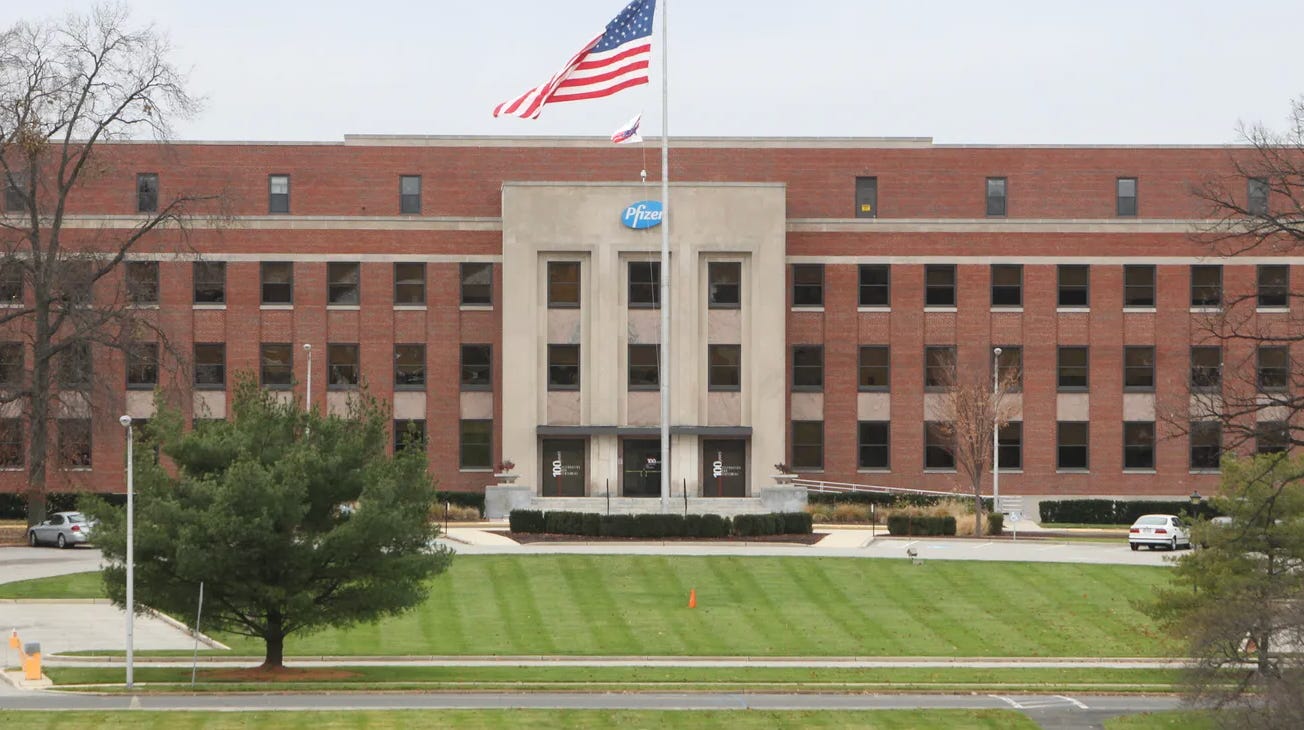
In the past 3 decades, the Lederle Lab campus has been sold 3 times to American Home Products in 1994, Wyeth in 2002, and Pfizer in 2009. Aside from being the starting site of the Pearl River Saint Patrick’s Day Parade and a massive parking lot to make a U-turn, I have no idea what goes on on the campus anymore. It sounds a lot like Lumon in Severance. Speaking of TV Shows….
Pearl River was setting of the the first weekly show in television history to be broadcasted in color. The show was called, Norby, and it was released in 1955. The premise of the show was it being a small town in New York, where Pearson Norby is elected VP of the town’s bank. He had a wife and two kids which led to some fun PG old-fashion 1950s banter. Part of the reason it was the first show shot in color was because it was produced and sponsored by Eastman Kodak. Despite having an 8.8 IMBD Score, Norby only lasted 1 season of 13 episodes. Total travesty.
(Source: Nostalgia Central)

While Julius Braunsdorf was inventing away, there was also another very important establishment in Pearl River. Originally called the Pearl River Brewing Company, it also served as a hotel. Established in 1872, it was 5th oldest building in town and is Pearl River’s oldest bar. During the Prohibition era, it was called the Sweet Spot. The Sweet Spot was a speakeasy with a candy storefront. All of the equipment from the Pearl River Brewing Company was moved to the Fire Department down the road. Beer was piped underground from the firehouse to the Sweet Spot, and props to the firefighters for giving the Town of Friendly People what they wanted. You can still grab a pint of Guinness at the town’s oldest drinking establishment known as the Pearl River Hotel.
(Source: Pint&Pen&Paper Week 13 Vol I)
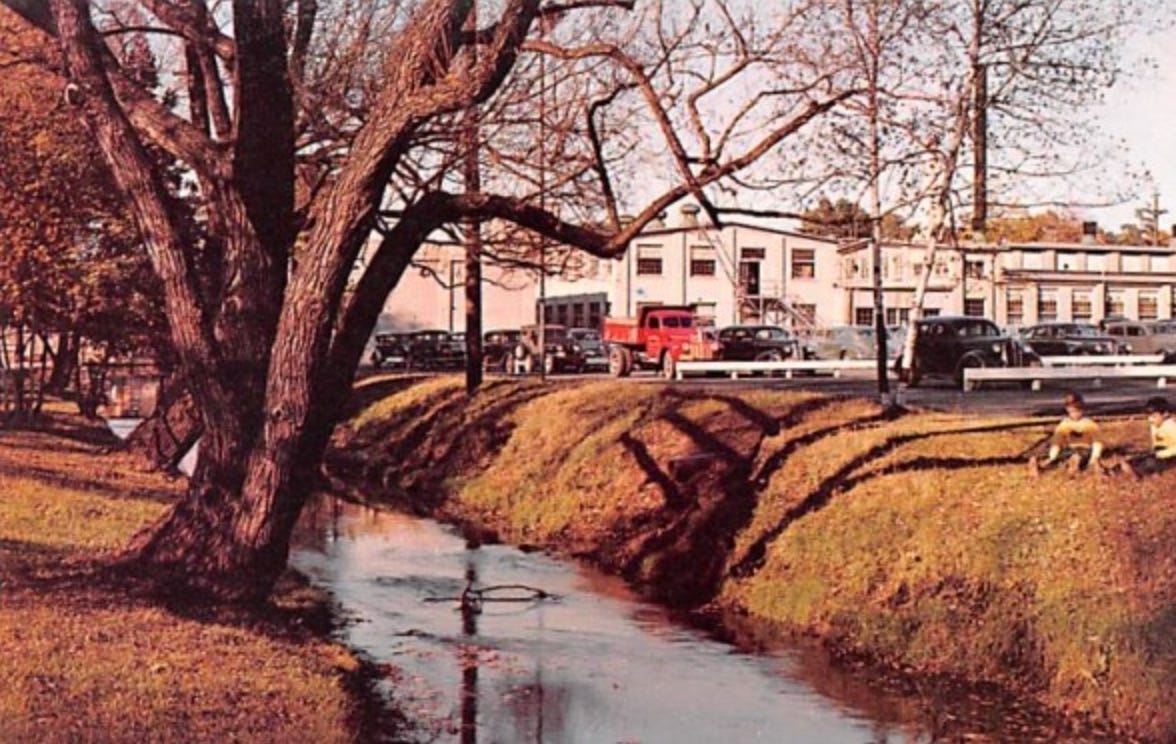
In the mid-1950s, Pearl River became a popular suburb hotspot for the Irish-Americans moving out of the Bronx. On Saint Patrick’s Day in 1963, the Rockland County Ancient Order of Hibernians organized the town’s first Saint Patrick’s Day Parade. Today, it has grown to become the 2nd biggest Saint Patrick’s Day Parade in the state of New York and usually I describe it as “probably the 4th or 5th biggest Saint Patrick’s Day Parade in the US of A.”
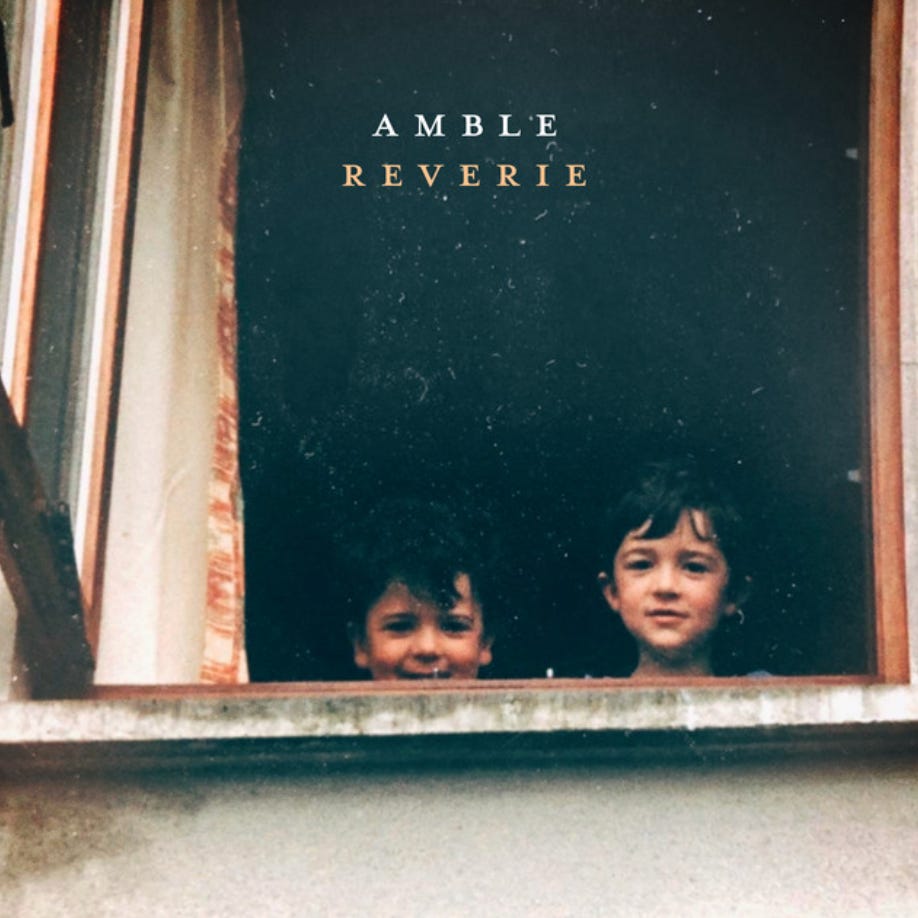
Today’s tune is Amble’s Schoolyard Days.