Stumblin' Along 2/15 '26
Love and Memories

Love and Memories
- History of Valentine’s Day
- YouTube Rabbithole

Alright @YouTheReader,
Today’s tune is O.A.R.’s Love And Memories because it’s the closest thing we have to a song called Love and History….

The origins of Valentine’s Day date back to the 3rd Century BC, or about 2,326 years ago. The Roman Empire is responsible for the holiday. At the time, they called it Lupercalia, a Roman fertility festival. From February 13 to 15, the Roman romantics “were drunk and naked”, states Noel Lenski, a religious studies professor at Yale University. These 3-day festivals included a matchmaking lottery in which young men drew the names out from a jar, and they would pair up for the duration of Lupercalia, or longer if the arranged match had chemistry and wanted to go steady afterwards. It was quite common for these matches to end in marriage.

As absurd as Lupercalia sounds, it might’ve even been crazier than one of those Diddy Hollywood or ███████ Island parties this century. The Romans believed the founders of their city, twin brothers Romulus and Remus, were nursed by a she-wolf named Lupa. As a token of their appreciation, every Lupercalia Roman priest would sacrifice a goat and a dog. The goat would symbolize fertility, while the poor doggo symbolized purification. They strip the skin of the goat, dip it into sacrificial blood, and then take it to the streets where women would be patiently waiting for them to whip them with the bloodied goat skin. While the priests were at it, they would also slap the skin on their crop fields for good measure. Not only were the Roman women cool with the bloodied goat skin, they more than welcomed it because it was believed to increase fertility.

After centuries of bloody Roman Diddy ███████ Island parties, Roman Emperor Claudius II had enough of the fertility festival, but not for the reason you may think. Also known as Claudius the Cruel, the Roman Emperor maintained that single men were better soldiers than married men with children. Claudius had difficulty recruiting Roman married men to fight, as they were unwilling to join the army because of their strong attachment to their wives and children. To increase army participation, Claudius banned all marriages and engagements in Rome. Valentine, a holy Roman priest at the time, felt that love was the answer and defied Claudius the Cruel’s orders. He continued to perform marriages between young people in secret until word got out, and he was arrested. While in jail, legend has it that Valentine left a farewell note for the jailer’s daughter, with whom he had become friendly, and signed it “From your Valentine.” On February 14, 270 AD, Claudius the Cruel put a hit on Valentine, beheading the Roman priest when he should’ve been celebrating Lupercalia.
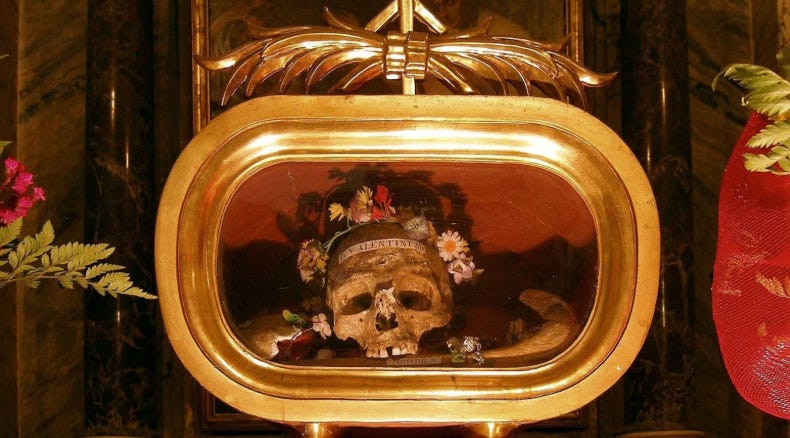
Two centuries after his death, Pope Gelasius I first celebrated Valentine’s martyrdom in a feast in 496 AD. This made Valentine a Saint in the Catholic Church and established February 14th as St. Valentine’s Day. The Catholic Church felt that the killing of the doggos was a bit much, so they got rid of the previous Roman Pagan Lupercalia festival, but incorporated the new holiday to be associated with love. As Noel Lenski put it, “Valentine’s Day was a little more of a drunken revel, but the Christians put clothes back on it. That didn’t stop it from being a day of fertility and love.” By 1375, English poet Geoffrey Chaucer wanted to spice things up with a bit of romance during the Middle Ages. Chaucer crafted a poem called “Parliament of Fowls,” which had a bar, “For this was sent on Seynt Valentyne’s day / Whan every foul cometh ther to choose his mate.” By the 16th century, William Shakespeare promoted the hell out of Valentine’s Day and helped spread its popularity throughout Europe. To this day, Rome, the Czech Republic, Ireland, Scotland, England, and France all have sites that claim to own Saint Valentine’s skull. The wild part is that they all might have a valid claim to a Saint Valentine skull, since there are about a dozen saints, plus a pope with that name.
(Sources: NPR & History Channel)
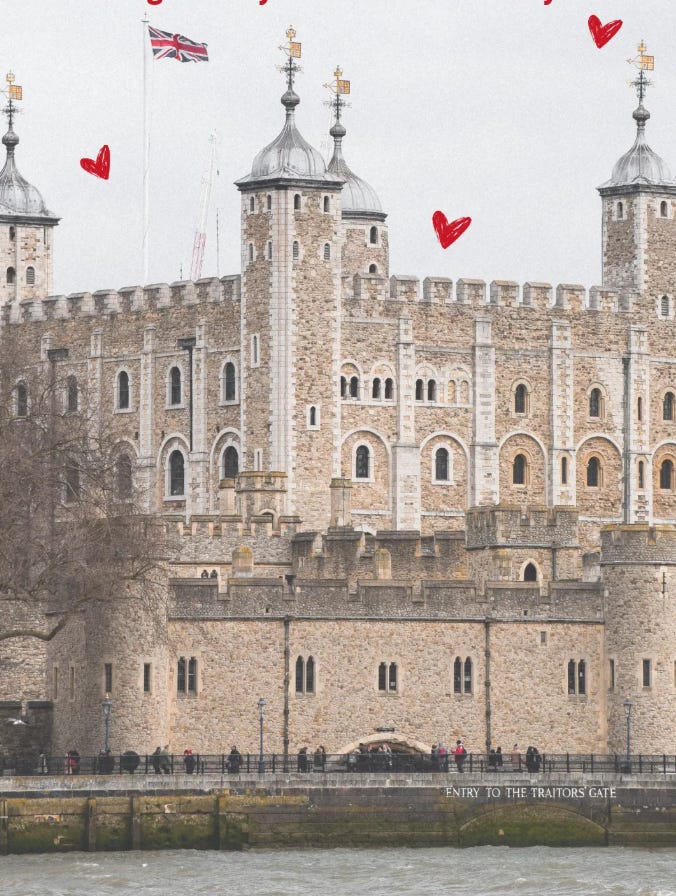
The oldest Valentine’s Day Card still in existence today dates back to 1415. Charles, the Duke of Orleans, was imprisoned at the Tower of London after being captured at the Battle of Agincourt. While locked up, Charles sent a love letter to his wife. It read…
‘God forgives him who has estranged
Me from you for the whole year.
I am already sick of love,
My very gentle Valentine.’
Very touching of Charles, Duke of Orleans. Unfortunately, he never made it out of the Tower of London to see his wife again, as he was imprisoned for 25 years, and she had passed away before his release. Nonetheless, his Valentine’s note would gain popularity, leading to the rise of handmade paper cards as a gift for significant others.


By the middle of the 18th Century, it became very common for lovers to exchange small gifts and handwritten notes on Valentine’s Day. Eventually, the Industrial Revolution would bring about factory-made postcards instead of handwritten notes. In the 1840s, Esther A. Howland is credited with selling the first mass-produced Valentine’s Day Cards. Thus, she would become known as “Mother of the Valentine.” By 1910, a card company was founded in Kansas City, Missouri, by Joyce Clyde Hall. He and his brother, Rollie, initially named the business Hall Brothers. They noticed a trend in the decline of postcard sales because people wanted more privacy in their mail. The Hall Brothers offered high-quality Valentine’s and Christmas cards that were to be mailed in specially designed envelopes. Not only was JC Hall a visionary for innovating mail, but he was brilliant at marketing his brand. JC Hall loved the word “hallmark”, not only because it was associated with a mark of quality, but because it included his family name. After changing the company name, Hallmark began marketing their brand by placing the name on the back of every card.
(Source: Hallmark)