Stumblin' Along 1/25 '26
Old Ways

Old Ways
- Top 10 Biggest Blizzards in USA History
- YouTube Rabbithole

Alright @YouTheReader,
Today’s tune is Tame Impala’s My Old Ways because I heard it at a bar in Brooklyn.

This was the opening song on Tame Impala’s newest album, which came out last fall. The music video is a bit out there, but the piano riff is pretty, pretty good.
On to a bit of history…

10. Snow Hurricane of 1804
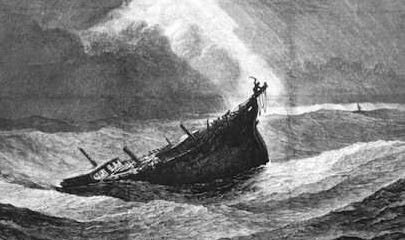
Kicking off with the United States’ first tropical cyclone in recorded history that produced snowfall. The Snow Hurricane occurred in New England in October of 1834, with upwards of 48 inches of snowfall in Vermont and New Hampshire. Weather historian David M. Ludlum suggests the winds that day reached 110 mph, as witness testimony of the day claimed the gusts blew down buildings and chimneys in the New England region. One random bit about this storm was a writer from Salem, Massachusetts, William Bentley, noted on October 7th, “Uncommon scarcity of Fish in our Bay” and pondered, “Do the storms drive fish from our surroundings?” Two days later, the Snow Hurricane hit, and he reported on the damage, “In Boston, the old people are said to represent that a storm like it happened on 16 September 1727. As yet I have found no tradition of such a storm among our old people or upon record or any report of its consequences. I suspect that as our winters have less horror we partake more of a southern climate from the great quantity of heat & consequently have more stormy weather of this kind & therefore may expect more of it in future years.” He was kinda spot on about the climate getting stormy weather over time and fish sensing when one is brewing.
(Source: Mass History)
9. The Great Blizzard of 1888


Who could forget The Great Blizzard of 1888? Taking place on March 11th, the Great Blizzard of ‘88 hit the Northeastern United States with hurricane-force winds and over 55 inches of snow. At the time of the blizzard, approximately 1 in 4 Americans lived in the area affected between Washington DC and Maine. The sheer amount of snow paralyzed New York City’s infrastructure, which at the point was was all above-ground transit. Up to 15,000 people were stranded on elevated trains, and their only option to get down was to pay a small fee for people below to use ladders. Wall Street, which typically had about 1,000 workers daily, had only 30 people able to commute to work, so the financial industry was shut down for three days. Over 200 people in New York City alone passed away from the Great Blizzard of 1888. One reason the New York underground subway system was built was the Great Blizzard of 1888.
(Source: History)
8. Great Arctic Outbreak of 1899
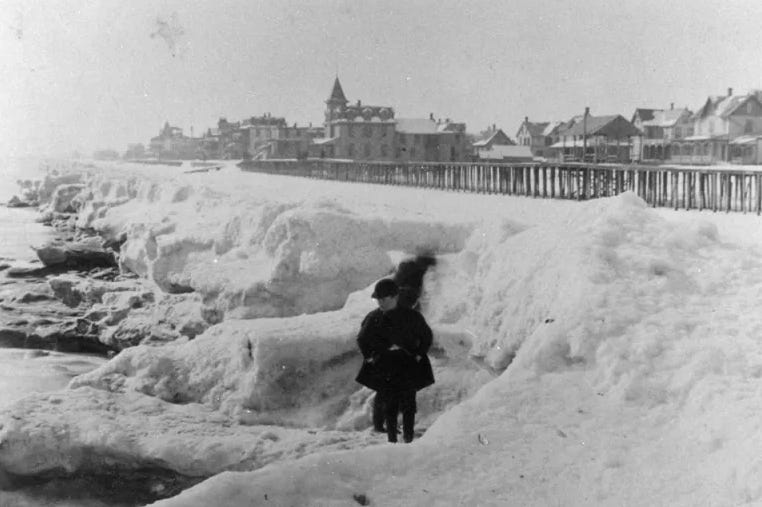
From February 11th to the 14th of 1899, the Great Arctic Outbreak of 1899, otherwise known as the Great Valentine’s Day Blizzard of 1899, set the record for the largest total snowfall ever recorded in one storm in New Jersey. The Jersey Shore’s Cape May saw 34 inches of steady snow in a 52-hour period. Meteorologist Joe Martucci, President, Cup A Joe Weather and Drone, said of the Great Arctic Outbreak of 1899, “This storm was impressive for many reasons…Its persistence and strength were unusual… (Surprisingly), South Jersey saw more snow than North Jersey. Less than an inch fell in typically snowy New Jersey places like Sussex County.” The bitter cold first hit the West Coast at the start of February, with temperatures dropping to 33°F in San Diego and 12°F in Seattle. By the time the extreme cold snap hit Montana, temperatures had dropped to -61°F, with wind chills estimated to approach -100°F across the northern Plains.
(Source: Cape May Magazine)
7. The Knickerbocker Storm (1922)


The Knickerbocker Storm hit the upper South and mid-Atlantic United States, dumping a Washington, DC record 28 inches of snowfall. Nicknamed after the Knickerbocker Theater in the nation’s capital, the storm took place over two days on January 27th to 28th of 1922. With the storm winding down on the second night, hundreds flocked to catch a showing of the silent film “Get-Rich-Quick Wallingford.” During the movie’s intermission, the Knickerbocker Theater’s roof gave way to the weight of the wet snow. Concrete, bricks, metals, and even the balcony rained down onto the audience. A total of 98 people passed away from the tragedy as Army Major George S. Patton was called upon for the rescue efforts.
(Source: History)
6. The Great Appalachian Storm (1950)
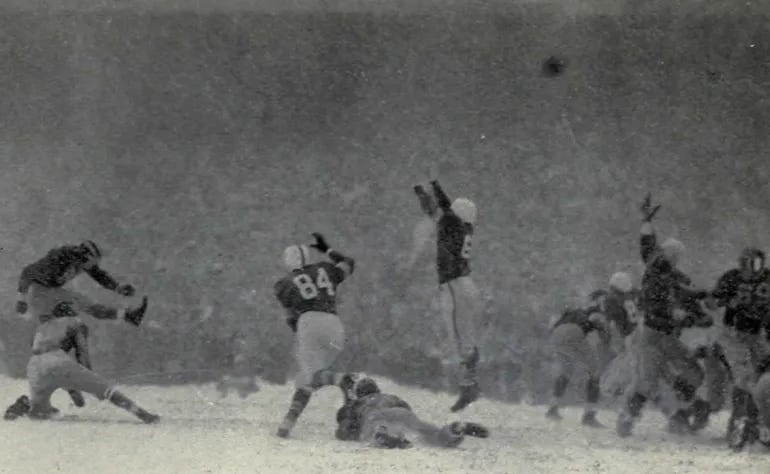
The Great Appalachian Storm occurred on the Thanksgiving weekend of 1950, with as much as 62 inches of snow blasting the central Appalachians. The storm even reached Big Ten country, as the Ohio State Buckeyes faced the Michigan Wolverines in their annual rivalry. Michigan would beat the Buckeyes 9-3 in what would be coined the Snow Bowl, with about 2 inches of snow falling per hour. Reports are that the 50,000 fans in attendance just straight up lit fires in the stands to stay warm. As for the Appalachians, temperatures rose almost immediately after the storm passed, causing extensive flooding in the region. At least 160 people passed away from the combination of the snowstorm and the flood.
(Source: Cardinal News)
5. The Blizzard of 1978
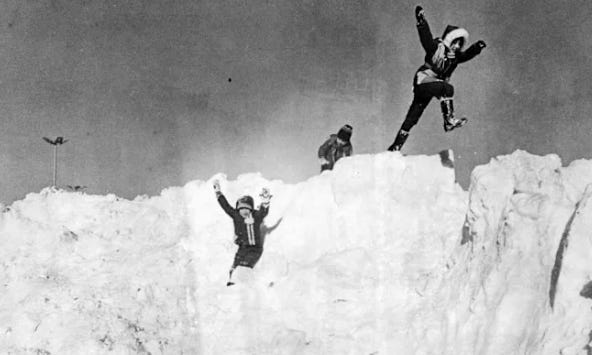
The Blizzard of 1978 first struck the Midwest of the US in late January. At the time, a record 12.2 inches of snow fell on a single day in the Ohio area. As the blizzard moved into the Northeast the following week, meteorologists struggled to predict its severity. Meteorologists initially had the storm hitting the Northeast on February 5th, but snowflakes failed to materialize, and everybody assumed it was a faulty forecast. By the time the snow really started coming down, people had already been going about their regular day, so they were surprised when whiteout conditions took place. With hurricane-force winds and 20 inches of snow, massive snowdrifts formed, trapping families at home and workers in their offices. Not great, but at least the kids enjoyed the snow.
(Source: Mental Floss)
4. The Storm of the Century (1993)
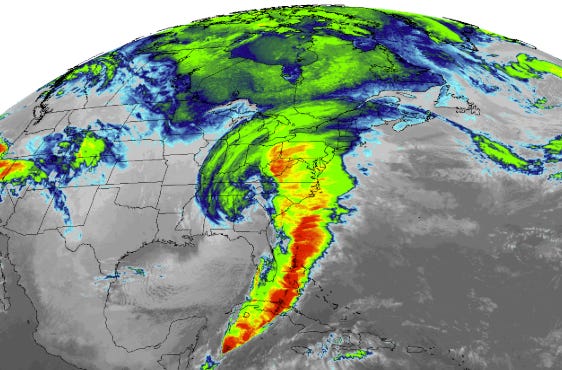
Coined “The Storm of the Century”, the deadliest American blizzard of the 20th century took place in March of 1993. Originally forming in the Gulf of Mexico, the great cyclonic storm affected over 26 states and Canada. There were over 300 deaths recorded and an estimated $10 billion in damages. As horrible as that sounds, many believe it could have been much worse. By the early ‘90s, sophisticated computer models enabled the National Weather Service to issue severe storm warnings two days in advance. For the first time, governors could declare a state of emergency before the snowflakes even touched the ground. There were record-breaking highs of 56 inches in some regions, and Long Island may have had it the worst, as 15 homes were swept out to sea.
(Source: Weather.gov)
3. Snowmageddon – 2010
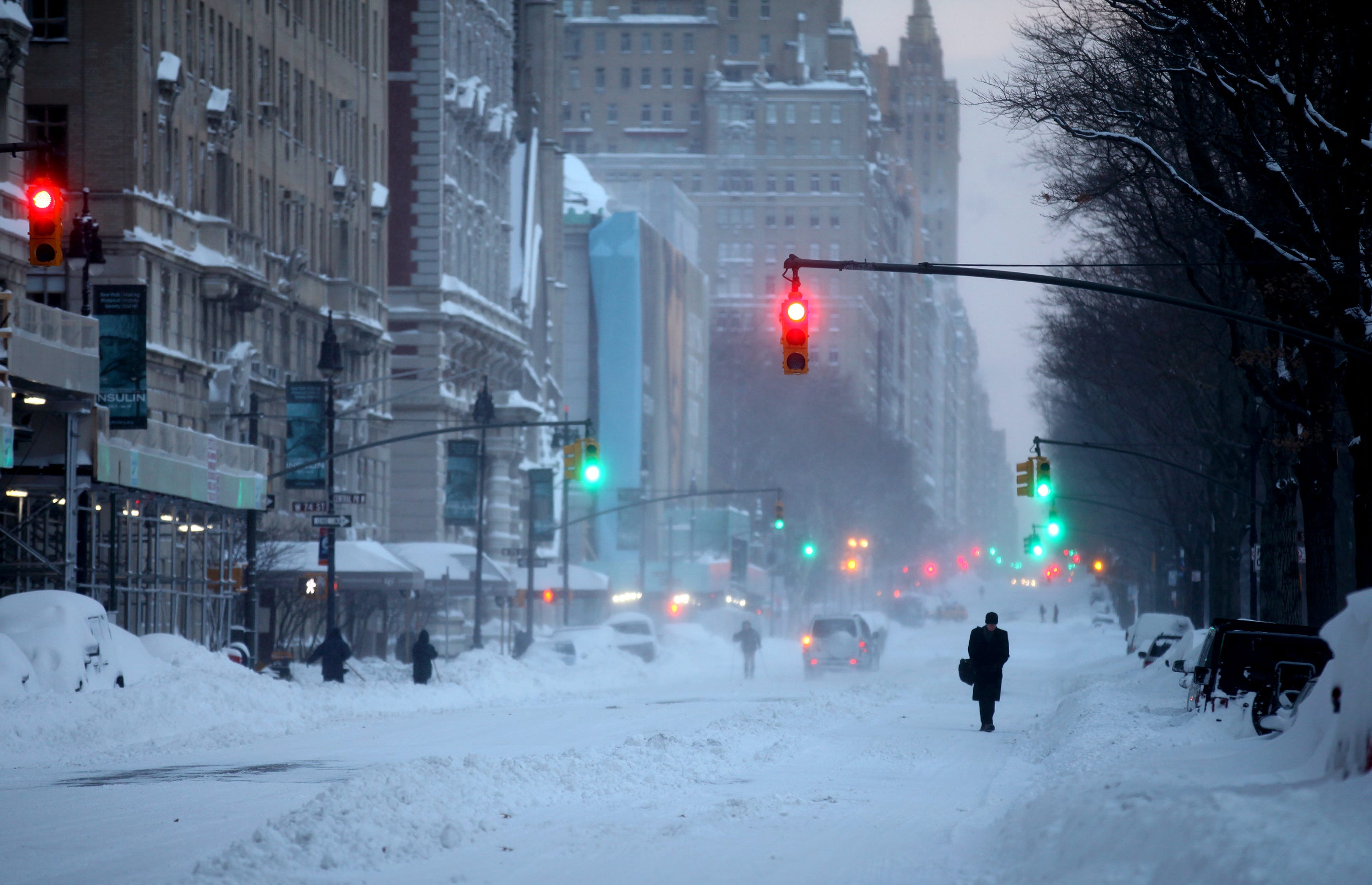
The Snowmageddon of 2010 happened two days after Christmas, with over 30 inches of snow falling in NYC. The timing may have been the most memorable part, as holiday travelers were stranded across the country. Airlines had to ground 7,000 flights due to a rare meteorological phenomenon known as thunder snow. Apparently, there was thunder and lightning accompanied by heavy snow rather than rain. Who knew that was even a thing? Very cool of Mother Nature. What wasn't cool of Mother Nature was that some of The City’s transportation system shut off due to two feet of snow and high winds, with roughly 500 passengers stranded for 6 to 10 hours on an A train near Kennedy Airport in Queens. Brutal, but at least Central Park looked nice.
(Source: NBC NY)
2. Snowzilla (2016)
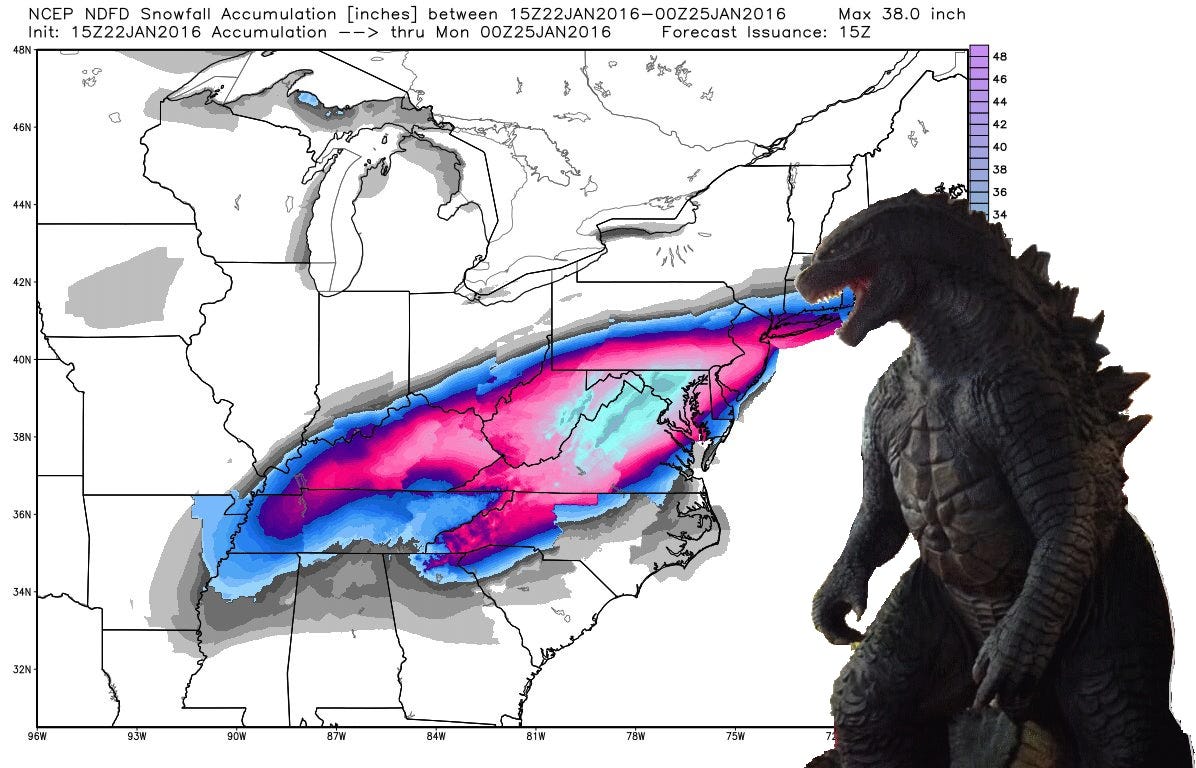
For some reason, the Washington Post named the January 2016 blizzard after Godzilla because of its massive size. Other meteorologists named it Winter Storm Jonas, but that doesn’t have the same bite, so we’ll go with Snowzilla. I gotta be honest, I’m looking at the dates of when this blizzard happened, and it was probably during syllabus week of college, so I don’t remember this at all.
(Source: Triple A)
1. December 2022 North American Winter Storm