Stumblin' Along 1/18 '26
Fast Car

- Martin Luther King Jr.
Fast Car
- YouTube Rabbithole
Alright @YouTheReader,
With tomorrow being a federal holiday in the United States for MLK Day, I figured this Stumblin’ Along history should be a bit about the man…
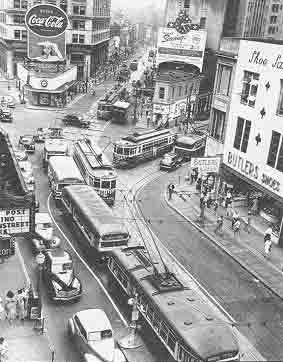
Born on January 15, 1929, in Atlanta, Georgia, Martin Luther King Jr.’s name at birth was Michael. His father changed Michael’s name to Martin Luther King Jr. at age 5. King Sr. made the name change because of a trip to Germany and was inspired by the Protestant Reformation leader Martin Luther. Both of his parents were Baptist preachers. MLK grew up middle-class on Auburn Avenue, also known as “Sweet Auburn.” During his childhood, the neighborhood was home to some of the country’s most successful black businesses. One such business was Atlanta Life Insurance, founded by Alonzo Herndon (a former slave). It was the first black-owned life insurance company in the US. On this avenue, other financial businesses, such as Citizens’ Trust Bank (the first African-American-owned bank), were also founded in 1919.
(Source: National Museum of African American History & Culture)
Martin Luther King Jr. was a very bright student. At 15, he skipped grades 9 through 12 of high school and went to Morehouse College. During WWII, a special wartime program was created to boost the enrollment of promising students such as MLK. Before he went to Morehouse College, however, he spent one summer on a tobacco farm up north in Connecticut. It was one of the first times he ever experienced race relations outside of the South. He wrote a letter to his parents, “Blacks and whites go to the same church. I never [thought] that a person of my race could eat anywhere.” In 1948, he graduated with a Bachelor’s degree in Sociology. MLK would credit the president of Morehouse College, Dr. Benjamin E. Mays, as one of the most inspirational people of his life. It was Mays who convinced MLK to become a preacher, as the then-college student was unsure whether he wanted to follow in his parents’ footsteps.
(Source: History)
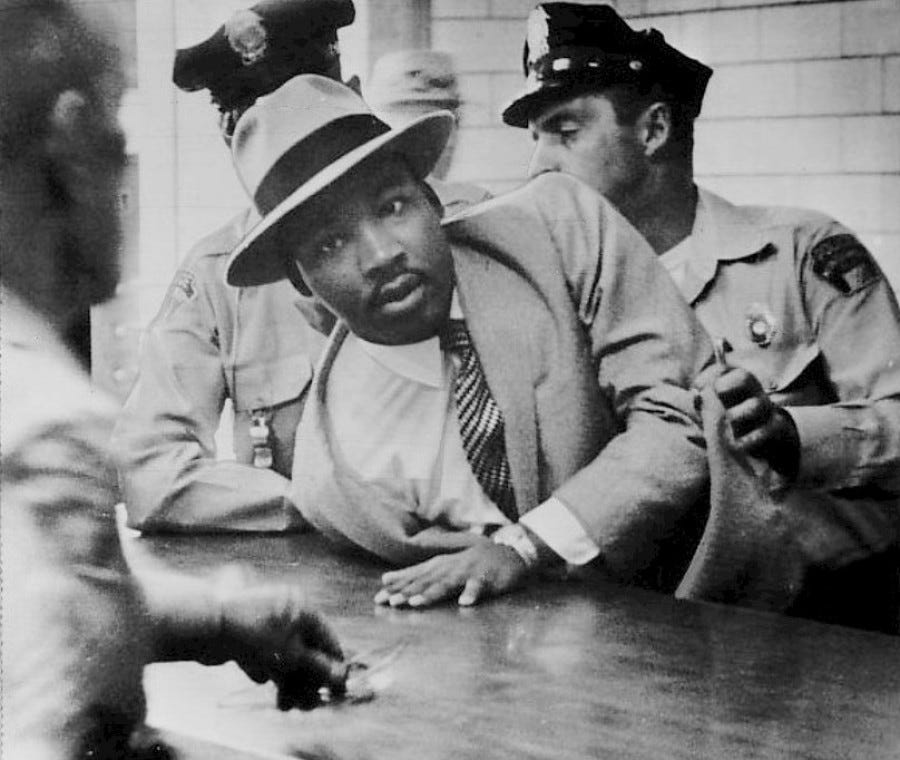
After graduating from Morehouse College, Martin Luther King Jr. got his doctorate at Crozer Theological Seminary in Chester, Pennsylvania. Crozer is where Dr. MLK learned the ways of Mohandas Gandhi and his philosophy of nonviolent protest. Even though it was the 1950s and Crozer was nearly exclusively a white student body, Dr. MLK was elected president. After Crozer, he would meet his wife, Coretta, in Boston and return to the South in 1953, becoming a pastor at a Baptist Church in Montgomery, Alabama. Around this time, Dr. MLK started becoming a more active civil rights advocate. On December 1, 1955, Rosa Parks refused to give up her seat on the bus to a white passenger, which got her arrested. Following this unjust arrest, Civil Rights Activists formed the Montgomery Improvement Association and decided that King was the right man to lead the cause. Within a week of Rosa Parks’ arrest, Dr. MLK would be arrested for the first time on December 5, 1955. Dr. MLK would get arrested another 28 times; at least, that is the recorded figure of the number of times he spent in jail. Quite a number of these were bogus arrests, such as one time in 1956 when he committed the cardinal sin of driving 30 mph in a 25 mph zone.
(Source: Today In Civil History)
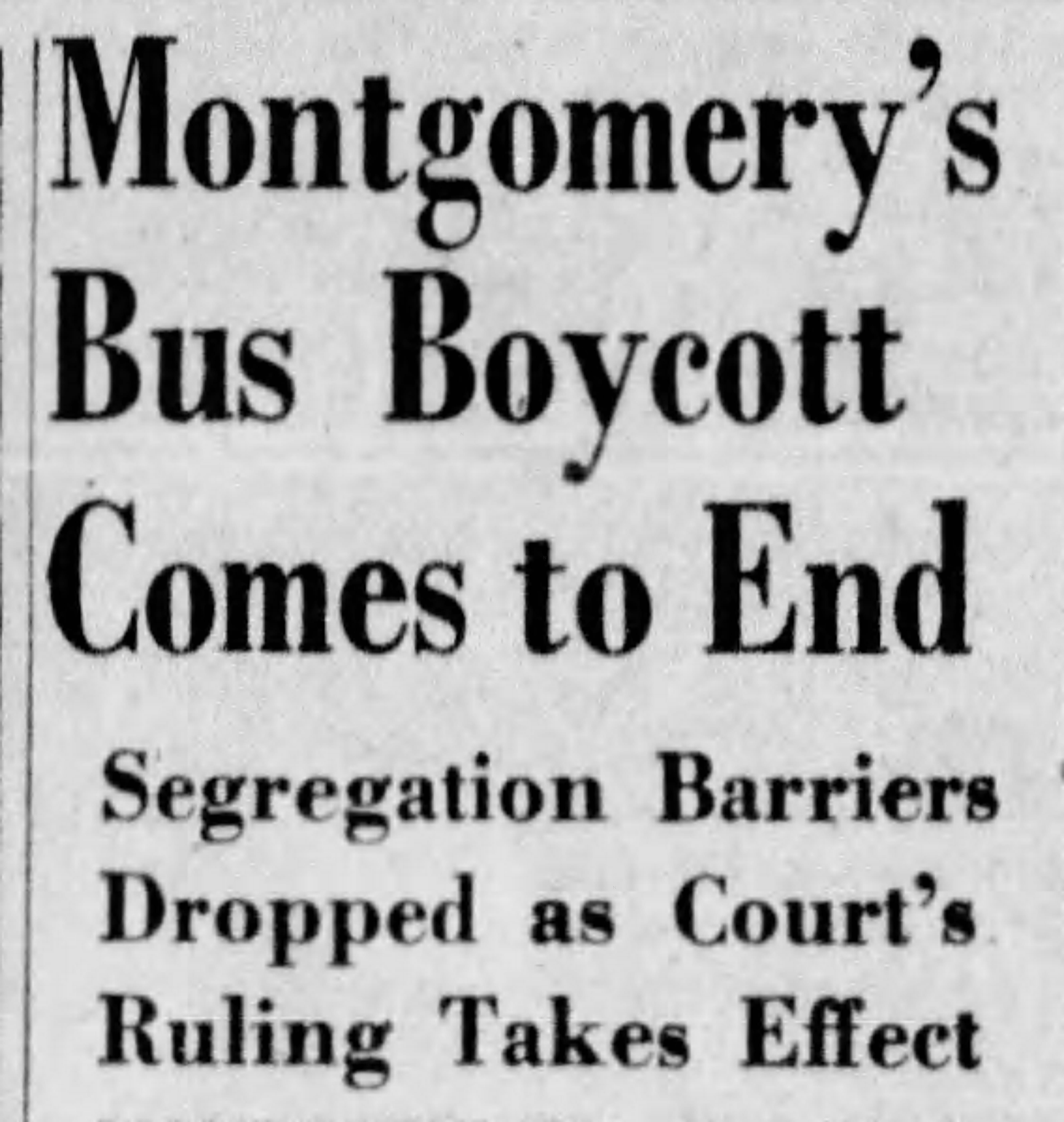
The Montgomery Bus Boycott proved to be successful, as 40,000 black bus riders boycotted the transit system. However, this did come with a price, as Dr. MLK Jr’s home would be dynamited, and his family’s safety was at extreme risk. Dr. MLK and the Montgomery Improvement Association created a list of demands that would need to be met before they lifted the boycott, including courtesy, hiring black drivers, and a first-come, first-served policy. It wasn’t until the NAACP got involved that the city of Montgomery was sued for having the segregation laws in busing invalidated. These 40k bus riders still had places to go and people to see, so to sustain the boycott, they started carpooling. African-American taxi drivers would charge only 10 cents (the same as the bus), and more people began simply walking from place to place. On June 5, 1956, a Montgomery federal court ruled that any law requiring racially segregated bus seating violated the 14th Amendment to the U.S. Constitution. That amendment, adopted in 1868 following the U.S. Civil War, guarantees all citizens—regardless of race—equal rights and equal protection under state and federal laws. The city of Montgomery would appeal this decision to the Supreme Court. On December 20, 1956, the US Supreme Court sided with the lower court. The very next day, Montgomery’s buses were integrated.
(Source: History)
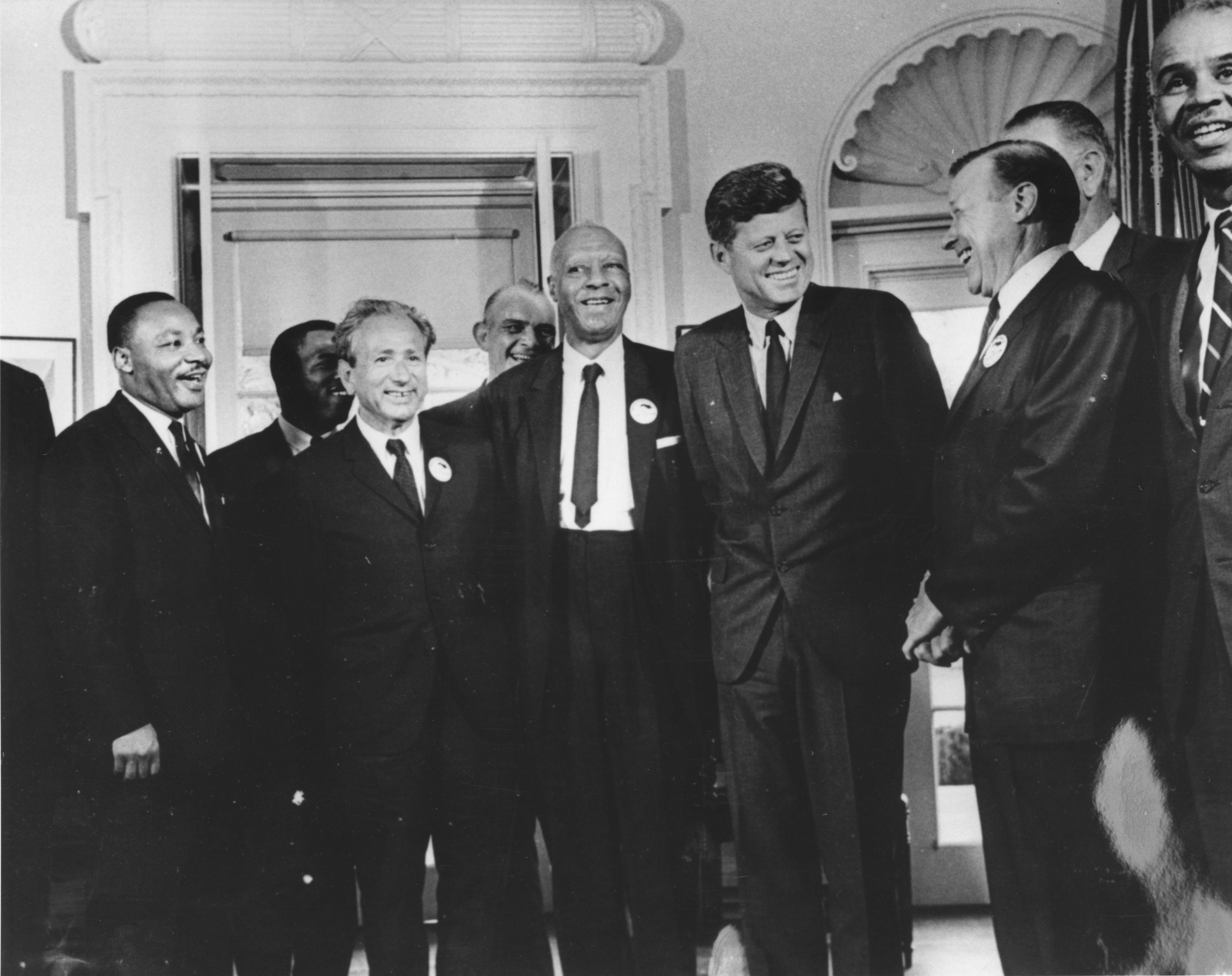
Following this major victory in the Civil Rights movement, Dr. Martin Luther King Jr. would form the Southern Christian Leadership Conference to sustain the momentum. Through the SCLC, Dr. MLK would gain a more prominent national platform to speak on behalf of civil rights. In 1960, he moved back to Atlanta to become a co-pastor with his father at Ebenezer Baptist Church. That October, MLK was arrested along with 33 others protesting the segregation of a lunch counter at an Atlanta department store. While the charges would be dropped, he violated his probation for minor traffic offenses, including his 1956 speed limit ticket. Thus, MLK was not released from jail until the Democratic presidential candidate John F. Kennedy intervened. This event happened 8 days before Kennedy’s 1960 election win and played a key role in his winning.
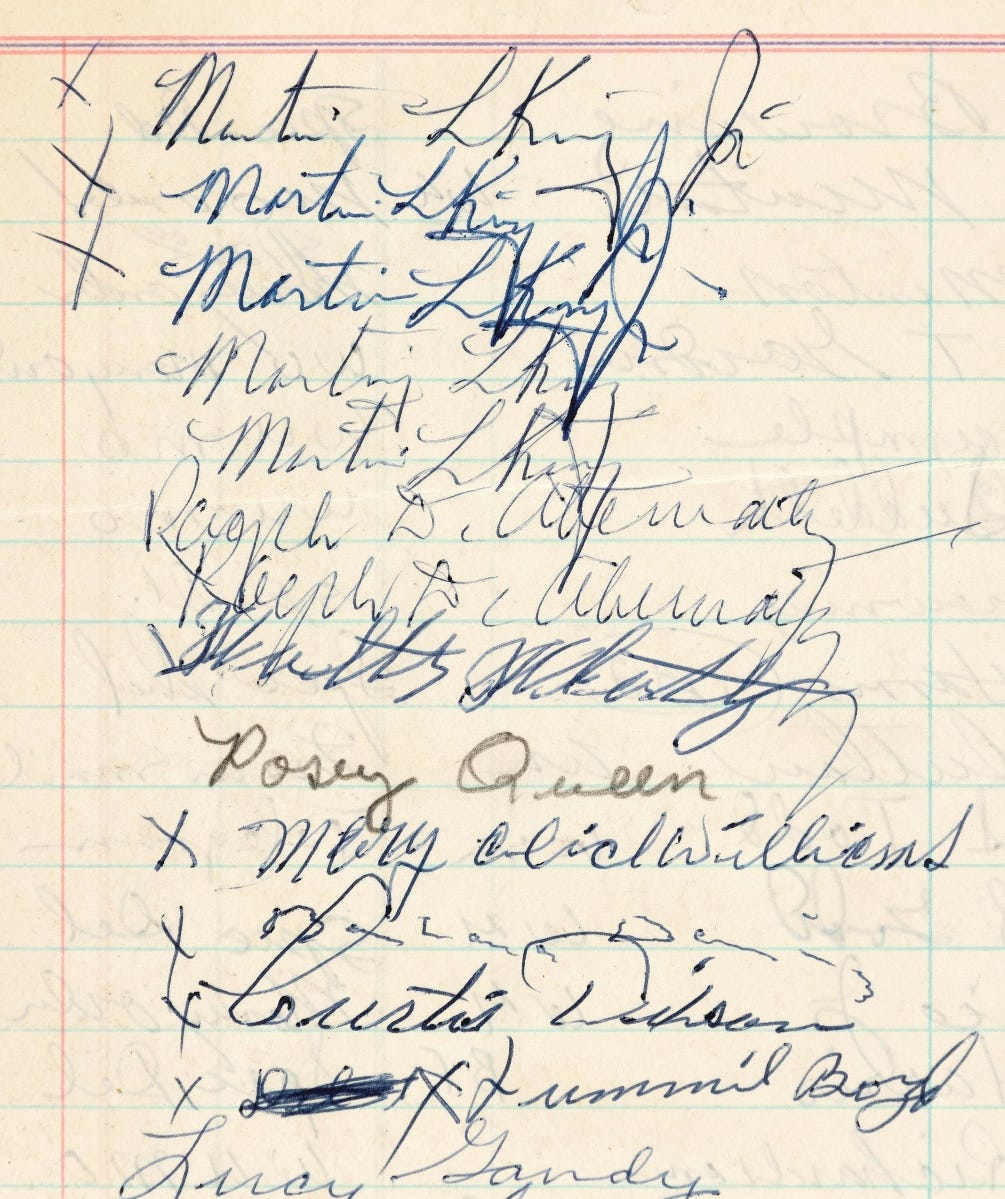
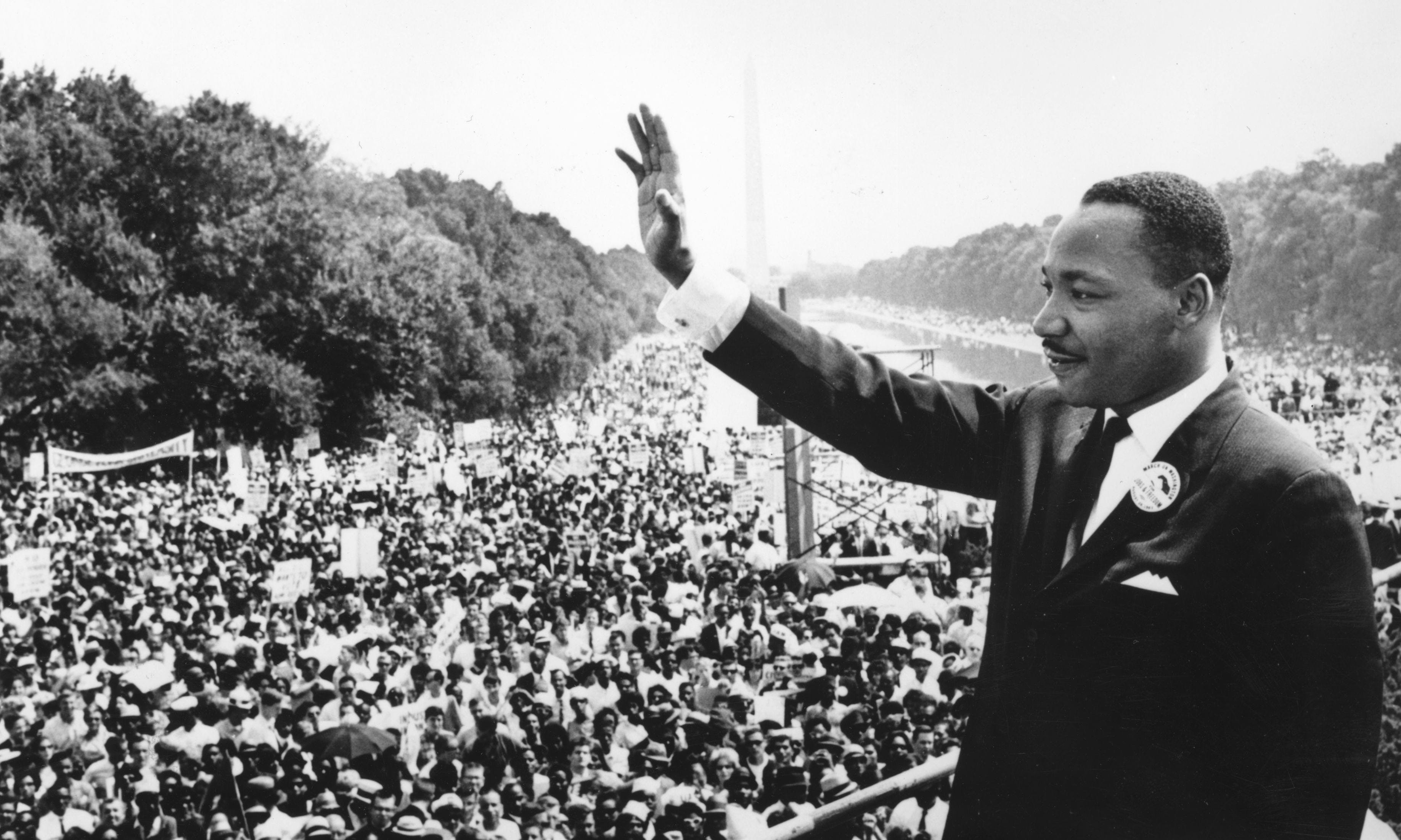
Despite having the President of the United States on his side, Dr. MLK would still face more jail time for his peaceful civil rights protests. In the spring of 1963, he continued his campaign to end the segregation at lunch counters. He was once again thrown in jail, this time in Birmingham, where he penned plenty of letters. Later that summer of 1963, Dr. MLK would join other civil rights leaders in the historic March on Washington after being released from his Birmingham jail cell. On August 28, 1963, Dr. MLK gave his “I Have A Dream” speech to over 200,000 of his fellow marchers in the shadows of the Lincoln Memorial, with one of the most quotable lines being, “I have a dream that one day this nation will rise up and live out the true meaning of its creed — we hold these truths to be self-evident: that all men are created equal.” Dr. MLK won the Nobel Peace Prize the following year in 1964. Despite the endorsement, he continued his work well past the accolades. His next goal was to fix the federal voting rights laws that disenfranchised African Americans in the South. This led to his march on Selma, which later led to the Voting Rights Act of 1965.
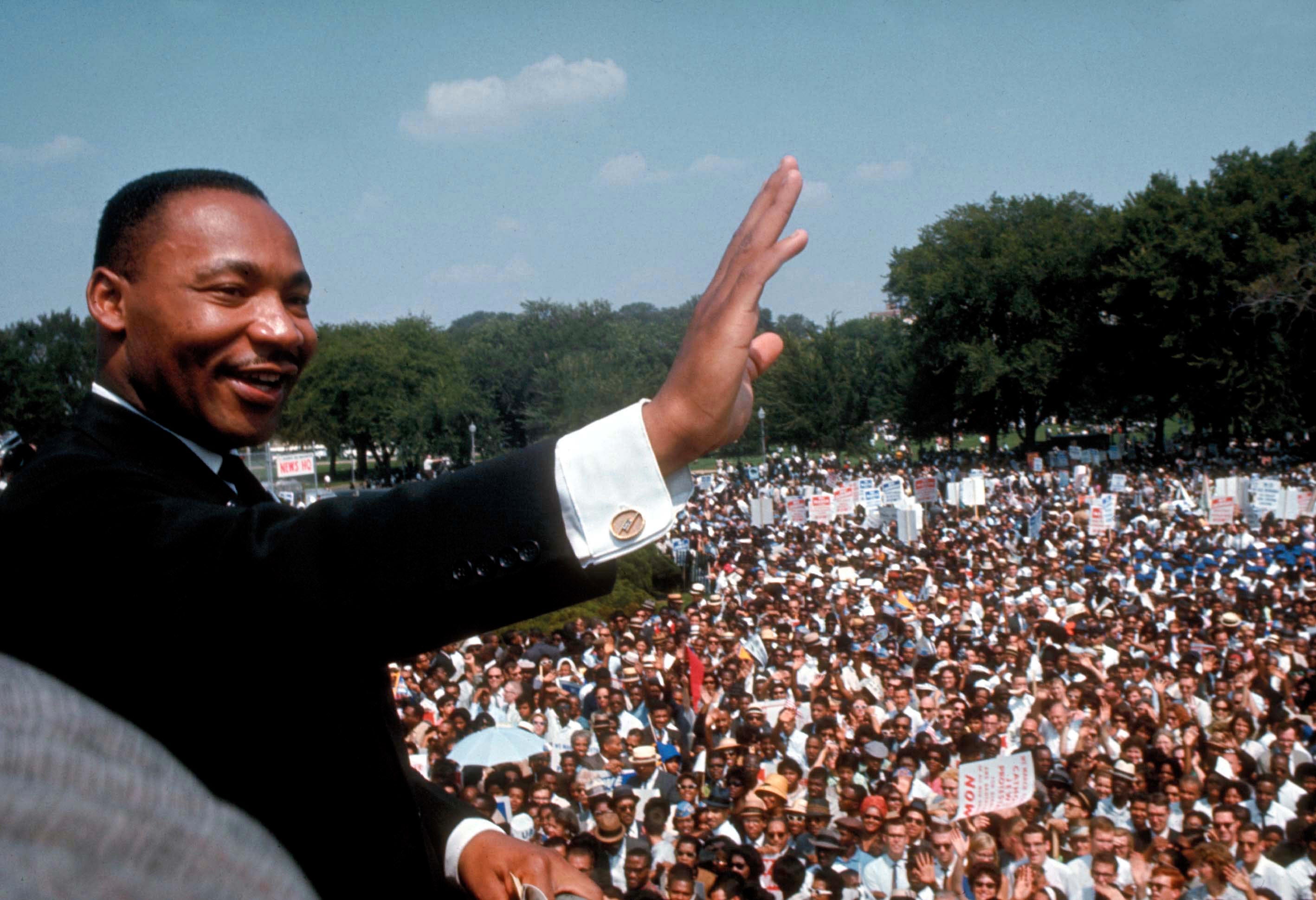
Sadly, Doctor Martin Luther King Jr. was assassinated on April 4, 1968. Easily one of the most important figures in 20th-century American history, in 1983, Dr. MLK became the 3rd American to have a federal holiday observed on their birthday, joining George Washington and Abraham Lincoln. We celebrate Dr. MLK Jr. Day on the 3rd Monday of January every year.
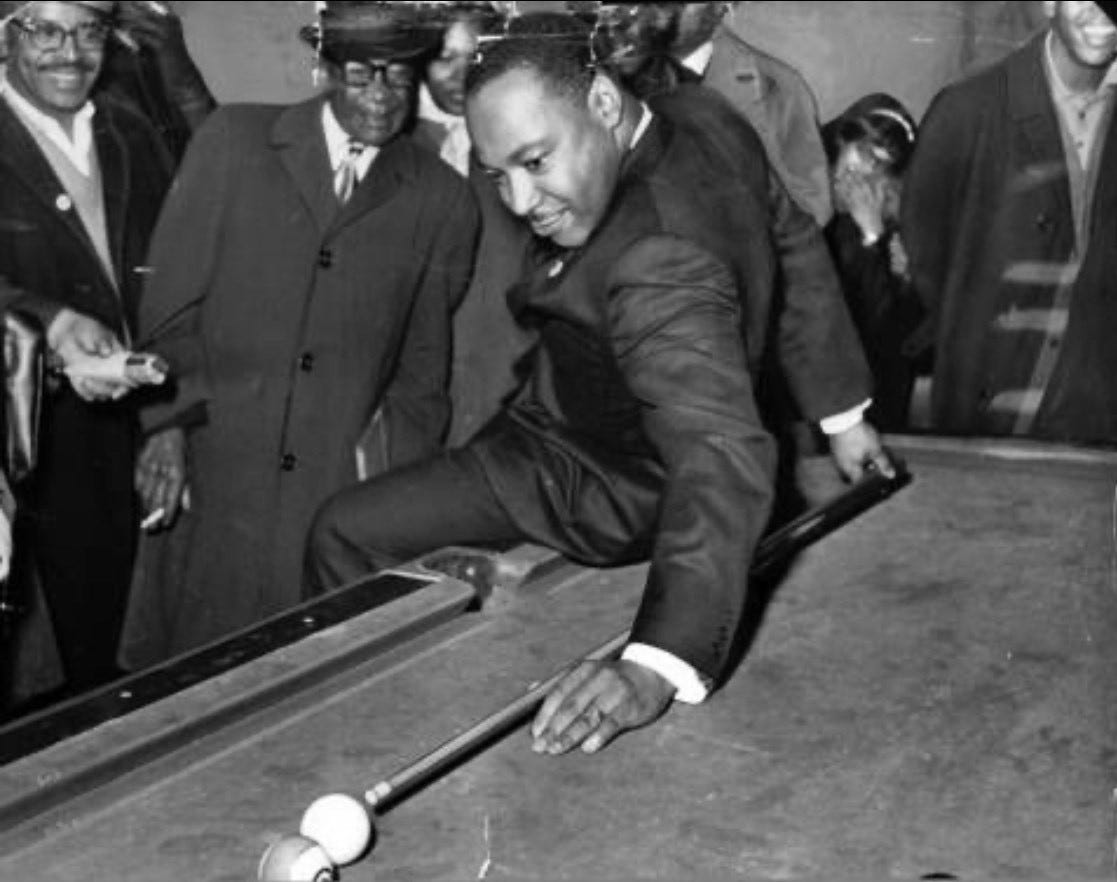
Lastly, I feel like when I read about legends such as Dr. MLK in textbooks or on the internet, it can be easy to forget that he was a living, breathing human just like the rest of us. Dr. MLK loved Star Trek, it was the only TV show he would allow his children to stay up late at night to watch. My guess is that he was a fan because it was pretty forward-thinking for its time. As a kid, he played baseball, football, and basketball, but his favorite sport was pool. He picked it up and played a ton in one of the basements of Crozer College, playing regularly until the wee hours of the night. Even after college, Dr. MLK Jr. would continue to play in pool rooms in cities across the country as a means to talk to people. Yet another reason why sports are the best.
(Source: NOLA)
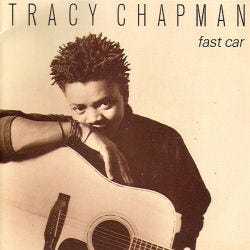
Today’s tune is Fast Car by Tracy Chapman.
Born in Cleveland, Ohio, on March 30, 1964, Chapman’s parents split up when she was only 4. Her mother refused to accept child support from her father, so she and her sister were raised on welfare while her mother worked multiple low-paid jobs. At 14, she wrote a song called Cleveland ‘78, which addressed many of her childhood hardships. From a young age, she was very socially and politically aware, telling Rolling Stone, “I think it had to do with the fact that my mother was always discussing things with my sister and me - also because I read a lot. A lot of people in similar situations just have a sense that they’re poor or disenfranchised, but they don’t really think about what’s created the situation or what factors don’t allow them to control their lives.”
Cleveland ‘78 was one of her first big breaks as an artist, as she was awarded a scholarship to a prep school in Connecticut. From there, she would attend Tufts University in Massachusetts. One of her childhood goals was to become a veterinarian, but she changed her studies to anthropology. After many summers of mowing lawns, she eventually started playing her guitar on the street. “It’s worse than playing in a club because there’s so many distractions. You can feel rejected if people don’t stop, so you have to kind of insulate yourself.” Eventually, she would make her way into performing at Boston Coffeehouse gigs. While many people could tell she had a ton of potential, she once sent her rough tape audio to a classmate’s uncle, who worked at CBS Records, and received a rejection letter stating that she “tune her guitar.”
In 1986, Tracy Chapman was introduced to a manager at Elektra Records, and just 2 years later, she released her self-titled debut album in 1988. On her debut album, her hit single Fast Car landed #1 in Ireland, #5 in the UK, and #6 on the US Billboard Hot 100. Chapman went from performing on the street to singing at Wembley Stadium for Nelson Mandela’s 70th Birthday Tribute.
(Source: The Guardian)
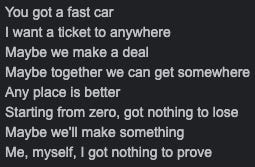
Chapman began writing Fast Car one late night in 1986 with her small Miniature Dachshund. She told Far Out, “She didn’t always stay up if I stayed up late, I think she was sitting on the couch right next to me, when I first started writing the music and the first few lyrics, I think the first part of the song that came to me was the first line ‘You’ve got a fast car…’” and the dog’s ears perked up. This just further illustrates the greatness of dogs.
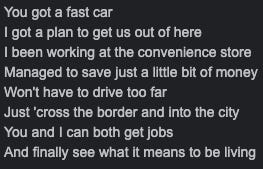
In the opening verse, Chapman sets the scene that she wants to get out of her current situation, but it sounds sorta naive or may come across a bit like the saying the grass is always greener. In the 2nd verse, the time has passed, and she once again desperately tells her partner they have a fast car. This time around, she has done a bit more research on where they can go and has even put in more effort by working. This could represent that it’s not as naive a thought.
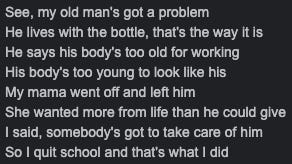
In the 3rd verse, she finally explains the situation of why she wants to get away in a fast car. It describes a heartbreaking story of her parents splitting up because of her father’s bouts with alcoholism. He’s stuck in that life, and her mother isn’t around either. While learning a bit about Tracy Chapman’s backstory, this may not be exactly like what the song’s narrator is going through; I’m sure in real life, she had similar struggles and needed to make sacrifices.
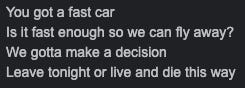

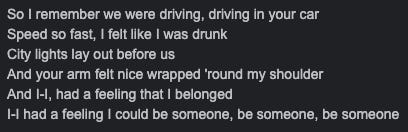
In the chorus, the song’s narrator is reminiscing about a time while she was in the Fast Car. For a moment in time, she was free and got to escape her hardships. She also got to spend it with someone who made her feel whole and that made her feel like she could make something of herself. Rather than physically drinking for a high, she got drunk on this feeling in the Fast Car.
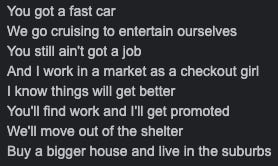
In Verse 4, she and her partner with the car are still in the same difficult situation. They still drive around in the Fast Car occasionally, but certain realities of life still hold them back from leaving. Despite this, she is still hopeful that they can get through it.
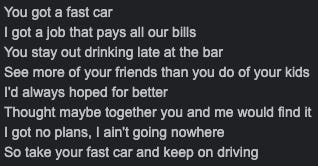
The 5th Verse is a sad circle of life moment. Like her mother in Verse 3, she is paying the bills while her partner with the Fast Car is now out drinking like her father. Now they have grown up and had kids of their own, who the partner with the Fast Car isn’t around to see. All her hopes in Verse 1 are past tense as she is resigned to the fact that she is stuck.