

Stumblin' Along 1/11 '26
Gangsta’s Paradise #2

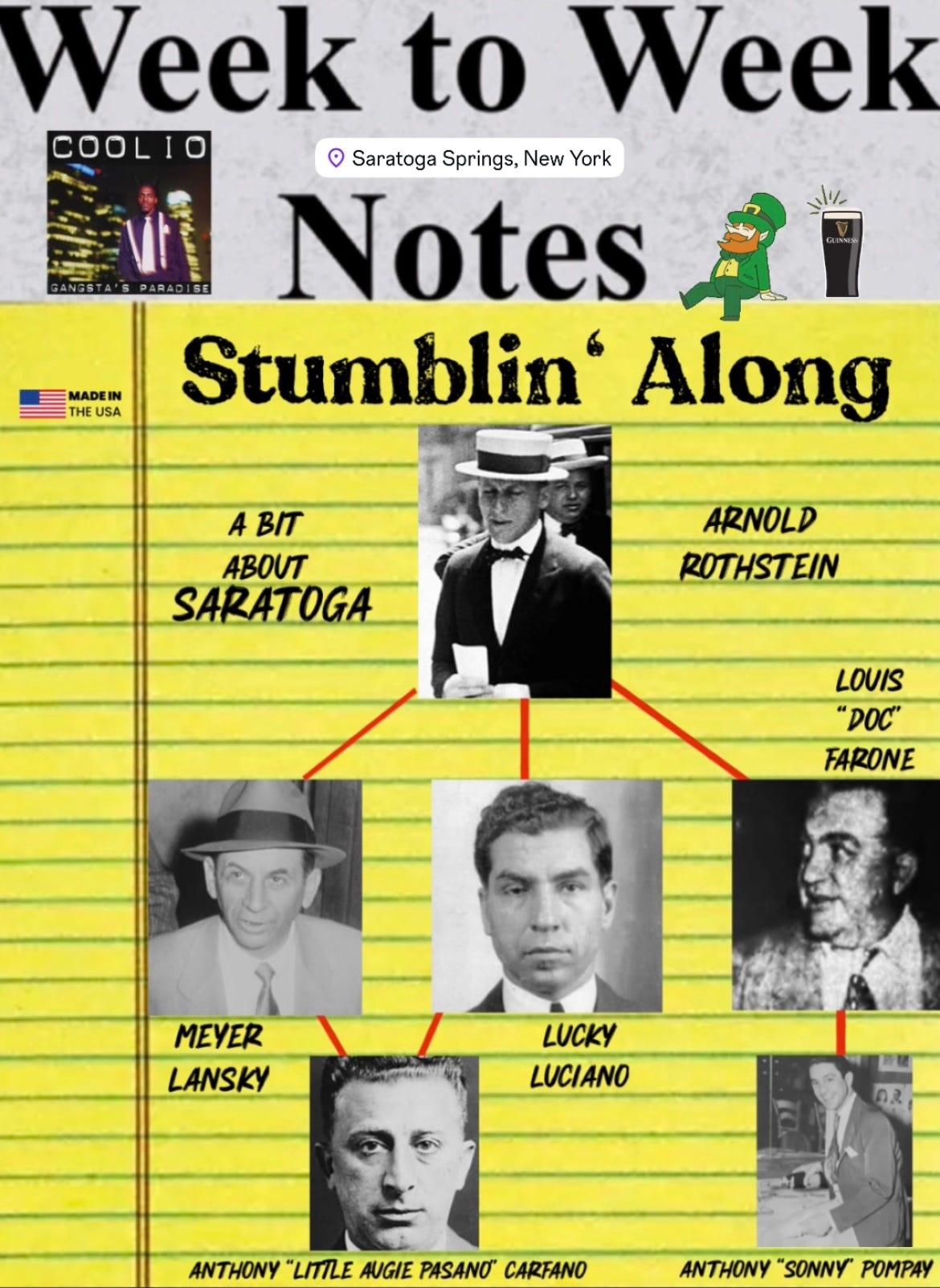
Gangsta’s Paradise #2
- A bit about Saratoga #2
- YouTube Rabbithole
Alright @YouTheReader,
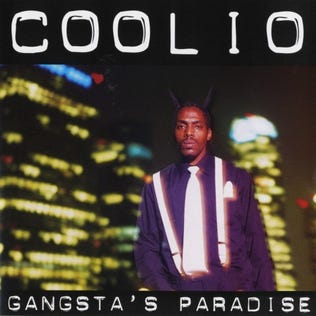
Today’s tune is Coolio’s Gangsta’s Paradise.
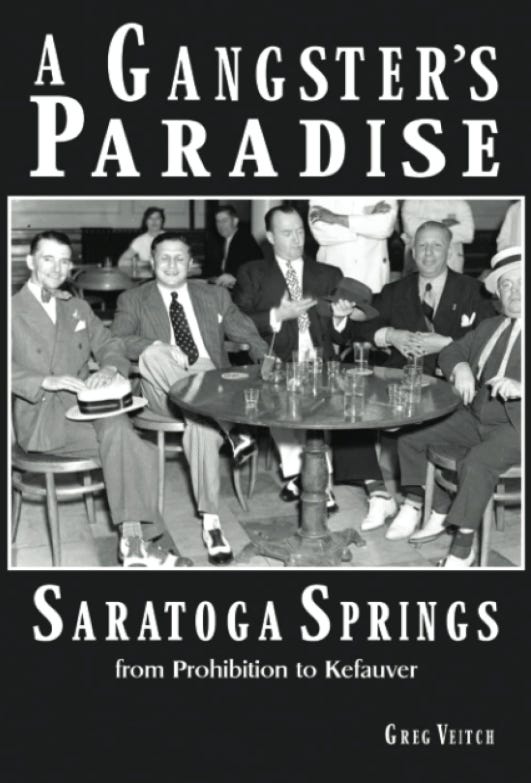
There’s a book written about Saratoga Springs by Greg Veitch called “A Gangster’s Paradise,” so I figured the song fit.
On to some Saratoga history…
A bit about Saratoga #2
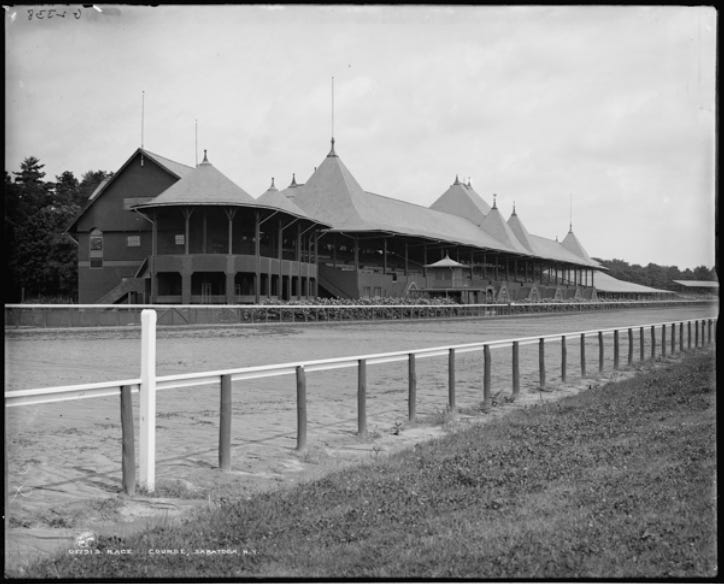
Last Sunday’s Stumlbin’ Along was left off about how John “Old Smoke” Morrissey and Richard “King of the Gamblers” Canfield had reputations as “fair and professional gamblers” who were respected by local townsfolk of Saratoga. Both men ensured they remained in the community's good graces by donating substantial amounts to local charities and keeping their casino closed on Sundays. They also funded the buildup of Saratoga Springs, which, in its heyday, was considered the American Monte Carlo. However, by 1907, an anti-gambling reform movement had begun, and the Canfield Casino was forced to close its doors by 1911. Once Canfield left town, local authorities clamped down on gambling and ran a relatively clean town for about a decade. Things would change in 1917, when Arnold Rothstein set his sights on the Spa City.
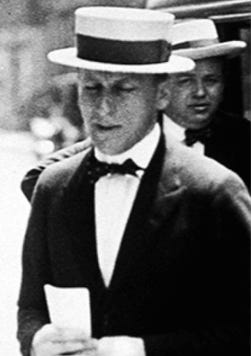
Arnold Rothstein was born in New York City on January 17, 1882. Since childhood, Rothstein has been highly skilled in math but otherwise has hated school. By age 16, Rothstein dropped out of school to become a traveling salesman who hung around pool halls. When he was 20, he began taking bets on horse races, baseball games, elections, and prize fights. He was also a loan shark, which carried extremely high interest rates. In the early 20th century, Rothstein earned the nickname “The Big Bankroll” because he always insisted on carrying a large stack of $100 bills. (For context, a Benjamin Bill in 1902 was worth about $3.8k.) He married an actress named Carolyn Green in 1909 and, a year later, opened his first official casino inside a hotel in the then Tenderloin district of Manhattan. The hotel with the casino, Hotel Metropole, which was later known as Hotel Rosoff, is now the Casablanca Hotel on 43rd Street. F. Scott Fitzgerald references The Metropole in The Great Gatsby.
(Source: Famous Trials UMKC Law)


By 1914, Arnold Rothstein began focusing on the business of bookmaking. He once infamously stated he was willing to bet on anything but the weather because the weather was the only thing he couldn’t fix. With a large bankroll in 1917, Rothstein showed up in Saratoga Springs and made friends with local officials by paying them off so that he could open up the Arrowhead Inn out by Saratoga Lake. Once the Arrowhead Inn became a success, Rothstein built America’s first resort hotel, called the Brookside Resort. His two Saratoga spots quickly made a killing, especially during the summer horse racing season. Around the same time that Rothstein started making money over fists in Saratoga, he was also infamously making his biggest score by fixing the 1919 World Series as the behind-the-scenes financial backer. It was Rothstein who was approached by Joseph “Sport” Sullivan to provide funding to pay off the eight Chicago White Sox players involved in the Black Sox scandal. Most believe Rothstein had wagered as much as $270,000 ($5 million today) for the Cincinnati Reds to win the World Series. This was also, of course, referenced in The Great Gatsby.
(Source: Saratoga Today Newspaper)


Around the time he was fixing the World Series, Arnold Rothstein hired Charles Luciano and Meyer Lansky to work at the Brook Resort. Both notorious gangsters were merely in their late teenage years when they picked up summer shifts in Saratoga. Lansky specialized in gambling, while Luciano shifted his focus to booze. On January 17, 1920, the 18th Amendment to the US Constitution took effect, and Prohibition of Alcohol began. Since Saratoga was just 180 miles from the Canadian border, the Spa City became a prominent mobster headquarters midway between Canada and New York City. Rothstein served as a “mentor” to both Luciano and Lansky, while also employing Jack “Legs” Diamond as his enforcer. Luciano and Legs handled the day-to-day operations of the bootlegging business, with their “turf” going from New York City down to Philadelphia. By 1925, Luciano was grossing over $4 million a year ($75 million today) thanks to the booze business that Rothstein financed. The dangerous business would eventually catch up to Luciano, as he earned his nickname “Lucky” thanks to his surviving a 1929 incident where his throat was slashed. No further comment at this time as I don’t want to be getting got by the mob for giving up secrets on the New York Mafia a century ago.


As notorious as the gangsters Rothstein, Luciano, and Lansky were thanks to their New York City brand, Saratoga, too, had some big players during Prohibition. Louis “Doc” Farone, a Saratoga resident, was associated with national gangsters but opposed out-of-towners making all the profits in the Spa City region. He considered Saratoga his territory, which led to several shootouts with downstate mobsters, including Rothstein’s enforcer, Jack “Legs” Diamond, who attempted to ambush Doc in the middle of Saratoga. Farone’s gang included his right-hand man, Anthony “Sonny” Pompay. They would smuggle Canadian beer, liquor, and wine from Montreal into Plattsburgh, then drive it down to Saratoga. Once the Prohibition had ended on December 5, 1933, Doc & Sonny quickly pivoted from alcohol into illegal casinos. Their most infamous Saratoga casino was known as Riley’s Lake House and Newman’s Lake House. These “lake houses” had previously been used as speakeasies, but were later used in Farone’s FBI conviction as the main operator of illegal gambling houses. Riley’s Lake House, in particular, had star entertainers such as Bing Crosby (one of the kings of Christmas music), Desi Arnaz (Ricky Ricardo from I Love Lucy), and Jimmy Durante (famous for Frosty the Snowman). While none of the entertainers were ever linked to the Saratoga mob's dirty money dealings, it is still a notable connection.
(Source: The Button Guys)


