Stumblin' Along 10/19 '25
(Don't Fear) The Reaper

(Don’t Fear) The Reaper
- TD’s Top 10 Spooky Spots
- YouTube Rabbithole
Alright @YouTheReader,
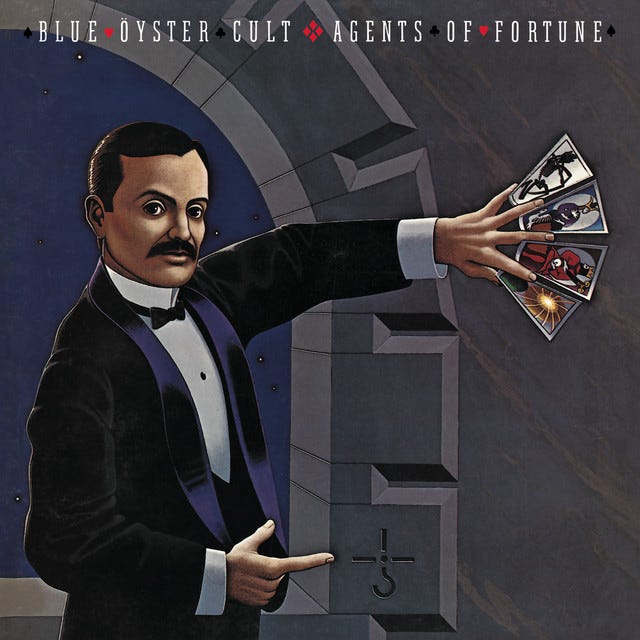
Today’s tune is Blue Öyster Cult’s (Don’t Fear) The Reaper.
Blue Öyster Cult formed at Stony Brook on Long Island, New York, in the late 1960s. The band got its name from their manager, Sandy Pearlman, who saw it on a restaurant menu. They were previously called Soft White Underbelly, a Winston Churchill reference about Italy being the “soft underbelly of the Mediterranean.” The “Ö” bit was a popular trend in the 70s thanks to other rock bands like Mötley Crüe and Motörhead.
(Source: American Songwriter)
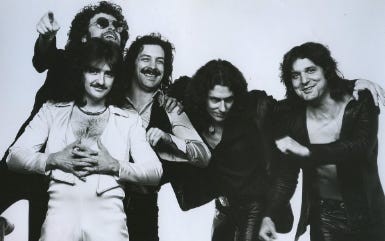
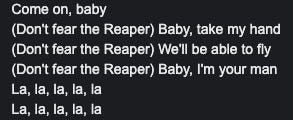
(Don’t Fear) The Reaper was written by Blue Öyster Cult’s lead guitarist, Donald Roeser, aka Buck Dharma. He told SongFacts the song was inspired by being diagnosed with an irregular heartbeat. “I had been diagnosed with a heart condition, and your mind starts running away with you - especially when you’re young-ish. So, that’s why I wrote the story. It’s imagining you can survive death in terms of your spirit. Your spirit will prevail,” said Dharma.
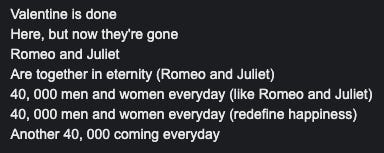
(Don’t Fear) The Reaper was the band’s biggest hit. In 1976, it peaked at #12 on the US Billboard Hot 100, #16 in the UK, and #17 in Ireland.
John Carpenter also used the song in his classic 1978 film Halloween. Since then, it’s been used in other horror films, such as Scream and Gone Girl.
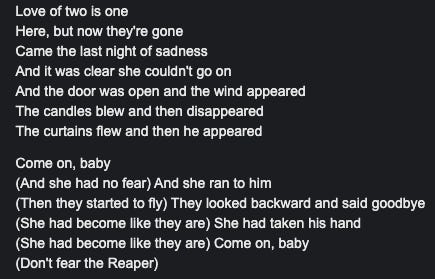
Of course, the song is also famous for an all-time SNL skit from 2000…
Great tune, on to some Stumlin’ Along…
With Halloween around the corner, I’ve compiled a list of the Top 10 Spooky Spots I can recall off the top of my head. So, without further ado….
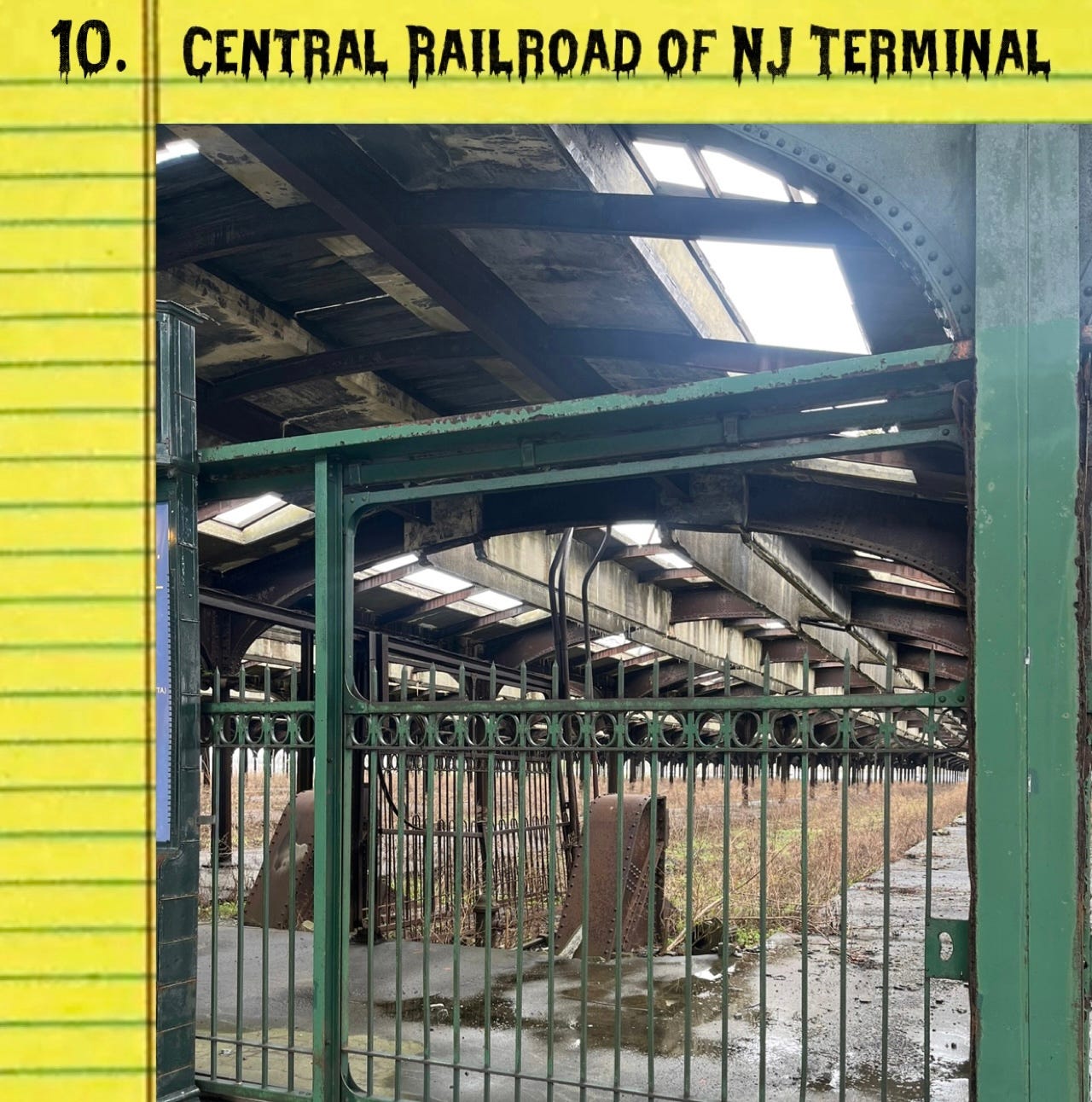
Spooky Scale: Not that creepy, just old.
The abandoned railroad tracks of the Central Railroad of New Jersey Terminal, located in Liberty State Park, is the pickup spot for Ellis Island and Statue of Liberty ferries. It’s just like 8 football fields of unmaintained grass and train tracks. I was only there on a rainy day, could be a bit spooky at night, but given that it’s historical land, there’s bound to be security.
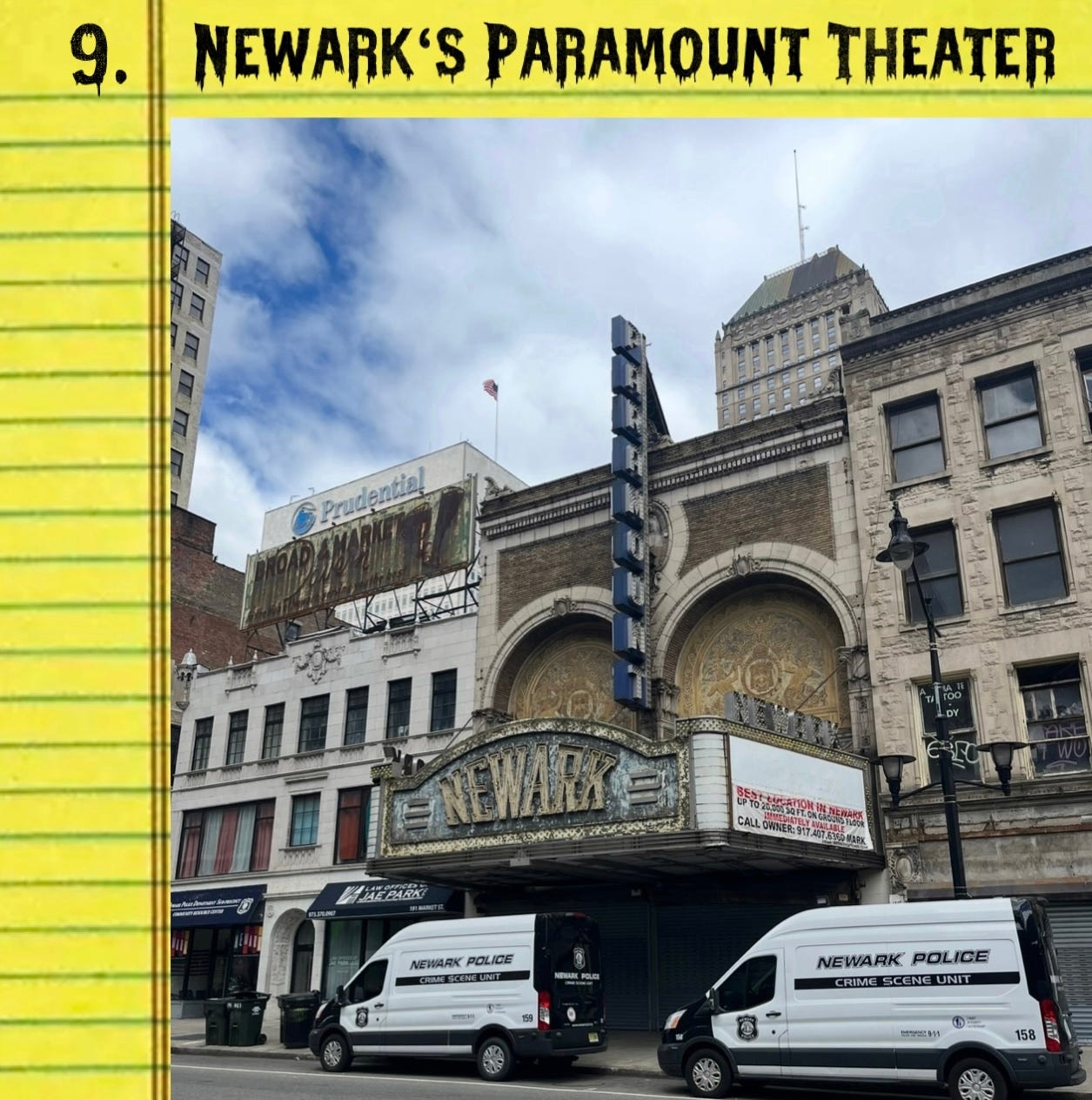
Spooky Scale: Pretty creepy, goes hard.
I just so happened to be leaving a bar in Newark when the Police Crime Scene Unit was parked in front of it, so it definitely made the picture go infinitely harder. Newark can get a bad rep, but I thought they had some nice pint spots. Newark’s abandoned Paramount Theatre was originally opened in 1886 and was most recently used for a scene in The Joker.
Last November, I wrote a Stumblin’ Along 11/3 ‘24 about the building. Neat bit of Newark history.

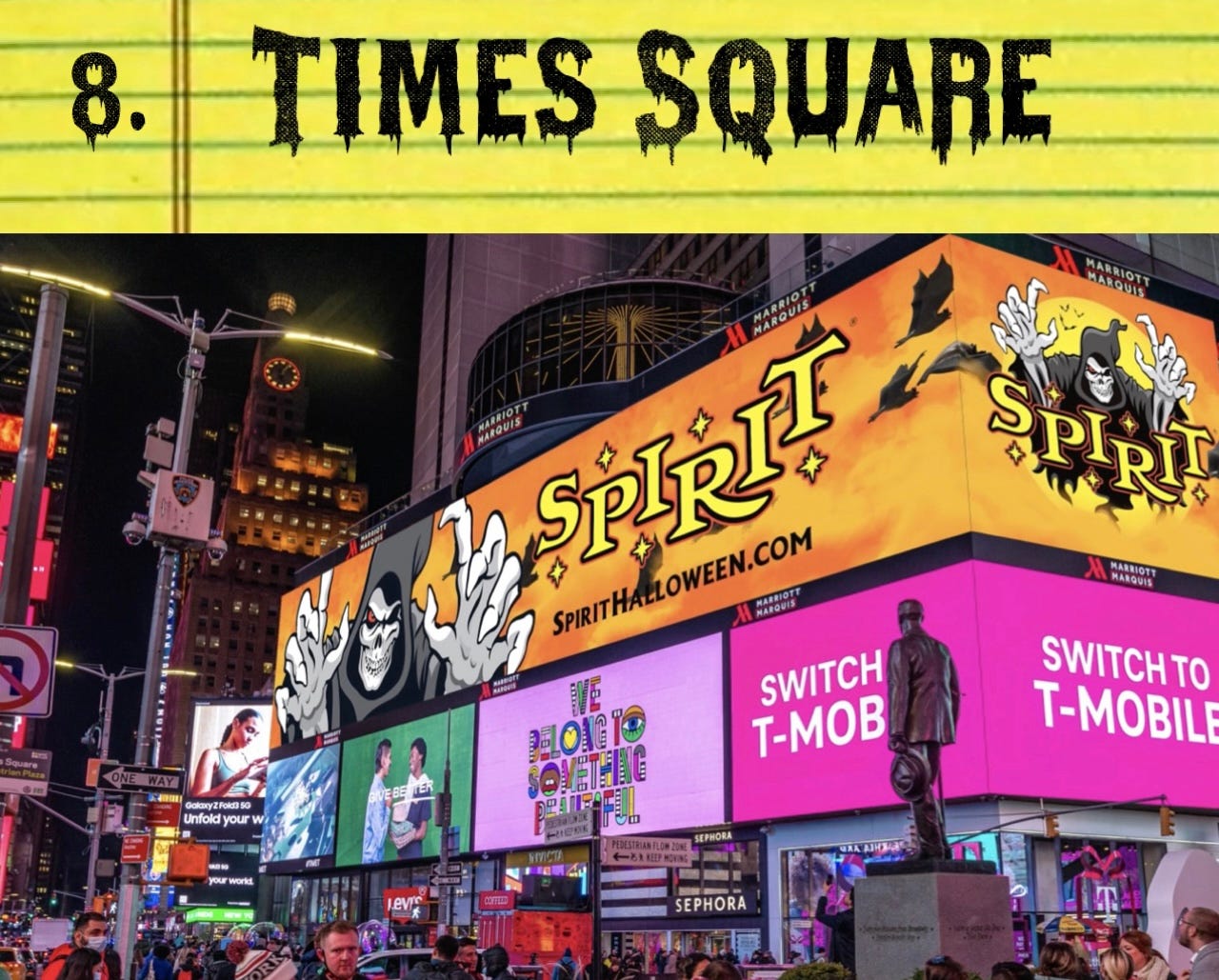
Spooky Scale: Avoid at all costs.
This isn’t even a Halloween thing. Times Square is commercialized chaos. Flashing lights everywhere and loud sounds. Half the people are always protesting, and the other half are tourists watching an elaborate choreographed square-off street dance going on. (Nothing wrong with either action, but just an observation.) Sometimes it’ll be a Tuesday and you’ll see an Elmo just urinating on the side of the street. I guess they’ve cleaned it up a bit since the 70s, but yeah, you never know what you’ll get.
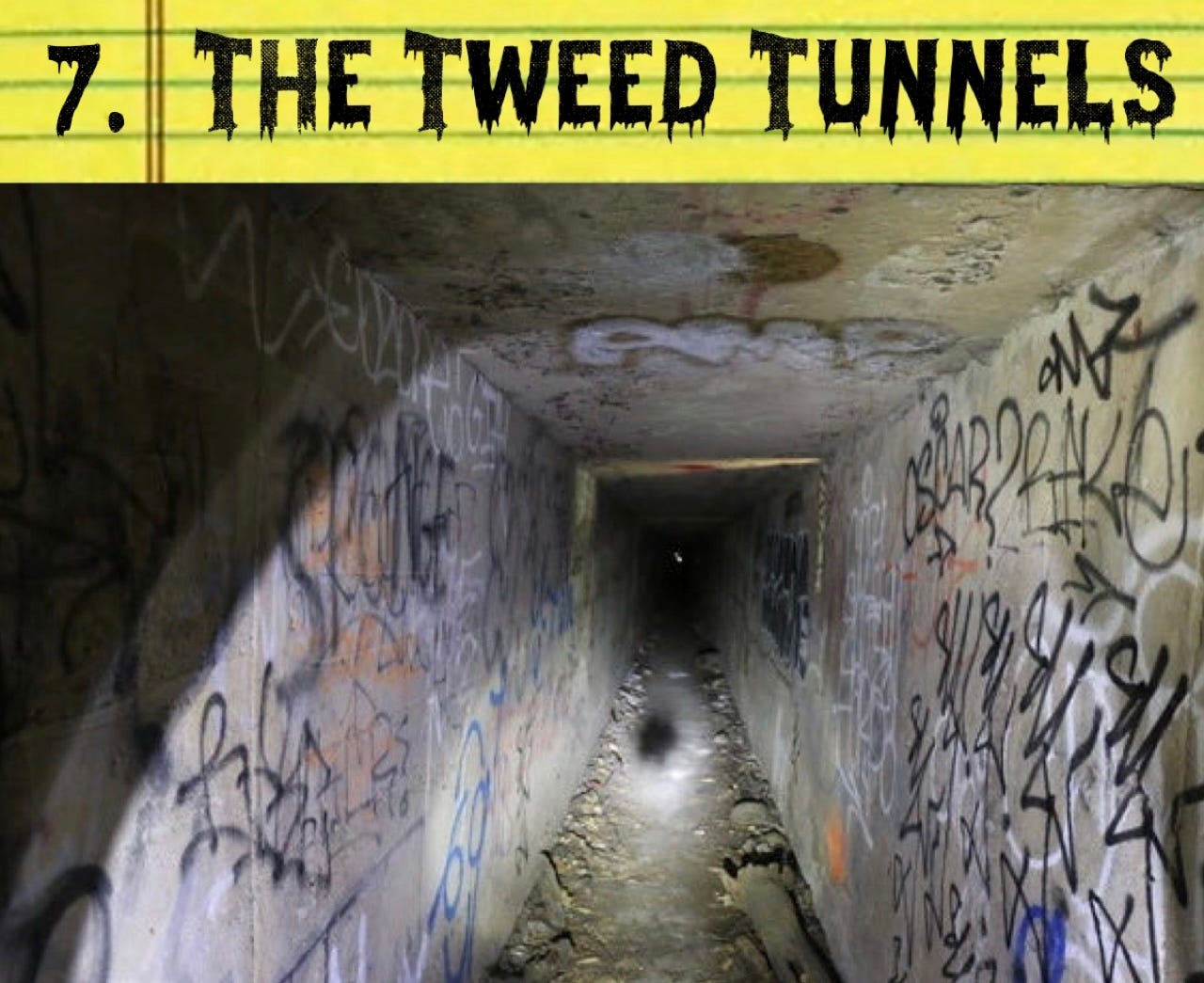
Spooky Scale: Solid 7.
The Tweed Tunnels are located in Upstate New York Blauvelt, New York. A town over from where I grew up, my friends and I went there one night in high school. We had a big enough group that the tunnels weren’t too scary, but one of the lads pretended to get lost in the woods, leading to some girls crying. Good craic, funny bit. Anyway, the tunnels were built in 1910 as part of the Bluefields Rifle Range. They were to be used as training grounds and a shooting range for New York National Guard members. During WWI, the site became a YMCA to get soldiers in shape and may have even hosted a small number of prisoners of war. After the Great War, the Tweed Tunnels were used as a Christian camp for women and a homeless shelter. Eventually, they would become abandoned, with rumors of hosting satanic rituals. We didn’t see the Illuminati meeting there when we visited in 2010-ish, just some big-ass spiders.
(Source: Atlas Obscura)
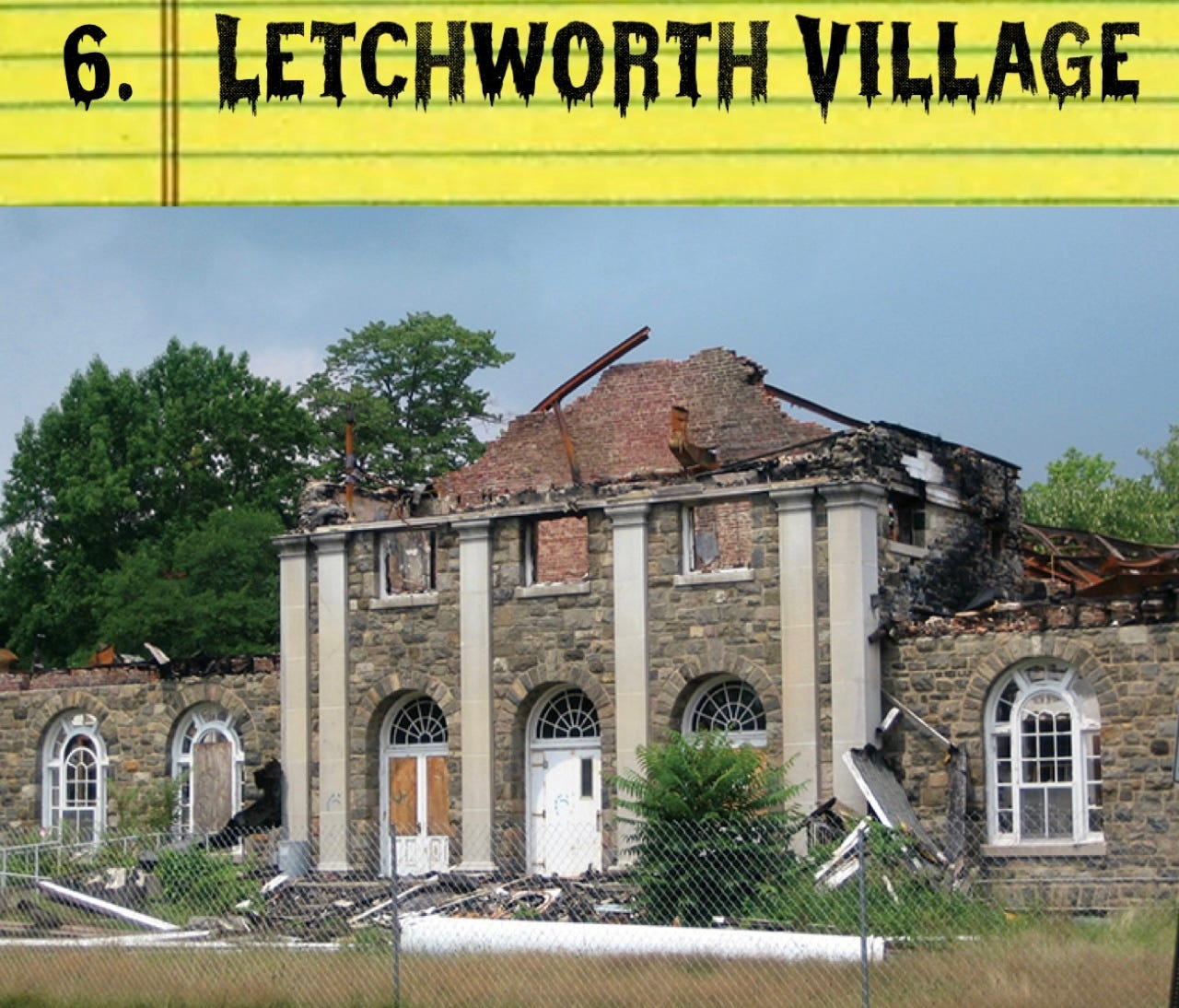
Spooky Scale: Sad Scary
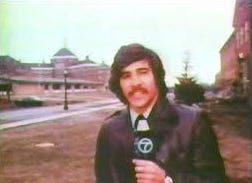
After doing the Tweed Tunnels, we got bored one night and tried Letchworth Village up to North Rockland. We couldn’t figure out how to get into the village, and I think one of the signs said private property, so we sissied out. The place was a residential institution for people with mental and physical disabilities from 1911 to 1996. It gained national recognition in 1972, when the then-local reporter, Geraldo Rivera, uncovered the horrible living conditions of disabled children and adults.
Letchworth Village was built in 1907 by a businessman named William Letchworth, but he passed away before it was completed in 1911. According to the Hudson Valley Mag, there were compassionate and good intentions behind the institution, but by 1935, it had already reached their 3,000-patient limit. By the 1960s, there were over 6,000 patients, and the overcrowding led to the slow process of deinstitutionalization.
Spooky Scale: Horrifying Football
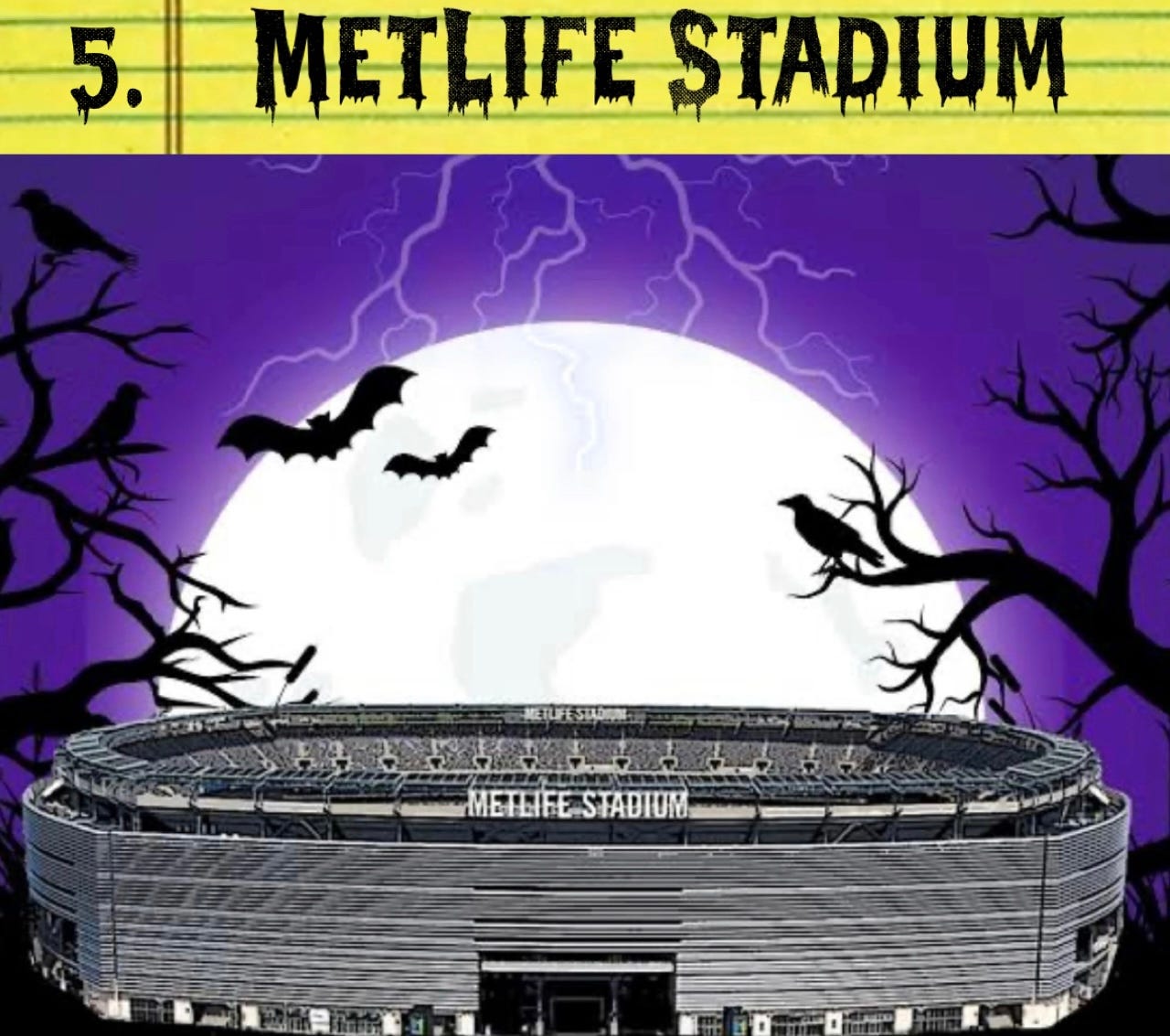
For what feels like the last decade, the Jets and Giants, but especially the Jets, have made the $1.6 billion Tin Can of Stadium a horrid Sunday experience.
Spooky Scale: Patriotically Petrifying
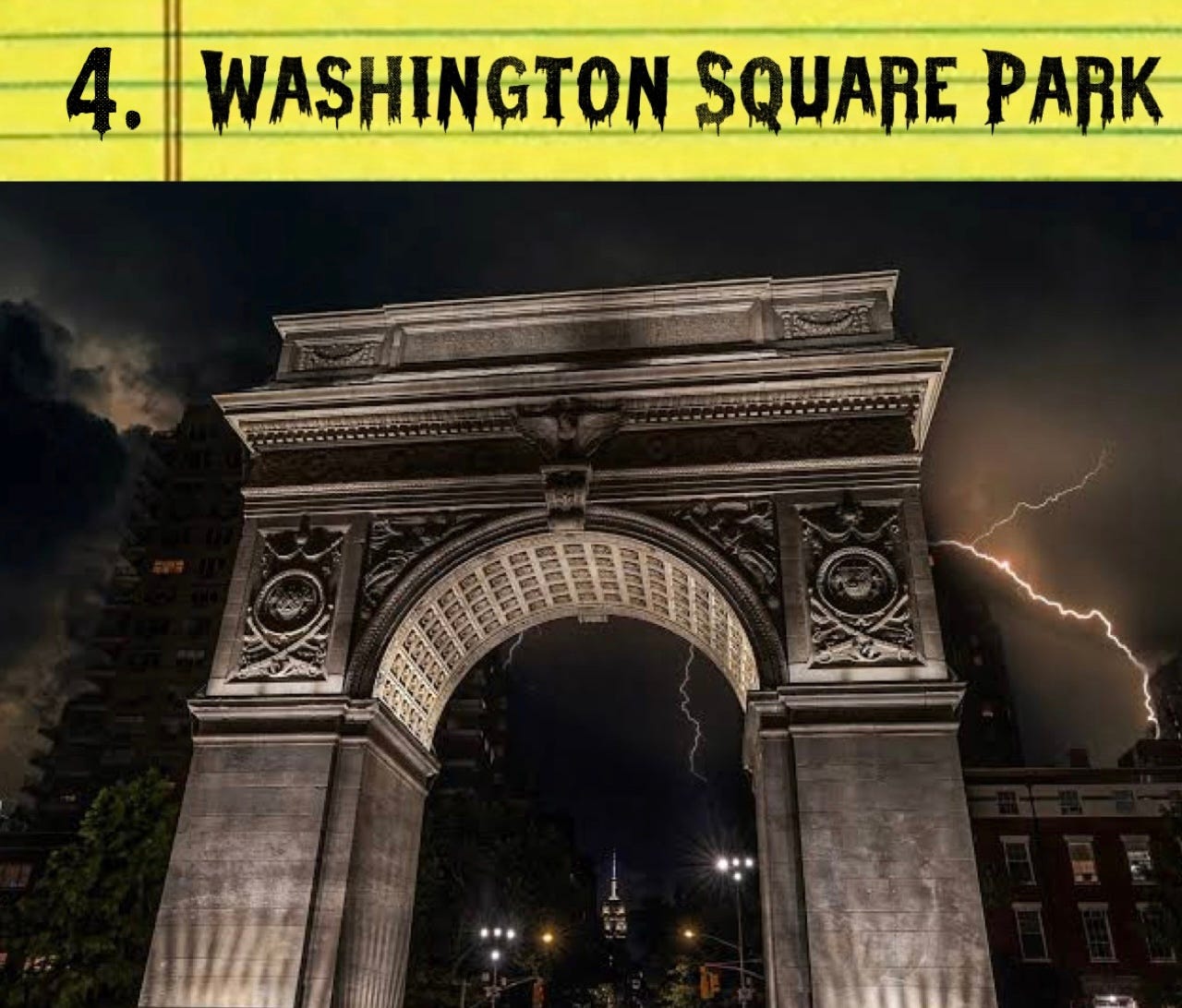
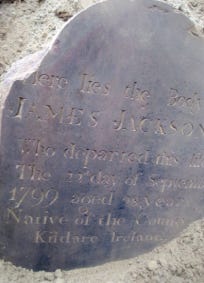
Don’t get me wrong, every time I walk by the Washington Square Park Monument, I salute it and stop to say the Pledge of Allegiance, but did you know there is north of at least 22,000 bodies below it? Before becoming Washington Square, the land was known as a potter’s field. Around the late 1700s, there was a Yellow Fever epidemic that ripped through New York City. Many of the victims who died of yellow fever were buried there, including an Irish immigrant named James Jackson. I only bring that up because they found his headstone while renovating the park in 2012.
Spooky Scale: Sunday Scaries to the Tenth Degree
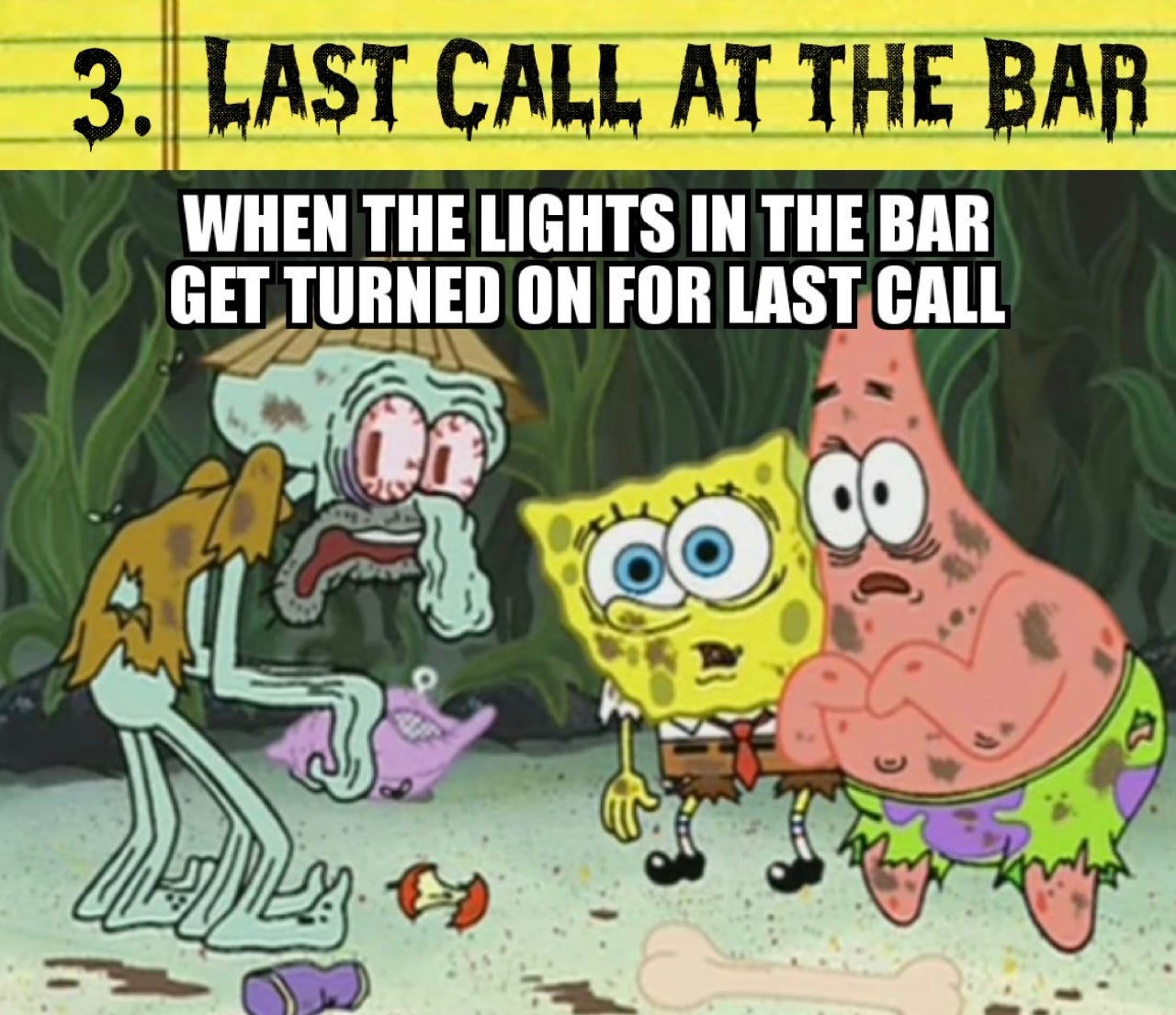
The utter disgust and look of contempt you see when the lights come on at the bar’s last call needs to be studied. Only gets worse.
Spooky Scale: Scary As F***
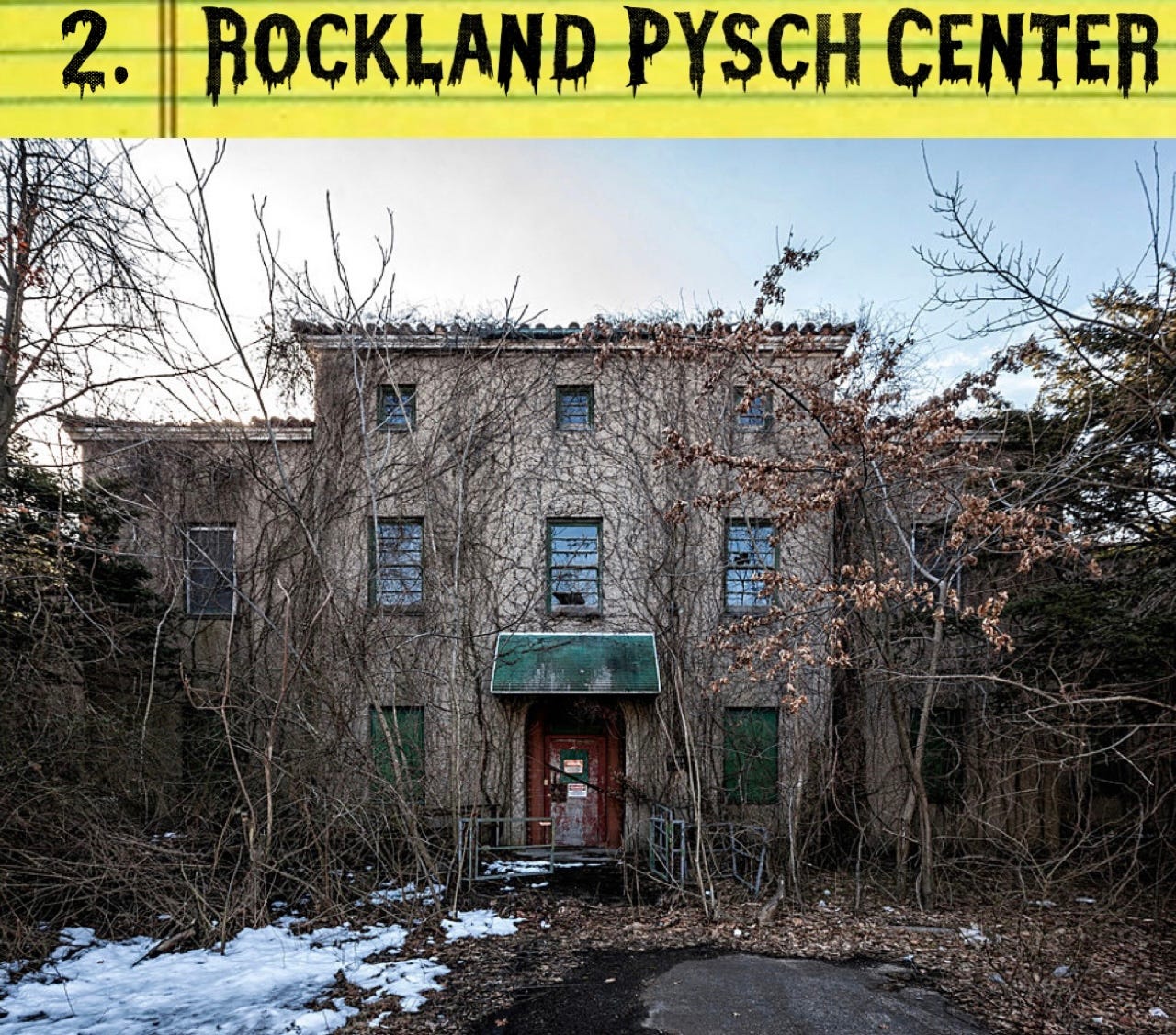
The abandoned buildings of Rockland Psych Center is eery as hell. Great spot to learn how to drive though. Plus, the GAA Clubhouse is class.